
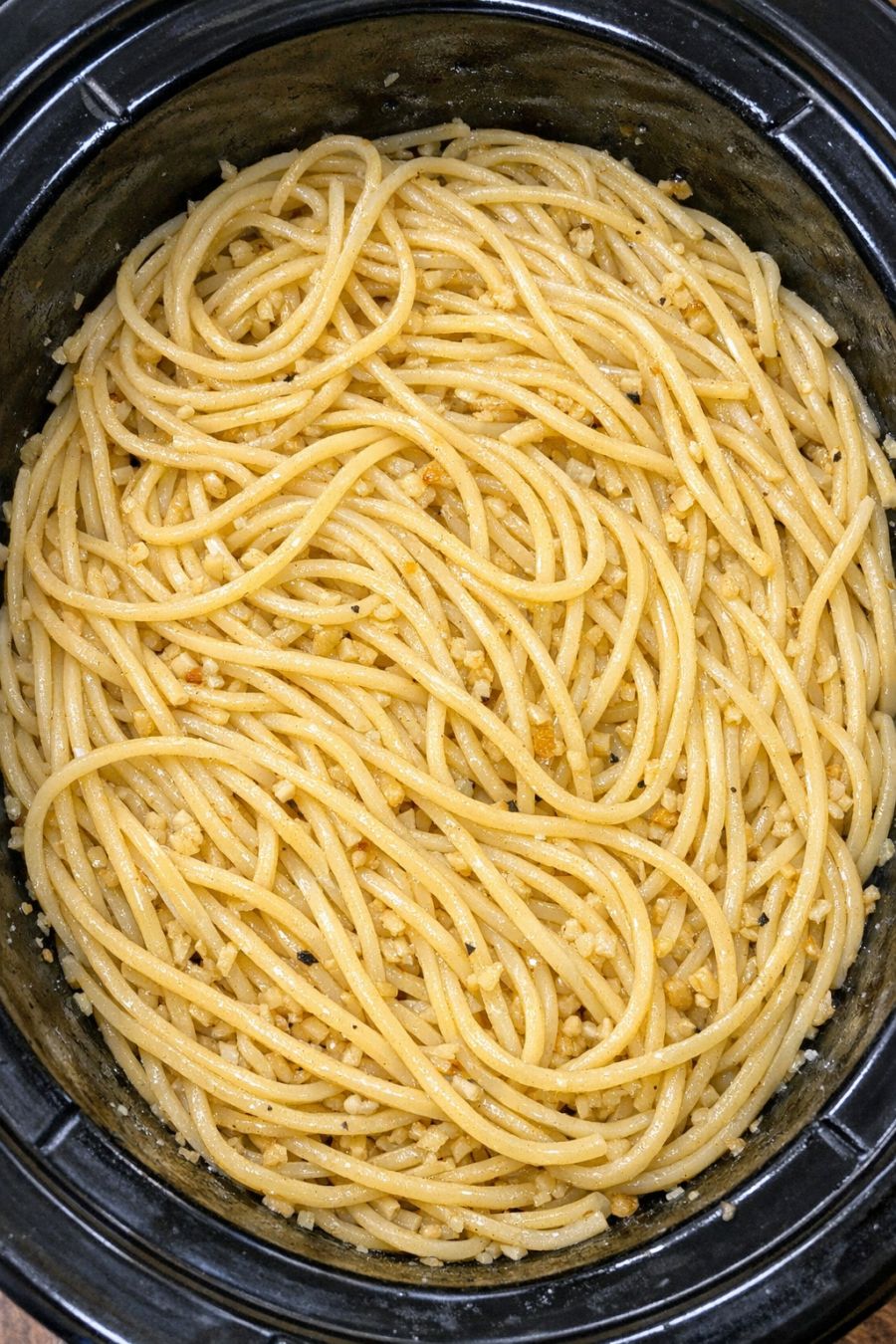
My great aunt used to say that hard times teach you what really matters, and this slow cooker garlic spaghetti is proof of that. During the Depression, she kept herself going on little more than a sack of pasta, a jug of oil, and a bulb of garlic, and she still managed to feed whoever showed up at her door. This recipe is a simple, three-ingredient wonder: spaghetti simmered right in a slow cooker until it’s soft, glossy, and fragrant with garlic. It’s the kind of meal you make when the pantry is bare, the paycheck is far away, or you just need something comforting and uncomplicated. It’s been passed down through our family as a reminder that less can truly be more.
This humble garlic spaghetti is lovely just as it is, straight from the slow cooker with a sprinkle of black pepper if you have it. To stretch it into a full meal, you can serve it alongside a simple green salad, sliced fresh tomatoes with a little salt, or any cooked vegetable you have on hand. A heel of crusty bread or a homemade biscuit is perfect for catching the extra garlicky oil at the bottom of the pot. If times aren’t quite so tight, a little grated cheese on top turns it into something that feels downright special.
Slow Cooker Depression-Era Garlic Spaghetti
Servings: 4
Ingredients
12 oz dry spaghetti
1/2 cup olive oil (or any mild cooking oil you have)
8 cloves garlic, finely minced or very thinly sliced
4 cups hot water (just enough to barely cover the pasta; for cooking only, not counted as an ingredient)
Directions
Set your slow cooker on HIGH so it begins to warm while you prepare the ingredients.
Break the dry spaghetti in half so it will fit comfortably into the slow cooker. Scatter the pasta evenly in the bottom of the crock, fanning it out a bit so it doesn’t clump in one tight bundle.
In a small bowl, stir the minced or sliced garlic into the olive oil. This step lets the garlic start to flavor the oil, just like my great aunt used to do while she waited for the water to heat.
Pour the garlic and olive oil mixture evenly over the dry spaghetti, using a fork or tongs to gently lift and turn the strands so they all get a light coating of oil and garlic bits.
Carefully pour in just enough hot water to barely cover the spaghetti—about 4 cups, depending on your slow cooker. The pasta should be submerged but not swimming in a lot of extra liquid.
Cover the slow cooker with the lid and cook on HIGH for 45 minutes.
After 45 minutes, open the lid and gently stir the spaghetti, loosening any strands that are sticking together or to the bottom. Check the liquid level; if it looks very dry and the pasta is still firm, add a small splash of hot water (a few tablespoons at a time).
Continue cooking on HIGH for another 30–45 minutes, stirring once or twice more, until the spaghetti is tender and the water has mostly been absorbed or turned into a light, glossy garlic-infused coating. The noodles should look soft, glistening, and lightly golden from the oil and garlic.
When the spaghetti is cooked to your liking, turn the slow cooker to WARM. Give everything a final gentle toss so the minced garlic is evenly distributed and every strand is coated with that golden sheen.
Taste and, if you have it and wish, add a pinch of salt or black pepper before serving straight from the slow cooker, just like my great aunt did when she fed whoever showed up hungry.
Variations & Tips
This recipe is meant to be as bare-bones and honest as the days it came from, but you can still make small changes when you have a little extra. If you have butter, you can replace a few tablespoons of the olive oil with butter for a richer flavor, stirring it in right at the end so it melts over the hot noodles. A pinch of dried herbs (like parsley, oregano, or basil) can be added with the garlic if your pantry allows. Grated cheese, red pepper flakes, or a squeeze of lemon are all optional extras that dress it up without changing the spirit of the dish. To stretch the meal, my aunt would sometimes stir in leftover cooked vegetables or beans during the last 10 minutes of cooking so they warmed through. For food safety, always keep the spaghetti covered while cooking so it reaches a safe, steaming temperature, and do not leave it on the WARM setting for more than 2 hours. Refrigerate leftovers within 2 hours of cooking in a shallow container so they cool quickly, and reheat only what you plan to eat, bringing it back to a good, hot temperature before serving. If the reheated pasta seems dry, add a spoonful of oil and a splash of water to loosen it. Always use clean utensils when stirring and serving to avoid introducing bacteria into the slow cooker or storage container.
