
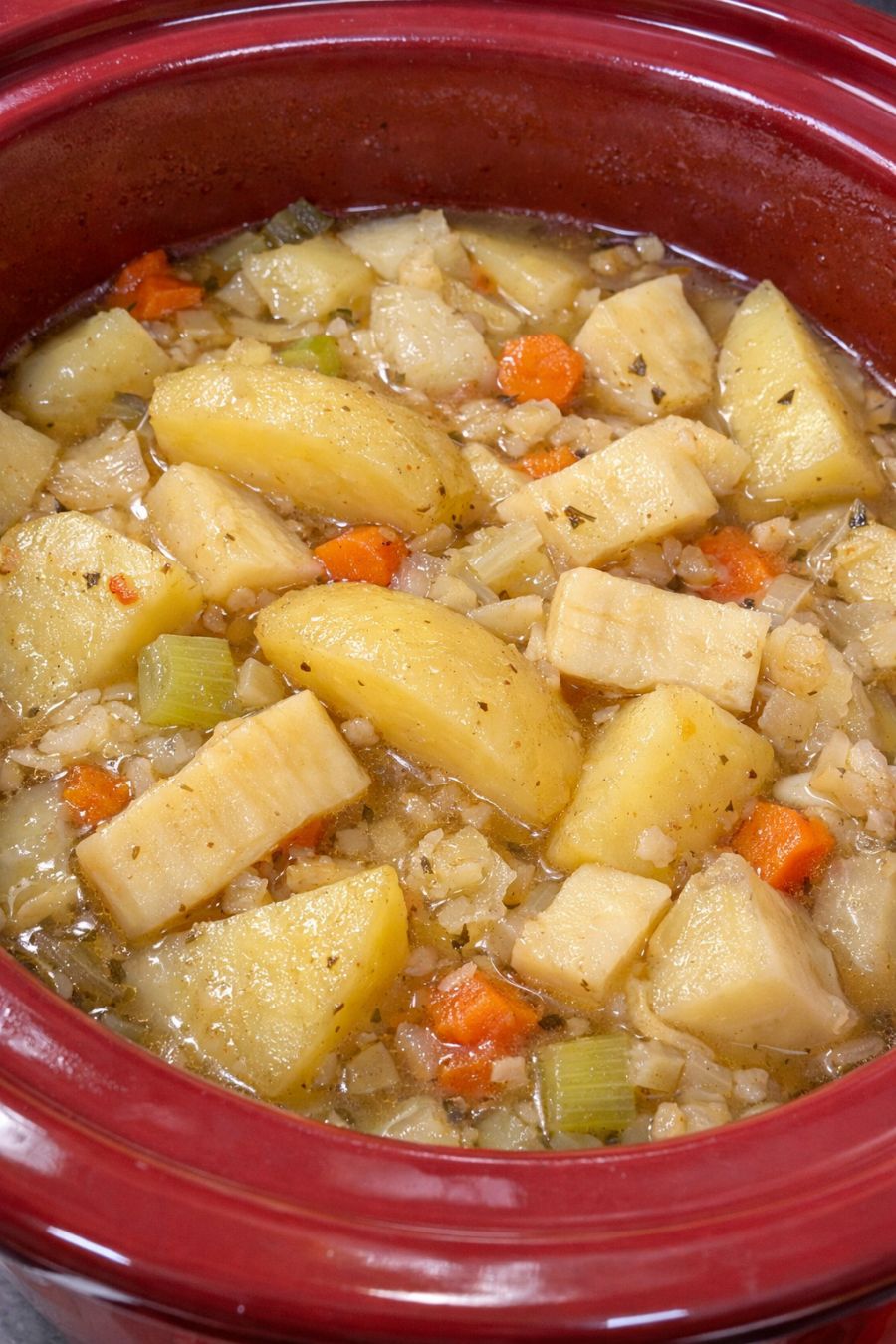
This slow cooker 4-ingredient poor man's potato and parsnip stew is the kind of recipe folks leaned on when money was tight but bellies still needed filling. My neighbor told me her mother made a pot like this all through the winters of the 1950s, stretching a few humble vegetables into something that felt special. The potatoes turn soft and golden, the parsnips melt into the broth and lend a gentle sweetness, and the simple onion-and-broth base tastes far fancier than it has any right to. It costs almost nothing to make, but when you lift the lid and see those tender vegetables breaking apart in a light, savory broth, it feels like you’ve brought a little country restaurant right into your own kitchen.
Ladle this stew into warm bowls and serve it with whatever bread you have on hand—day-old dinner rolls, cornbread, or a thick slice of toast to soak up the broth. A simple side of sliced apples or a basic green salad with vinegar dressing balances the sweetness of the parsnips. If you’ve got a bit of cheese, a sprinkle over hot bread on the side makes the meal feel extra comforting. This stew is light but filling, so it pairs nicely with simple, frugal sides that don’t overshadow its gentle, homestyle flavor.
Slow Cooker Poor Man's Potato and Parsnip Stew
Servings: 4
Ingredients
2 pounds russet or yellow potatoes, scrubbed and cut into thick wedges
1 pound parsnips, peeled and cut into chunky pieces
1 large yellow onion, peeled and thinly sliced
4 cups low-sodium vegetable or chicken broth
1 teaspoon salt, or to taste
1/2 teaspoon black pepper, or to taste
1 bay leaf (optional, if you have it)
1 tablespoon butter or oil for extra richness (optional)
Directions
Prepare the vegetables: Scrub the potatoes well and cut them into thick wedges, about the size of a couple of bites each. Peel the parsnips and cut them into similar-sized chunky pieces so they cook at the same rate. Peel the onion and slice it thinly.
Layer the slow cooker: Place the sliced onion in the bottom of the slow cooker crock. This gives a soft, sweet base for the stew. Add the potato wedges and parsnip pieces on top of the onions.
Add broth and seasoning: Pour the broth over the vegetables. Sprinkle in the salt and black pepper. If you have a bay leaf, tuck it down into the liquid. If you’re using butter or oil for extra richness, dot it over the top.
Stir gently: Using a spoon or your hands, gently stir and nudge the vegetables so they’re mostly covered by the broth. It’s fine if the tips of some pieces peek out; they’ll soften and sink as they cook.
Cook low and slow: Cover the slow cooker with the lid. Cook on LOW for 7 to 8 hours, or on HIGH for 3 1/2 to 4 hours, until the potatoes and parsnips are very tender and just starting to break apart at the edges. The broth should be thin but flavorful, with the onion melting into it.
Adjust seasoning: When the vegetables are soft and the stew looks creamy around the edges, taste the broth carefully (it will be hot) and add a bit more salt and pepper if needed. Remove the bay leaf, if used.
Serve: Gently ladle the stew into bowls, trying not to mash the potatoes and parsnips too much. You want to see soft golden potato wedges and pale cream-colored parsnip pieces nestled in the light broth, with some of the vegetables naturally breaking apart. Serve hot, with bread or crackers on the side to soak up the savory broth.
Variations & Tips
To keep the spirit of this old-fashioned, tough-times stew, think of variations as ways to use what you already have rather than buying special ingredients. If you don’t have parsnips, you can use carrots or a mix of carrots and parsnips; the flavor will be a bit sweeter but still comforting. A clove of garlic, a pinch of dried thyme, or a sprinkle of dried parsley can be added with the broth if they’re already in your pantry. For a creamier, more restaurant-style feel, lightly mash a few potato and parsnip pieces in the pot at the end of cooking, then stir them back into the broth to thicken it slightly. If you’d like a bit more protein without spending much, stir in 1 cup of cooked beans (such as white beans) during the last 30 minutes of cooking. To make it vegetarian, simply use vegetable broth and skip any meat-based broths. For food safety, always refrigerate leftovers within 2 hours of cooking, store them in a covered container, and use within 3 to 4 days, reheating until the stew is steaming hot all the way through. If your slow cooker tends to run hot, avoid leaving it on the “warm” setting for more than 2 hours after cooking is done, to keep the vegetables from turning mushy and to reduce any risk of bacteria growth.
