
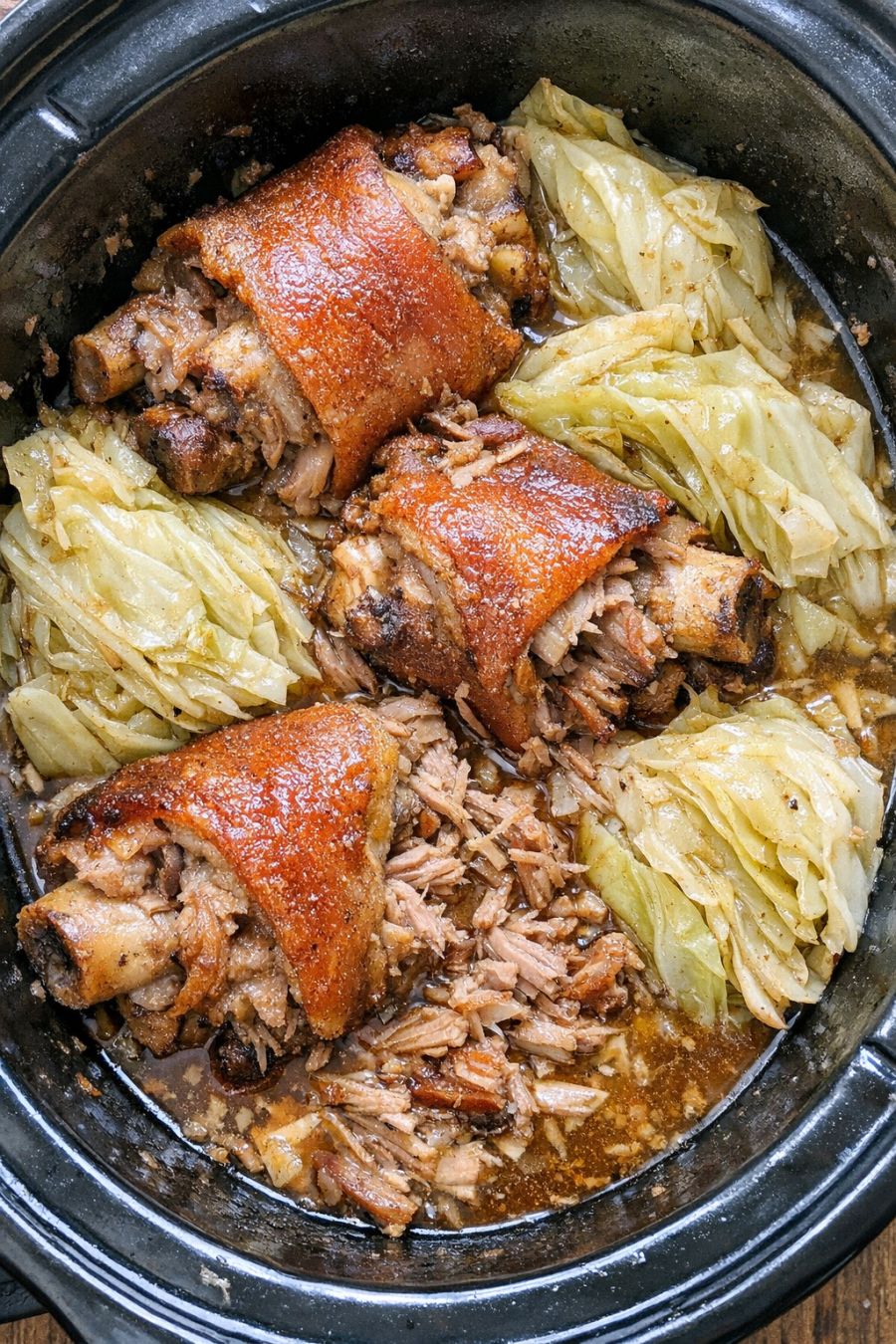
This slow cooker 4-ingredient depression era pork hocks and cabbage is the kind of meal my great aunt swore by every spring when money was tight and everyone was tired of winter food. It’s truly a one-pot, feed-the-whole-family-for-just-a-few-dollars situation: cheap, meaty pork hocks, a big head of cabbage, a simple onion, and a little salt. Long, slow cooking turns those humble ingredients into tender, fall-apart pork with crispy-edged skin, silky cabbage wedges soaked in smoky drippings, and a rich amber broth. It’s practical, comforting, and perfect for busy days when you want dinner to basically make itself while you’re at work.
Serve big spoonfuls of pork, cabbage, and broth in shallow bowls with crusty bread or cornbread to soak up the juices. Boiled or mashed potatoes stretch the meal even further and make it extra hearty. If you like a bit of brightness, add a splash of apple cider vinegar or a spoonful of mustard at the table. Leftovers reheat well for lunches and can be tucked into rolls or served over rice or egg noodles for a different feel the next day.
Slow Cooker Depression Era Pork Hocks and Cabbage
Servings: 4–6
Ingredients
2–3 lbs fresh pork hocks (about 3–4 medium hocks)
1 medium green cabbage (about 2–3 lbs), cored and cut into 6–8 wedges
1 large yellow onion, peeled and thickly sliced
2–3 teaspoons kosher salt (or to taste)
Directions
Pat the pork hocks dry with paper towels and sprinkle all over with about 1 teaspoon of the salt. This helps the skin crisp and seasons the meat early.
Heat a large skillet over medium-high heat on the stove. Add the pork hocks (no oil needed; the fat will render) and sear on all sides until the skin is deeply golden and starting to crisp, 8–12 minutes total. Work in batches if needed so they brown instead of steam. This step builds flavor and gives that crispy golden skin you want in the finished dish.
While the hocks are browning, layer the sliced onion in the bottom of a large slow cooker (5–7 quarts). This keeps the meat from sticking and adds sweetness to the broth.
Cut the cabbage into 6–8 thick wedges, keeping the core attached so the wedges hold together. Arrange the wedges snugly on top of the onion in the slow cooker, cut sides facing up if possible.
Sprinkle the remaining salt evenly over the cabbage and onion. Remember the pork and rendered fat will add more flavor, so you can start on the lighter side and adjust at the end.
Place the browned pork hocks on top of the cabbage wedges, pouring any browned bits and rendered fat from the skillet over everything. The fat will help the cabbage wilt and baste the meat as it cooks.
Cover the slow cooker with the lid and cook on LOW for 8–10 hours, or on HIGH for 4–5 hours, until the pork is very tender and the meat is starting to fall off the bone, the skin is soft with some golden edges, and the cabbage is pale green and silky, fully soaked in the pork drippings. The onions will melt into the rich amber cooking liquid.
Once cooked, taste the broth and cabbage and add a pinch more salt if needed. Carefully lift out the pork hocks and pull the meat from the bones, discarding excess fat and any tough skin if you prefer. Shred the meat into large chunks and return it to the slow cooker, nestling it back into the cabbage and broth.
Gently stir just enough to mix some of the shredded pork with the cabbage while still leaving a few intact wedges. Serve hot straight from the slow cooker, making sure each bowl gets some meat, cabbage, and plenty of the rich cooking liquid.
Variations & Tips
To keep this close to its depression era roots, the recipe uses only four basic ingredients, but you can still tweak it a bit. For extra smokiness, brown the hocks until very deep golden, or use smoked pork hocks if you can find them (skip or reduce added salt, since smoked hocks can be quite salty). If you want a little tang, splash in a tablespoon or two of apple cider vinegar at the end of cooking. To stretch the meal, add peeled potato chunks or carrot pieces around the cabbage before cooking; just know that this technically adds more ingredients beyond the core four. For a leaner dish, chill the cooked pot in the fridge, then skim the hardened fat from the top before reheating and serving. Food safety tips: Use fresh, cold pork hocks and keep them refrigerated until you’re ready to cook. Always wash your hands, cutting boards, and knives thoroughly after handling raw pork. When using a slow cooker, avoid starting from frozen; thaw pork hocks completely in the refrigerator first so they move quickly through the temperature “danger zone.” Cook on LOW or HIGH as directed until the pork is very tender and the internal temperature reaches at least 145°F, though this recipe takes it well beyond that for fall-apart texture. Refrigerate leftovers within 2 hours of cooking and use within 3–4 days, or freeze for longer storage.
