
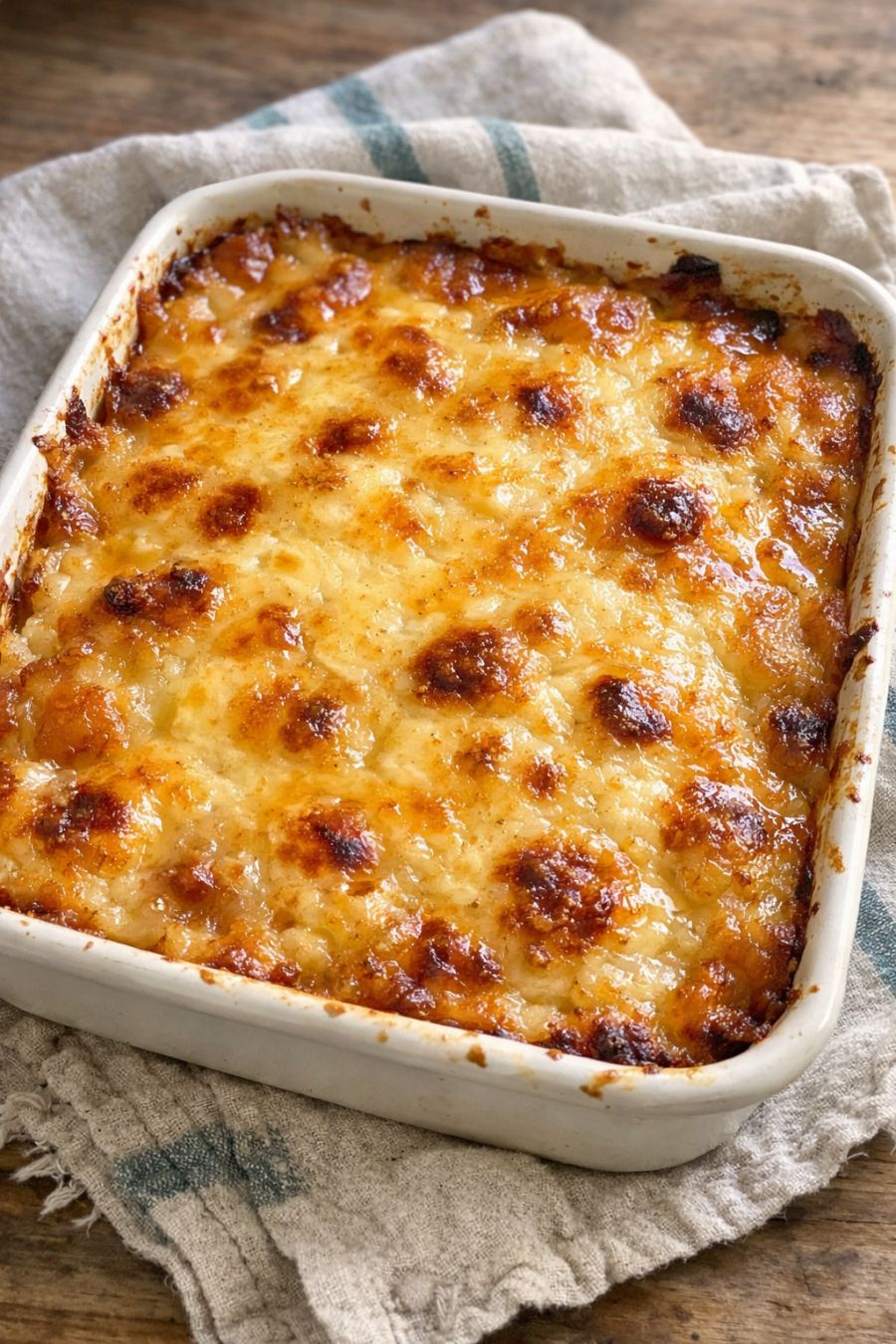
This 4-ingredient poor man’s smashed potato casserole is exactly what I lean on when the grocery budget is tight but I still want something cozy and satisfying. It’s built on humble Yukon Gold potatoes, smashed right in the baking dish, then enriched and topped so they bake into a golden, bubbling pan with caramelized edges and a glossy, cheesy lid. Think of it as a stripped-down Midwestern potato bake—no fancy ingredients, no fussy steps—just pantry basics doing the heavy lifting. It’s perfect for weeknights, potlucks, or any time you need a big-flavor side (or even a main) out of very little.
Serve this casserole hot, straight from the oven, with something simple and protein-rich alongside—roast chicken thighs, pan-seared sausages, or even a couple of fried eggs on top turn it into a full meal. A crisp green salad with a sharp vinaigrette or some steamed frozen vegetables tossed in butter help balance the richness. If you’re stretching the budget further, a can of green beans or peas on the side and some sliced bread to swipe through the cheesy, creamy potatoes make this feel like a complete, comforting dinner.
4-Ingredient Poor Man’s Smashed Potato Casserole
Servings: 4-6
Ingredients
2 pounds Yukon Gold potatoes, scrubbed well and cut into 1 1/2-inch chunks
1 1/2 cups whole milk (or 2% milk), plus a splash more if needed
4 tablespoons salted butter, cut into small pieces
2 cups shredded cheese (such as mild or sharp cheddar, or any melting cheese you have)
Directions
Preheat your oven to 400°F (200°C). Lightly grease a shallow baking dish (about 2-quart size) with a bit of butter or neutral oil if you have it; if not, the butter in the recipe will still keep things from sticking too much.
Place the Yukon Gold potato chunks in a large pot and cover them with cold water by about 1 inch. Add a pinch of salt if you have it (optional but helpful for flavor). Bring to a boil over medium-high heat, then reduce to a gentle boil and cook until the potatoes are very tender when pierced with a fork, 12–15 minutes depending on the size of the pieces.
Drain the potatoes well in a colander, shaking off excess water. Immediately transfer the hot potatoes into the prepared baking dish, spreading them out in an even layer.
Add the butter pieces evenly over the hot potatoes. Pour 1 1/2 cups of milk over the potatoes and butter. Using a sturdy fork or a potato masher, smash the potatoes right in the baking dish. You’re aiming for something rustic: mostly mashed but with some chunks left for texture. If the mixture looks very dry or stiff, add a splash more milk and mash again until it’s creamy but still thick enough to hold some peaks.
Taste a small bit if you like and, if you have salt and pepper on hand, season lightly. This isn’t counted among the four core ingredients, so consider it optional; the butter and cheese will already bring richness and some saltiness.
Smooth the top of the smashed potatoes with the back of a spoon, then sprinkle the shredded cheese evenly over the surface, making sure to reach the edges so they can caramelize and crisp as it bakes.
Place the baking dish on a worn kitchen towel–lined sheet pan if you’re worried about bubbling over, then transfer to the preheated oven. Bake for 20–25 minutes, until the casserole is bubbling around the edges, the cheese is fully melted, and the surface is a glossy amber-gold with some darker brown, crispy spots.
For extra caramelized edges and crispier brown spots, switch the oven to broil for 2–3 minutes at the end of baking, watching closely so the top doesn’t burn. The cheese should blister in places and deepen in color.
Remove the casserole from the oven and let it rest for about 5–10 minutes. This brief rest helps the potatoes set up slightly so they’re easier to scoop while still staying creamy underneath the glossy, melted top. Serve warm, scooping down through the cheesy layer to reveal the smashed Yukon Golds beneath.
Variations & Tips
This recipe is intentionally bare-bones to keep the ingredient list short and budget-friendly, but there’s plenty of room to adapt it to what you have. If you’d like more flavor and have pantry extras, stir in a teaspoon or two of garlic powder or onion powder when you smash the potatoes. A spoonful of sour cream or plain yogurt in place of some of the milk will give you a tangier, richer casserole. You can also swap part of the milk for canned evaporated milk, which was a classic Midwestern trick for creaminess when fresh dairy was scarce. Any good melting cheese works: mozzarella will give you longer, stringy pulls; Monterey Jack or Colby will be mild and melty; a little Parmesan on top will boost browning and savoriness. If you want to turn this into a more complete meal without adding extra cost, fold in leftover cooked vegetables (like peas, corn, or chopped cooked broccoli) or bits of cooked meat (ham, chicken, or crumbled sausage) before adding the cheese topping. For a bit of crunch, scatter a handful of crushed crackers or stale bread crumbs over the cheese. Food safety tips: Always cook the potatoes until they’re fully tender; undercooked potatoes can be unpleasant and harder to digest. Handle the hot pot and baking dish with dry oven mitts to avoid steam burns. If you add leftover meats or vegetables, make sure they were cooled and stored properly (refrigerated within 2 hours of cooking and used within 3–4 days). Reheat leftover casserole to at least 165°F (74°C) before eating, and refrigerate any leftovers within 2 hours of baking. Discard leftovers if they’ve been left at room temperature too long or show any off odors.
