
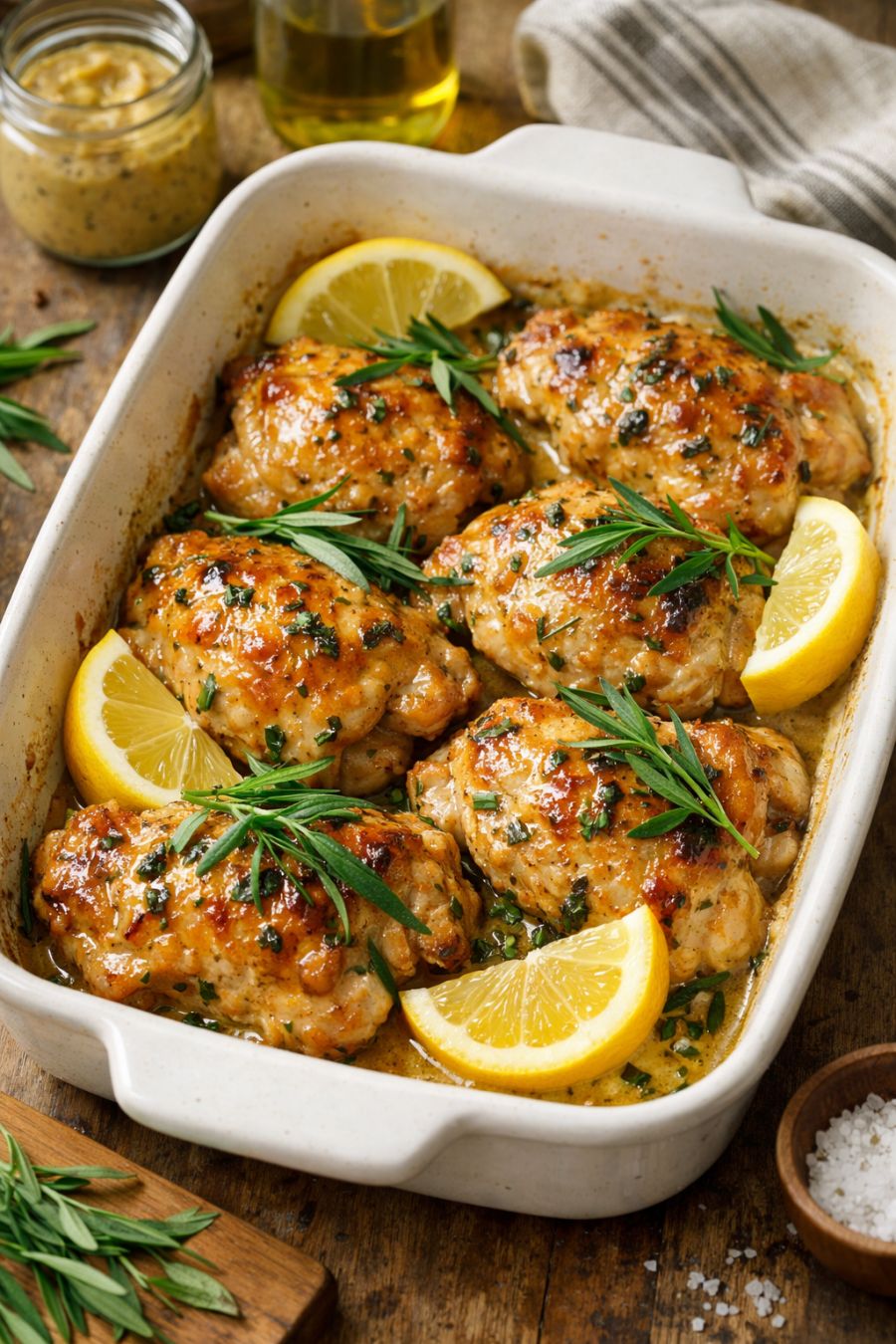
This little oven-baked Dijon tarragon chicken is the kind of dish I lean on when the house is full and I don’t want to fuss. It comes straight out of the kind of cooking I grew up with in the rural Midwest: a sturdy ceramic roasting pan, a few honest ingredients, and the faith that the oven will do the rest. You simply smear good Dijon mustard over bone-in chicken breasts, tuck in two simple pantry items, and slide the whole thing into the oven. The mustard turns silky and tangy, the tarragon perfumes the meat, and before you know it, the platter is empty and everyone is asking if there’s more.
I like to serve this Dijon tarragon chicken with buttered egg noodles or fluffy mashed potatoes to catch the pan juices, plus a simple green vegetable like steamed green beans or roasted asparagus. A crisp green salad with a light vinaigrette balances the richness nicely. If you enjoy bread on the table, a warm loaf of crusty bread or soft dinner rolls will help mop up every last bit of the mustardy juices. For a homier touch, a side of glazed carrots or a pan of roasted potatoes feels right at home with this farmhouse-style roast.
Oven-Baked 4-Ingredient Dijon Tarragon Chicken
Servings: 4
Ingredients
4 bone-in, skin-on chicken breasts (about 2 1/2 to 3 pounds total)
1/2 cup Dijon mustard
2 tablespoons dried tarragon (or 1/4 cup chopped fresh tarragon)
2 tablespoons olive oil
1 teaspoon kosher salt, or to taste
1/2 teaspoon black pepper, or to taste
2 tablespoons water or chicken broth (for the bottom of the pan, optional)
Directions
Preheat your oven to 375°F (190°C). Set out a medium to large ceramic roasting pan so the chicken breasts can sit in a single layer without crowding.
Pat the bone-in chicken breasts dry with paper towels. This helps the mustard cling to the skin and encourages browning. Arrange the chicken in the ceramic roasting pan, skin side up.
Sprinkle the chicken evenly with the kosher salt and black pepper. Drizzle the olive oil over the top of each piece, letting a little run around the chicken into the bottom of the pan.
Spoon the Dijon mustard directly onto the top of each chicken breast. Using clean hands, smear the mustard over the skin and down the sides, coating each piece generously. It doesn’t have to be perfect—just make sure every breast has a good layer of mustard.
Sprinkle the dried tarragon (or chopped fresh tarragon) evenly over the mustard-smeared chicken, pressing it lightly so it adheres. If using, pour the water or chicken broth into the bottom of the pan around the chicken to create a bit of steam and extra pan juices.
Place the ceramic roasting pan on the middle rack of the preheated oven. Bake for 40 to 50 minutes, or until the chicken is cooked through and the skin is lightly browned. The internal temperature should reach 165°F (74°C) in the thickest part of the meat, not touching bone.
If you’d like deeper color on the top, you can turn the oven to broil for the last 2 to 3 minutes, watching closely so the mustard and herbs don’t burn.
Remove the pan from the oven and let the chicken rest for 5 to 10 minutes so the juices settle. Spoon some of the mustard-tarragon pan juices over each piece as you serve. Transfer to a warm platter and bring it straight to the table—this is one of those simple, elegant roasts that always seems to disappear first.
Variations & Tips
You can easily adapt this simple, farmhouse-style chicken to what you have on hand. For a slightly creamier finish, whisk 1 to 2 tablespoons of heavy cream or sour cream into the hot pan juices after the chicken comes out of the oven, then spoon that over the meat. If you don’t have tarragon, try dried thyme or a mix of thyme and parsley for a more traditional Midwestern herb flavor. For a touch of sweetness, drizzle a teaspoon or two of honey over the mustard before baking. If your family prefers dark meat, this same method works beautifully with bone-in chicken thighs or drumsticks; just adjust the baking time as needed and still aim for an internal temperature of 165°F (74°C). To make cleanup easier, you can lightly oil the ceramic pan before adding the chicken, though the olive oil in the recipe usually does the trick. For food safety, always wash your hands thoroughly after handling raw chicken and after smearing on the mustard, and sanitize any surfaces or utensils that touched the raw meat. Use a meat thermometer to ensure the chicken reaches a safe internal temperature, and refrigerate leftovers within 2 hours. Leftover chicken can be sliced cold and served over salad or tucked into sandwiches with a little extra mustard for another simple meal.
