
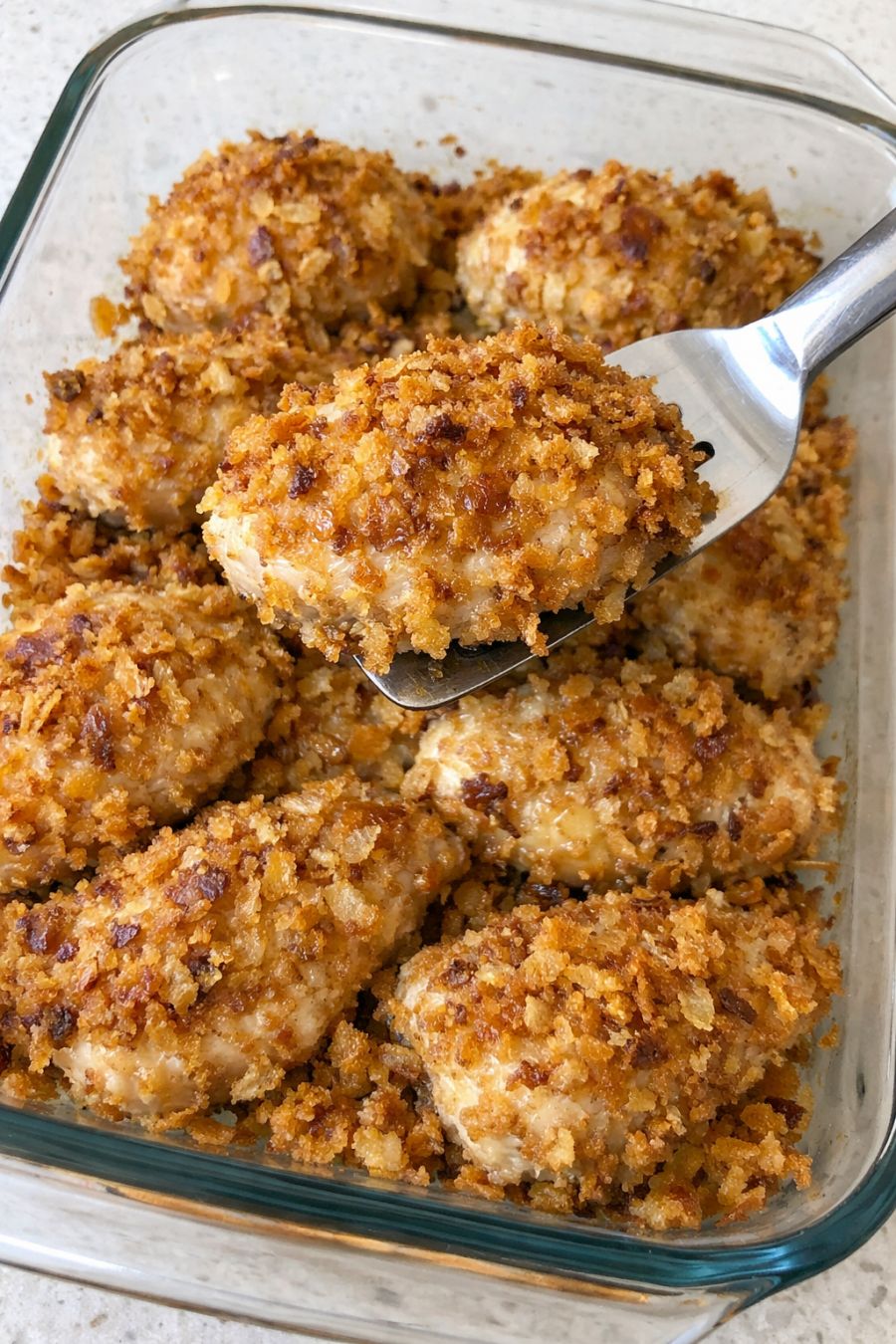
This oven baked 3-ingredient bridge club chicken is the kind of recipe you’d find on a yellowed index card in a metal box next to the rotary phone. My aunt kept this one tucked under a magnet on the fridge because it never failed her on card night. With just chicken, sour cream, and crushed canned crispy fried onions, she could have a pan of golden, crunchy chicken in the oven before the ladies even shuffled the deck. It’s simple, comforting Midwestern cooking at its best—no fuss, pantry-friendly, and impressive enough that you’ll suddenly understand how a weekly bridge game turned into a decades-long tradition.
Serve this chicken hot right from the glass baking dish with a big spoonful of buttery mashed potatoes or scalloped potatoes to catch the drippings. A simple side of green beans, peas, or a tossed salad balances the richness nicely. At my aunt’s table, there was always a plate of soft dinner rolls or white bread to mop up the creamy bits left in the pan, and a jar of dill pickles or bread-and-butter pickles on the side. For card night or any casual supper, set the dish in the center of the table and let everyone help themselves between hands.
Oven Baked 3-Ingredient Bridge Club Chicken
Servings: 4
Ingredients
2 pounds bone-in chicken pieces (drumsticks and thighs, skin-on preferred)
1 cup full-fat sour cream
2 cups canned crispy fried onions, crushed into coarse crumbs
Directions
Preheat your oven to 375°F (190°C). Set out a 9x13-inch glass baking dish so it’s ready for the chicken.
Pat the chicken pieces dry with paper towels. This helps the sour cream cling and keeps the coating crisp as it bakes.
Spoon the sour cream into a shallow bowl. In a separate shallow dish, lightly crush the crispy fried onions with your hands or the bottom of a glass until they’re in coarse crumbs, leaving some small chunks for extra crunch.
Working with one piece of chicken at a time, coat it generously in sour cream, using a spoon or your fingers to cover all sides. Let any thick clumps stay on the chicken; they help hold the onion crumbs.
Roll each sour cream-coated piece in the crushed crispy onions, pressing gently so the crumbs adhere and form a good crust. Place the coated chicken pieces in a single layer in the glass baking dish, skin side up if using skin-on pieces.
Once all the chicken is arranged in the dish, sprinkle any remaining onion crumbs over the top, pressing them lightly onto bare spots.
Bake uncovered for 45–55 minutes, or until the chicken is cooked through, the coating is deep golden brown, and the internal temperature reaches 165°F (74°C) in the thickest part of the meat without touching the bone.
If the topping isn’t as browned as you’d like near the end of baking, move the dish to the upper third of the oven for the last 5–10 minutes, watching closely so the onions don’t burn.
Remove the dish from the oven and let the chicken rest for about 5 minutes. The coating will crisp up a bit more as it sits. Serve straight from the glass dish, using a serving fork or spatula to lift each crunchy piece.
Variations & Tips
If you prefer boneless meat, you can use boneless, skinless chicken thighs; start checking for doneness around 30–35 minutes, as they cook faster and can dry out if overbaked. For a lighter version, use reduced-fat sour cream, though the coating may not be quite as rich. You can also mix a teaspoon or two of dry ranch dressing mix or onion soup mix into the sour cream for a more pronounced flavor, keeping in mind this will increase the saltiness. If you like a touch of color, sprinkle a little paprika over the top before baking. For smaller gatherings, halve the recipe and use an 8x8-inch glass dish. Food safety tips: Always start with fully thawed chicken; baking from frozen can cause uneven cooking. Keep raw chicken and its juices away from other ingredients, and wash your hands, utensils, and cutting boards thoroughly after handling. Use a food thermometer to make sure the thickest part of each piece reaches 165°F (74°C). Do not leave the baked chicken at room temperature for more than 2 hours; refrigerate leftovers promptly in a covered container and eat within 3–4 days, reheating until hot all the way through.
