
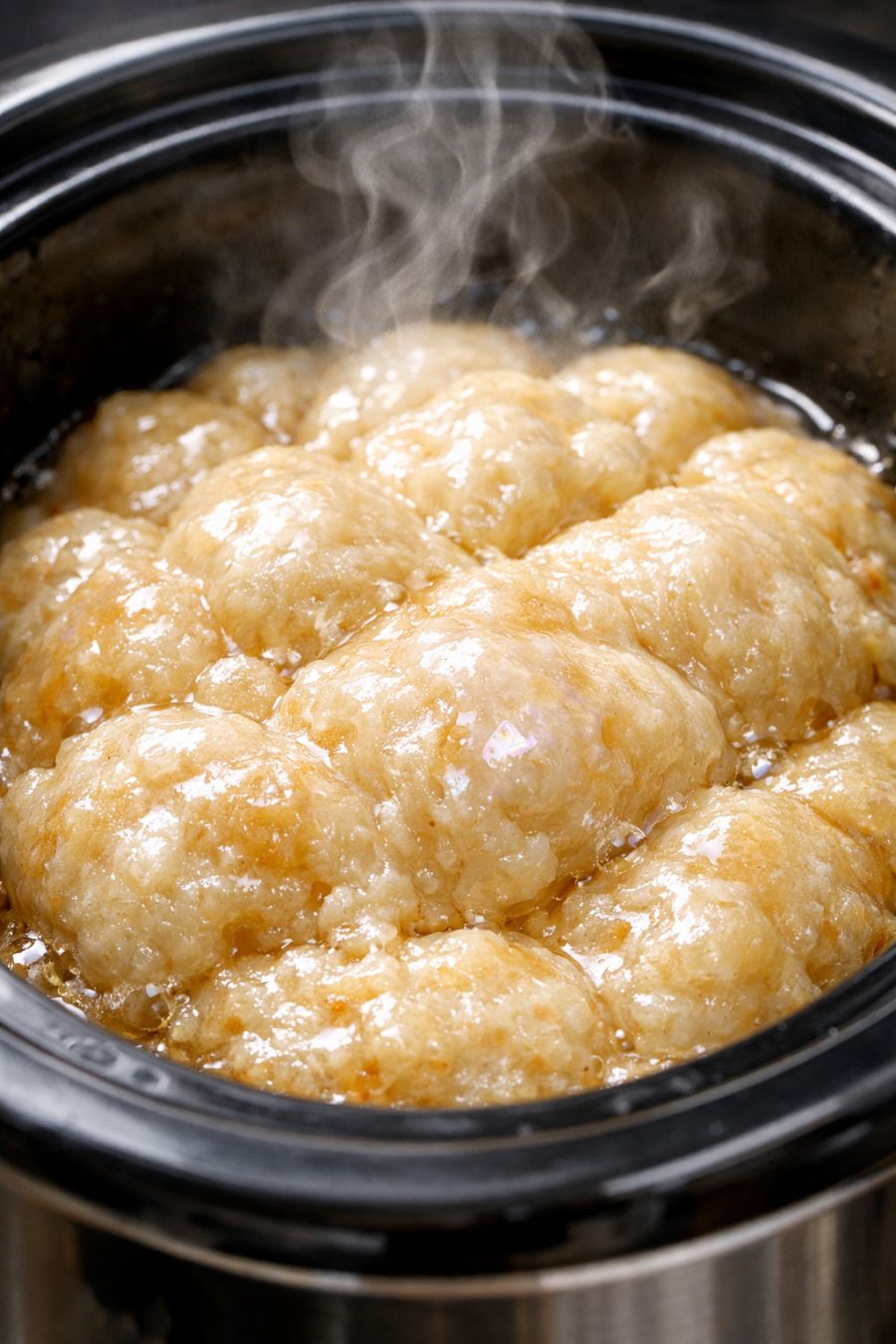
This 4-ingredient slow cooker pearlescent sponge is my answer to those nights when I want a spectacular dessert completely handled hours ahead. It’s essentially a custard-meets-sponge pudding that bakes low and slow in a crockpot, then gets finished with a simple pearlescent glaze that catches the light and looks far fussier than it is. The method borrows from classic steamed puddings and hot-milk sponge cakes, but the slow cooker does all the work, keeping the texture pillowy and moist while you go about your day.
Serve this warm, straight from the slow cooker, with the pearlescent glaze still glistening and a little steam rising off the surface. It’s lovely on its own, but a small scoop of vanilla ice cream or a spoonful of lightly sweetened whipped cream plays up the custardy sponge. For contrast, pair it with something tart: a few fresh berries, a spoonful of lemon curd, or a drizzle of unsweetened raspberry puree. Coffee, black tea, or a dessert wine with good acidity (like a Moscato d’Asti) makes a nice finish alongside the gentle sweetness of the sponge.
4-Ingredient Slow Cooker Pearlescent Sponge
Servings: 6
Ingredients
4 large eggs, at room temperature
1 cup granulated sugar, divided (3/4 cup for sponge, 1/4 cup for glaze)
1 cup all-purpose flour, spooned and leveled
1 cup full-fat canned coconut milk, well shaken and divided (3/4 cup for sponge, 1/4 cup for glaze)
Directions
Prepare the slow cooker: Lightly grease the inside of a 4- to 6-quart slow cooker crock with a thin film of neutral oil or softened butter to help release the sponge later and prevent sticking. If your slow cooker tends to run hot, place a folded kitchen towel under the lid during cooking to catch condensation and keep the top of the sponge from becoming soggy.
Mix the egg and sugar base: In a medium mixing bowl, whisk the 4 large eggs and 3/4 cup of the granulated sugar together vigorously for 2 to 3 minutes, until the mixture looks pale, slightly thickened, and falls back in a ribbon from the whisk. This step helps build lightness into the sponge without needing extra ingredients.
Add coconut milk to form the custard-like batter: Slowly whisk 3/4 cup of the coconut milk into the egg-sugar mixture until completely smooth. Make sure the coconut milk is well shaken so the fat is evenly distributed; this is what will give the sponge its rich, tender, almost custardy crumb.
Incorporate the flour gently: Sprinkle the 1 cup all-purpose flour over the wet mixture in two additions, whisking or folding gently after each addition just until no dry flour remains. Avoid overmixing; a few tiny lumps are fine. The batter will be pourable but slightly thick, similar to a loose cake batter.
Set up the slow cooker water bath (for even, gentle cooking): Pour about 1 inch of hot tap water into the bottom of the greased slow cooker crock. The water will surround the batter bowl, creating a gentle, steamy environment like a traditional steamed pudding. Place a small heatproof rack, canning ring, or folded kitchen towel in the bottom of the crock to lift the batter container slightly above the direct heat.
Transfer batter to a heatproof container: Pour the batter into a greased, heatproof bowl or loaf pan that fits comfortably inside your slow cooker with some space around it for the steam to circulate. Cover the bowl tightly with foil to minimize condensation dripping directly onto the sponge.
Slow cook the sponge: Carefully lower the filled, covered bowl into the prepared slow cooker, setting it on the rack or towel. Cover the slow cooker with its lid. Cook on LOW for 3 to 3 1/2 hours, or until the sponge is puffed, the edges look set, and a thin knife or skewer inserted in the center comes out mostly clean with just a few moist crumbs. Avoid lifting the lid in the first 2 hours, as heat loss can cause the sponge to collapse.
Make the pearlescent glaze base: About 10 minutes before the sponge is done, combine the remaining 1/4 cup granulated sugar and remaining 1/4 cup coconut milk in a very small saucepan or heatproof measuring cup. Warm over low heat (or in short bursts in the microwave), stirring until the sugar is completely dissolved and the mixture looks glossy and slightly thickened. Do not boil; gentle heat keeps the glaze clear and helps it take on a subtle pearlescent sheen.
Finish the glaze to a pearlescent shine: Once the sugar is dissolved, continue warming the glaze over very low heat, stirring occasionally, for another 3 to 5 minutes. As it concentrates slightly, it will become more viscous and glossy. If you tilt the pan, you should see soft, shimmery reflections on the surface. Keep the glaze warm off the heat so it stays fluid and glassy while you unmold the sponge.
Unmold the sponge while hot: When the sponge is fully cooked, turn off the slow cooker and carefully lift out the bowl using oven mitts. Remove the foil. Run a thin knife around the edge of the sponge to loosen it. Invert a warm serving plate over the bowl, then quickly and confidently flip both together to release the sponge onto the plate. If a little moisture has collected on top, gently blot with a paper towel.
Glaze the hot sponge: While the sponge is still hot and steaming, slowly spoon or pour the warm pearlescent coconut glaze over the top, letting it cascade down the sides and pool slightly around the base. The heat of the sponge will keep the glaze fluid for a minute or two, then it will set into a soft, glistening coat that catches the light in a pearly sheen.
Serve and hold: Serve the pearlescent sponge warm, scooping portions with a large spoon so you capture both the tender interior and the glossy glaze. If you need to hold it, you can return the glazed sponge (on a heat-safe plate) to the warm, turned-off slow cooker for up to 30 minutes, tented loosely with foil to keep in the steam without dulling the glaze too much. Refrigerate any leftovers within 2 hours and reheat gently, covered, in the slow cooker or microwave before serving.
Variations & Tips
For a citrus note, rub the finely grated zest of 1 lemon or orange into the 3/4 cup sugar used for the sponge before whisking it with the eggs; this perfumes the whole dessert without adding extra ingredients. To lean into vanilla, scrape the seeds from half a vanilla bean into the coconut milk before shaking and dividing it, or add 1 teaspoon vanilla extract to the batter (this technically makes it a fifth ingredient, but many home cooks treat vanilla as a pantry staple). For a slightly denser, bread-pudding-like texture, reduce the coconut milk in the batter to 1/2 cup and add 2 extra tablespoons of flour. If your slow cooker runs hot and the edges of the sponge cook too quickly, add an extra 1/2 inch of water to the crock and check for doneness 15 minutes earlier next time. For a more dramatic glaze, warm the coconut milk-sugar mixture just a bit longer, stirring constantly, until it lightly coats the back of a spoon; as it cools on the sponge, it will form a thicker, more pronounced pearlescent layer.
Food safety tips: Always use pasteurized eggs and keep them refrigerated until you are ready to cook. Do not hold the finished sponge at room temperature for more than 2 hours; beyond that, transfer leftovers to an airtight container and refrigerate. Reheat leftovers to steaming-hot before serving, and use within 3 days. When cooking in a slow cooker, make sure the insert is at least half full (with water and the dessert vessel combined) to maintain safe, even heating, and avoid leaving the appliance on WARM for more than 2 hours once cooking is complete.
