
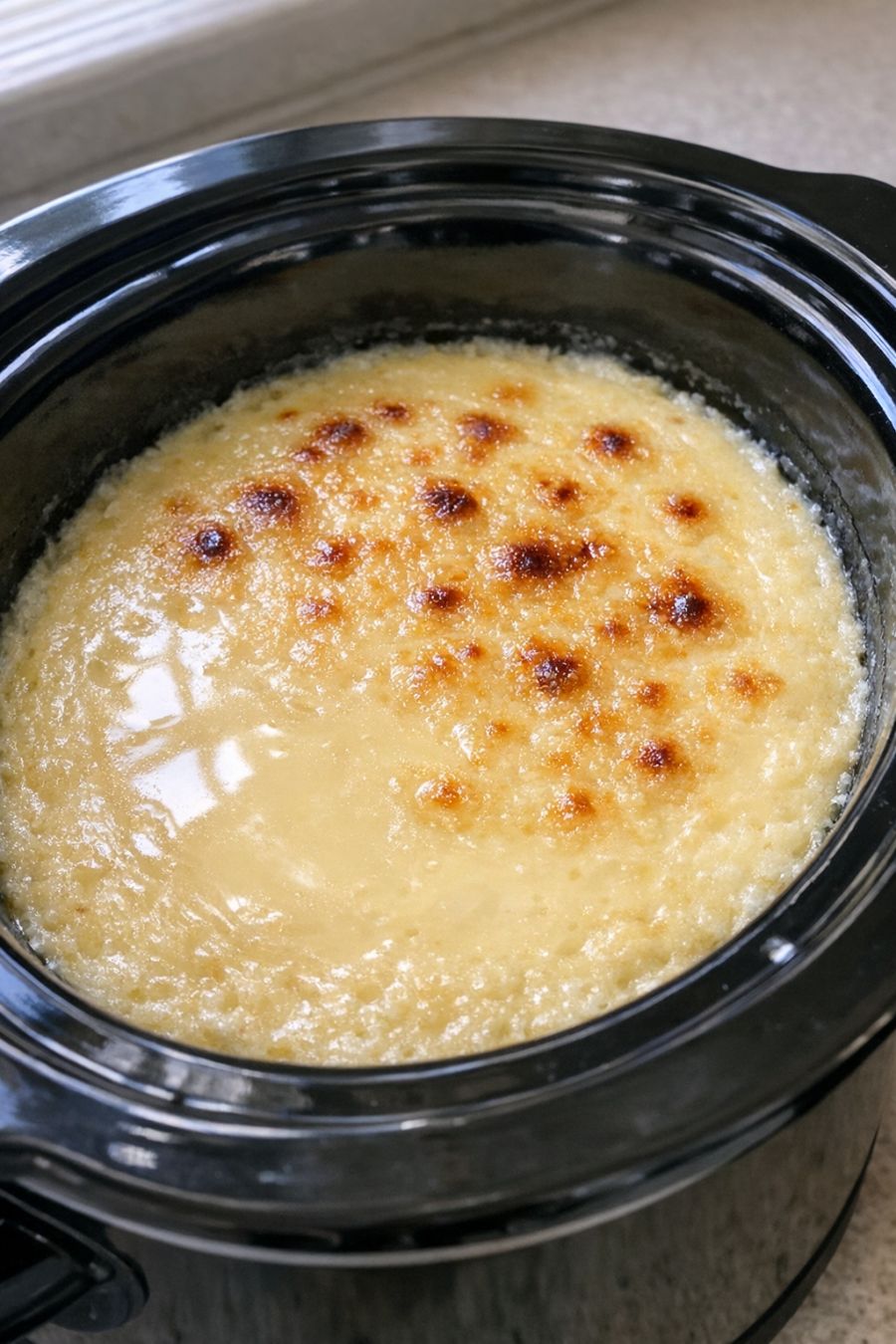
This 5-ingredient slow cooker butterscotch cream pudding is my shortcut version of the vintage baked custards many of our moms and grandmothers used to make. Instead of fussing with a water bath in the oven, everything bakes gently in the slow cooker, giving you that silky, spoonable, pale yellow pudding with those nostalgic golden brown spots on top. Using butterscotch instant pudding mix as the flavor base means you can throw this together in minutes, let it quietly do its thing, and still end up with a dessert that tastes like you hovered over the stove all morning—perfect for a cozy Mom’s Day treat.
Serve this warm or at room temperature in small ramekins or scooped straight from the slow cooker into pretty bowls. A small dollop of softly whipped cream or a splash of cold heavy cream over the top plays nicely with the warm, custardy texture. I like to add a light sprinkle of flaky salt or crushed butter cookies for contrast. Pair it with coffee or black tea after brunch, or offer it as a gentle, not-too-sweet finish to a roast chicken or pot roast dinner—very much in the spirit of classic Midwestern comfort food.
Slow Cooker Butterscotch Cream Pudding
Servings: 6
Ingredients
1 (3.4-ounce) box instant butterscotch pudding mix
2 cups whole milk, cold
1 cup heavy cream, cold
3 large eggs, at room temperature
1 teaspoon pure vanilla extract
Directions
Lightly grease the inside of a 4- to 6-quart slow cooker crock with butter or nonstick spray. This helps the custard release easily and encourages those delicate golden brown spots on top.
In a large mixing bowl, whisk the eggs until well blended and no streaks of yolk remain. This step helps the custard set evenly.
Add the instant butterscotch pudding mix to the eggs and whisk until the mixture is smooth and thickened, with no visible dry powder.
Gradually whisk in the cold whole milk and heavy cream, a little at a time, until the mixture is completely smooth and well combined. Whisk in the vanilla extract.
Pour the custard mixture into the prepared slow cooker, smoothing the surface gently with a spatula so it cooks evenly and develops a uniform, silky top.
Cover the slow cooker with its lid. For the most even, gentle heat (which mimics a traditional water bath), place a clean kitchen towel under the lid, stretching it flat so it doesn’t touch the custard; this catches condensation and prevents water from dripping onto the surface.
Cook on LOW for 2 1/2 to 3 1/2 hours, or until the edges are set, the center has a slight wobble when you jiggle the crock, and a thin knife inserted near the edge comes out mostly clean. Avoid lifting the lid during the first 2 hours to maintain steady heat.
Once cooked, turn off the slow cooker and remove the lid and towel. Let the pudding stand in the warm crock for 20 to 30 minutes; it will continue to set and the top may develop soft golden brown spots from the gentle heat.
Serve warm by spooning into bowls directly from the slow cooker, or carefully transfer to a shallow dish to cool. For a more sliceable texture, cool to room temperature and then refrigerate for at least 2 hours before serving.
Refrigerate any leftovers promptly in a covered container and enjoy within 3 days.
Variations & Tips
For a slightly richer, more old-fashioned custard, replace 1/2 cup of the whole milk with additional heavy cream. If you prefer a lighter version, use 2% milk in place of whole milk, keeping the heavy cream as written to maintain a creamy texture. A pinch of fine sea salt whisked into the custard base will deepen the butterscotch flavor and give it a more grown-up profile. For a subtle spice note that feels very vintage, add 1/4 teaspoon ground nutmeg or 1/2 teaspoon ground cinnamon to the mixture before cooking. You can also stir in 1/4 cup finely chopped toasted pecans or walnuts after cooking for a bit of texture, though the classic version is perfectly smooth. If you’d like individual servings, set small heat-safe ramekins in the slow cooker, pour in the custard, and pour hot tap water into the crock around the ramekins to halfway up their sides; cook on LOW and begin checking at about 2 hours. Food safety tips: Always use pasteurized eggs and keep them refrigerated until you’re ready to mix. Make sure the custard reaches at least 160°F in the center for safety—use an instant-read thermometer if you’re unsure. Cool leftovers quickly and store them in the refrigerator within 2 hours of cooking. Do not leave the pudding sitting at room temperature for extended periods, especially on warm days or during buffet-style gatherings.
