
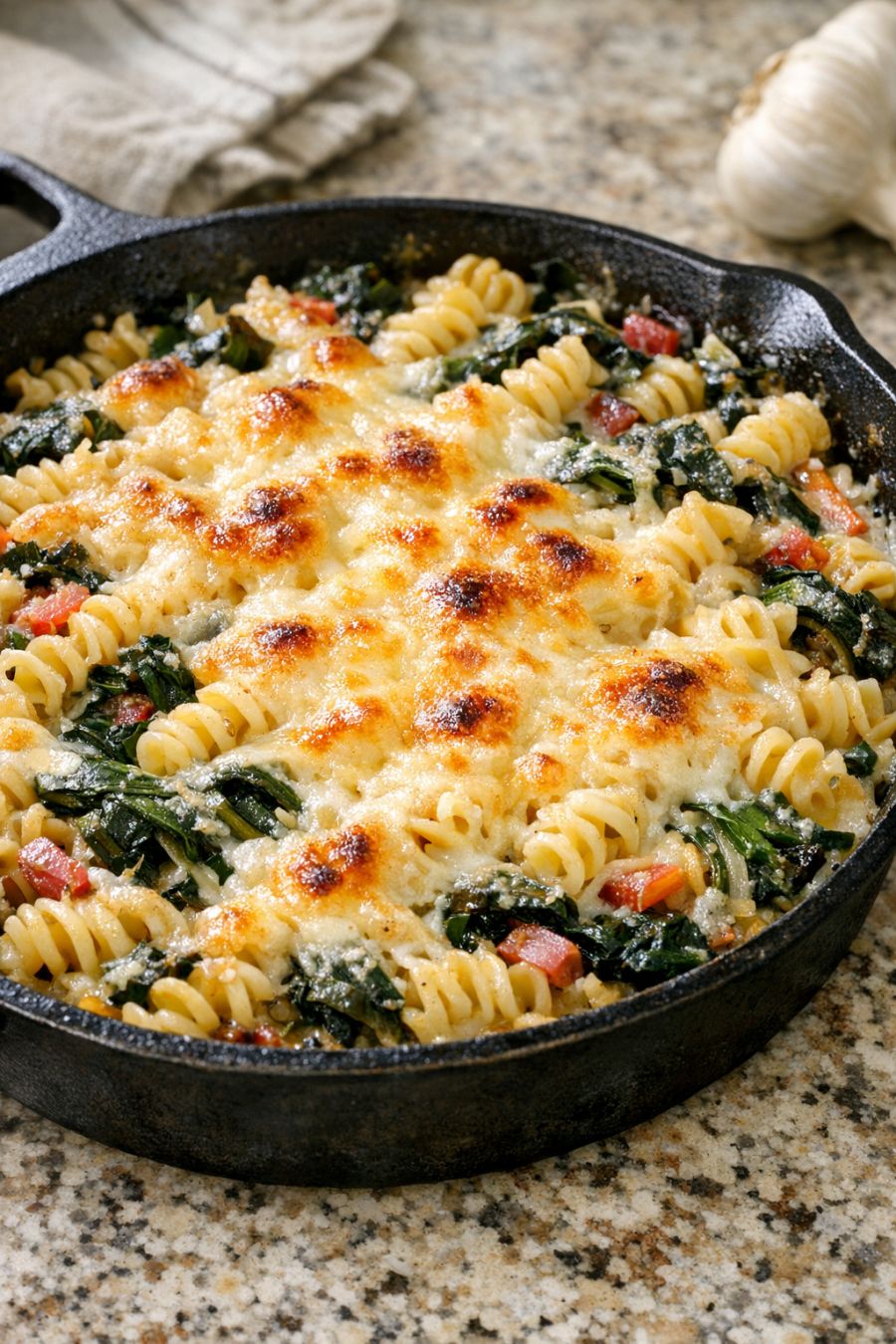
This is the kind of cozy, no-fuss supper I can throw together on a chilly evening without even thinking. It reminds me of the simple noodle bakes I grew up with in rural Amish country, where a cast iron pan and a handful of pantry staples could feed a whole table. Here, dry rotini and chopped raw Swiss chard go straight into the pan, then get soaked with a creamy, brothy mixture and topped with cheese. The oven does all the work, and what comes out is a comforting, old-fashioned casserole that tastes like it’s been in the family for years.
I like to serve this casserole with sliced fresh tomatoes or a simple cucumber salad in the summer, and with warm applesauce or roasted carrots in the colder months. A slice of crusty bread or a pan of cornbread is nice for soaking up the creamy sauce at the bottom of the skillet. If you enjoy a little extra richness, a small dish of cottage cheese on the side feels very Midwestern and homey. A glass of iced tea or a mug of hot herbal tea fits right in with this quiet, comforting meal.
Oven-Baked Amish Swiss Chard Noodle Casserole
Servings: 4
Ingredients
8 oz dry rotini pasta (about 2 1/2 cups)
4 packed cups chopped raw Swiss chard (stems and leaves, roughly chopped)
2 cups shredded Swiss cheese (about 8 oz)
3 cups whole milk
1 1/2 tsp kosher salt, plus more to taste
1/2 tsp black pepper
Butter or oil for greasing the cast iron pan (about 1 tsp, optional)
Directions
Preheat your oven to 375°F (190°C). Lightly grease a 10- to 12-inch cast iron skillet or similar baking pan with a little butter or oil so the noodles don’t stick.
Spread the dry rotini pasta evenly in the bottom of the cast iron pan. Shake the pan gently so the noodles settle into a fairly even layer.
Rinse the Swiss chard well under cool running water to remove any grit, then pat it dry or spin it dry. Trim off any very tough ends, then chop both stems and leaves into bite-size pieces. You should have about 4 packed cups.
Scatter the chopped raw Swiss chard evenly over the dry rotini pasta in the pan, tucking some of the pieces down between the noodles with your hands so it’s fairly well distributed. This is where it should look like that close-up process shot: hands placing chopped chard all over the dry pasta in the cast iron.
In a medium bowl or large measuring cup, whisk together the whole milk, kosher salt, and black pepper until the salt is mostly dissolved. This seasoned milk will cook the pasta and chard and turn into a simple creamy sauce.
Slowly pour the milk mixture over the pasta and Swiss chard in the cast iron pan, making sure to wet all the noodles. Gently press down with the back of a spoon or your hand so everything is mostly submerged. A few pieces of chard poking up are fine.
Sprinkle the shredded Swiss cheese evenly over the top. Some cheese will sink a bit into the milk, and some will stay on the surface to brown and bubble.
Cover the pan tightly with foil. Bake, covered, for 30 minutes, until the milk is hot and the pasta is starting to soften.
Carefully remove the foil, then return the pan to the oven. Bake uncovered for another 20–25 minutes, or until the pasta is tender when you poke it with a fork, most of the liquid is absorbed into a creamy sauce, and the cheese on top is golden and lightly browned around the edges.
Remove the casserole from the oven and let it rest for 10 minutes before serving. This short rest helps the sauce thicken and makes it easier to scoop neat portions. Taste and add a pinch more salt or pepper at the table if you like.
Variations & Tips
You can swap half of the milk for chicken broth if you like a slightly lighter, less creamy casserole, but keep the total liquid close to 3 cups so the dry rotini has enough moisture to cook. Any mild, good-melting cheese will work in place of Swiss: try Colby, Monterey Jack, or a young cheddar for a more traditional Midwestern flavor. If your Swiss chard is very tender and leafy, you can use heaping cups; if it’s thick and sturdy, chop the stems a little smaller so they soften nicely. For extra richness, dot the top with a tablespoon or two of butter before baking uncovered. To add a bit of protein without changing the 5-ingredient spirit too much, you can stir in 1–2 cups of cooked, shredded chicken or diced ham along with the chard, but be aware this will increase the saltiness, so reduce the added salt slightly. Food safety tips: Always wash Swiss chard thoroughly to remove dirt and any possible contaminants, especially in the creases of the leaves and along the stems. Keep milk refrigerated until you’re ready to mix the sauce, and don’t leave the mixed casserole sitting out for long before baking; get it into the oven promptly. Leftover casserole should be cooled, then refrigerated within 2 hours and eaten within 3–4 days. Reheat leftovers until they are steaming hot all the way through (165°F/74°C) before serving. If you notice an off smell, unusual texture, or mold on leftovers, discard them rather than tasting.
