
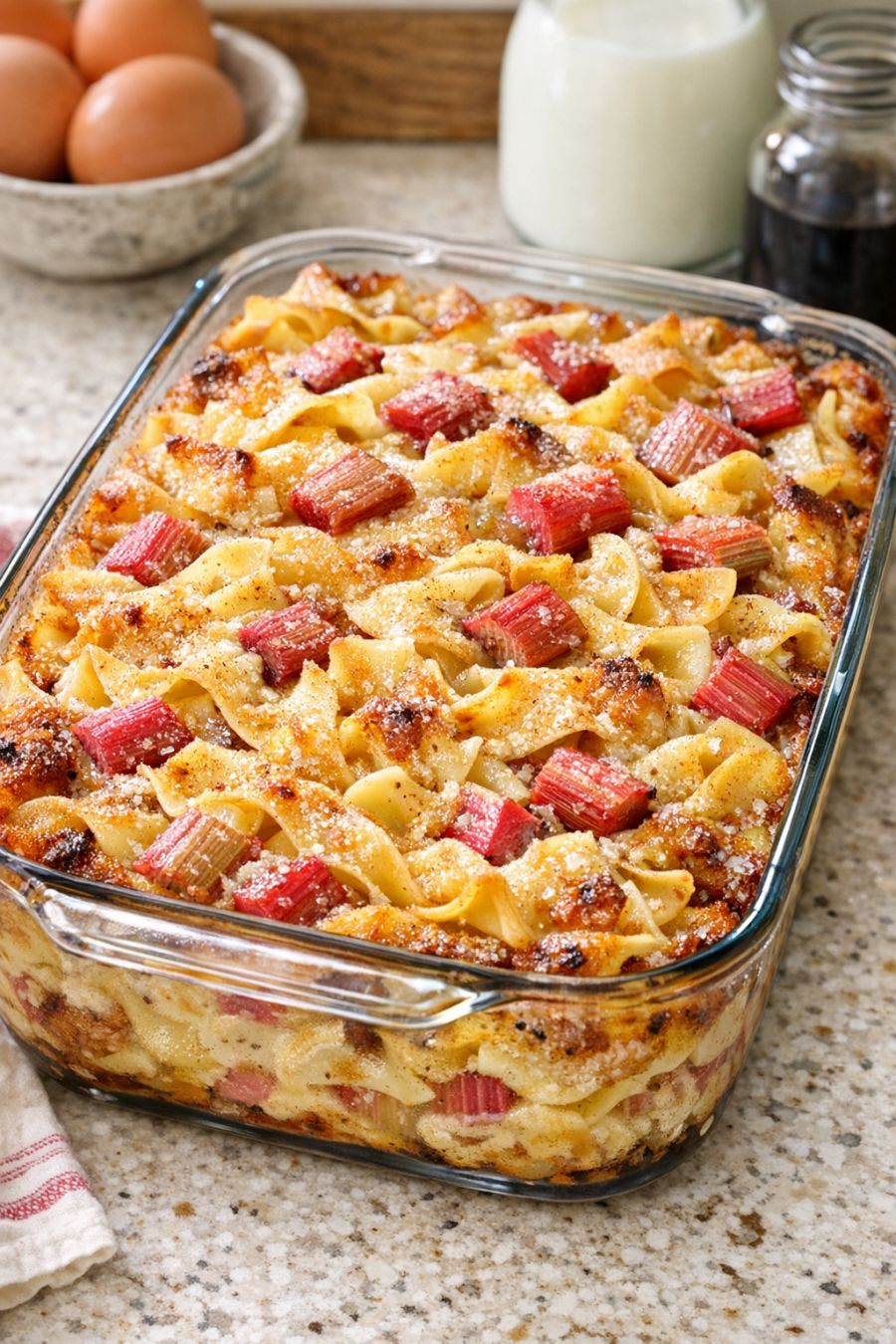
This cozy oven-baked Amish-style rhubarb noodle pudding is the definition of simple comfort food. It’s one of those old-fashioned, church-basement kind of desserts that leans on pantry staples and a handful of fresh rhubarb. On busy weeknights, I love that I can just scatter chopped raw rhubarb over dry wide egg noodles in a glass baking dish, pour a quick sweet custard over the top, and let the oven do the rest. With only five ingredients and almost no prep, it’s the first thing I suggest when friends come over and I need a nostalgic, Midwest-friendly dessert that feels special but doesn’t keep me in the kitchen all night.
Serve this rhubarb noodle pudding warm, scooped straight from the glass baking dish. I like it with a dollop of whipped cream or a small scoop of vanilla ice cream to play up the tangy-sweet rhubarb. Coffee or black tea is perfect on the side, especially if you’re serving this after a casual dinner like roast chicken or a big salad-and-bread night. Leftovers are surprisingly good at room temperature or slightly chilled, so don’t be shy about slicing a square for breakfast with your morning coffee.
Oven-Baked Amish Rhubarb Noodle Pudding
Servings: 6
Ingredients
4 cups chopped fresh rhubarb (about 1/2-inch pieces, from 1 to 1 1/2 pounds stalks)
3 cups dry wide egg noodles (about 6 ounces)
1 cup granulated sugar
2 cups whole milk
3 large eggs
Directions
Preheat your oven to 350°F (175°C). Lightly grease a 9x13-inch glass baking dish with butter or a neutral oil spray so the pudding releases easily after baking.
Scatter the dry wide egg noodles evenly over the bottom of the glass baking dish. Don’t cook them first—the noodles will soften and bake in the custard.
Sprinkle the chopped raw rhubarb evenly over the dry noodles, using your hands to scatter it so you get a good mix of rhubarb in every bite. The dish should look like a colorful, uneven layer of rhubarb on top of the noodles.
In a medium mixing bowl, whisk together the granulated sugar and eggs until well combined and slightly thickened, about 30 to 60 seconds. This helps the sugar start to dissolve and the eggs to blend smoothly.
Gradually whisk in the milk until the mixture is smooth and uniform. This is your simple custard that will soak into the noodles and rhubarb as it bakes.
Slowly pour the custard mixture evenly over the rhubarb and noodles in the glass baking dish, making sure to cover as much of the surface as you can. Gently press down any noodles that are sticking up so they’re mostly submerged; it’s okay if a few edges peek out.
Let the dish rest on the counter for about 5 minutes to give the noodles a head start on soaking up the custard. This helps them soften more evenly during baking.
Place the glass baking dish on the middle rack of the preheated oven. Bake for 40 to 50 minutes, or until the custard is set, the top is lightly golden in spots, and a knife inserted near the center comes out mostly clean with no runny custard.
Remove the pudding from the oven and let it cool on a wire rack for at least 15 to 20 minutes. This rest time helps the custard finish setting so you can scoop or slice it without it falling apart.
Serve warm, scooped straight from the glass baking dish. Store any leftovers covered in the refrigerator and enjoy within 3 days, reheating individual portions gently in the microwave if you like.
Variations & Tips
For a slightly richer version, replace 1/2 to 1 cup of the milk with half-and-half or light cream; this will give you a creamier custard without changing the basic process. If you like a little spice, whisk 1 teaspoon of vanilla extract and 1/2 teaspoon of ground cinnamon into the custard before pouring it over the noodles and rhubarb. You can also cut the sugar down to 3/4 cup if your rhubarb is less tart or you prefer a not-too-sweet dessert. For a crunchy top, sprinkle 2 to 3 tablespoons of extra sugar over the surface just before baking. To make this more brunch-y, serve it with Greek yogurt instead of whipped cream. Food safety tips: Always use fresh, crisp rhubarb stalks and discard any leaves—they are toxic and should never be eaten. Wash and dry the stalks well before chopping. Make sure the custard (egg and milk mixture) is baked until fully set; the center should not be liquid, and the internal temperature should reach at least 160°F (71°C) to ensure the eggs are safe. Cool leftovers, cover, and refrigerate within 2 hours of baking, and reheat only what you plan to eat. If the pudding has an off smell or appearance after storing, discard it.
