
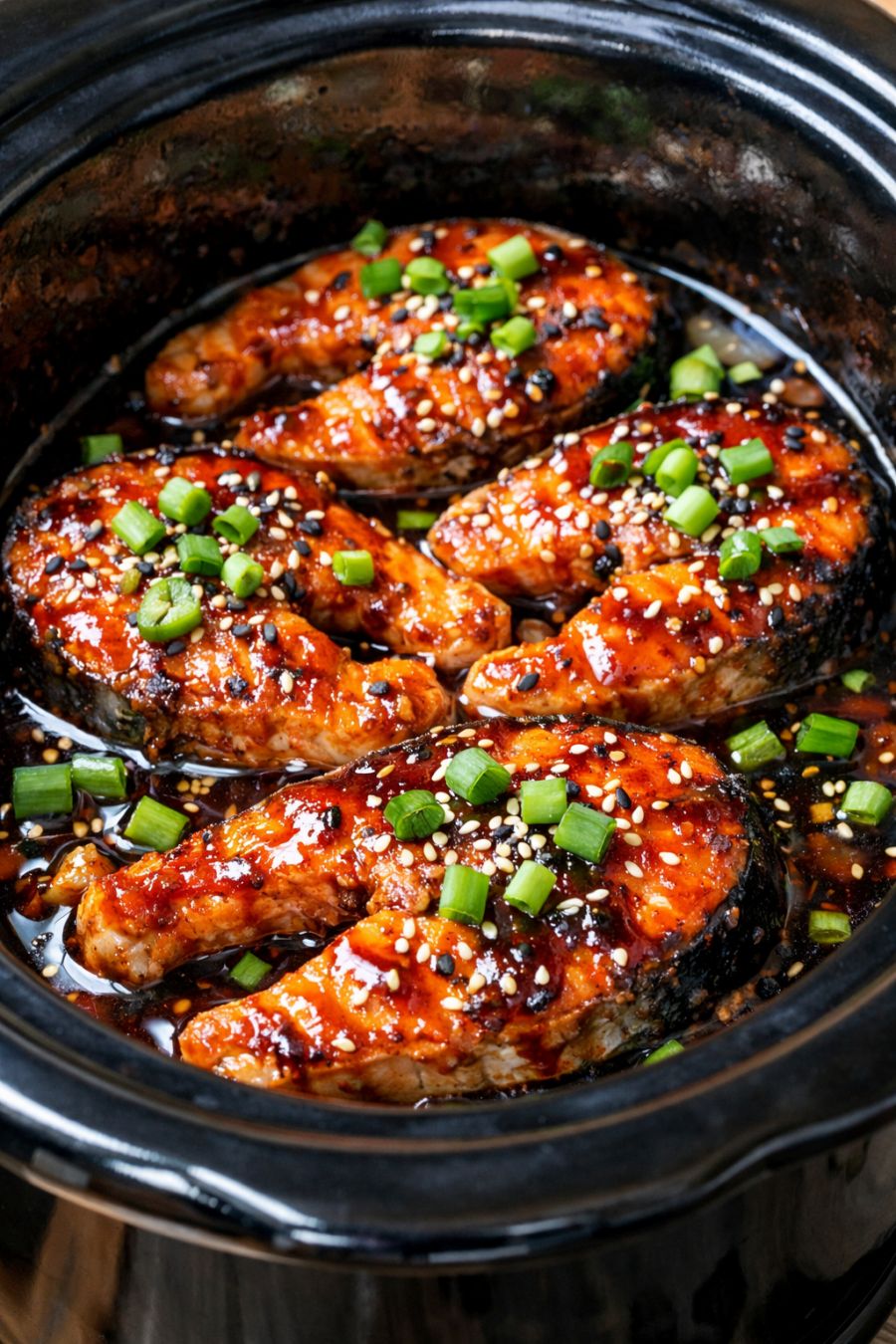
This 5-ingredient slow cooker Memorial Day salmon is the kind of set-it-and-forget-it recipe that lets you enjoy the holiday instead of hovering over the stove. You literally dump frozen salmon steaks into the crock with four pantry staples, put on the lid, and walk away. Slow cooking fish is not traditional—most of us are used to grilling or pan-searing salmon—but gentle heat can keep it moist and silky, almost like a cross between poached and baked. This version leans on classic American cookout flavors: a touch of smoky sweetness, a little tang, and enough sauce to spoon over rice or potatoes. It’s practical, unfussy, and designed for busy home cooks who still want something that feels special on the table.
Serve the salmon steaks right out of the slow cooker with the juices spooned over the top. They’re excellent over steamed rice, buttered baby potatoes, or a simple pasta tossed with olive oil and garlic. For a Memorial Day spread, add a crunchy coleslaw, grilled or roasted corn, and a big green salad with a bright vinaigrette to balance the richness of the fish. A side of crusty bread is handy for soaking up the sauce, and if you enjoy wine, a chilled Sauvignon Blanc or a light, citrusy beer pairs nicely with the smoky-sweet flavors.
5-Ingredient Slow Cooker Memorial Day Salmon
Servings: 4
Ingredients
4 frozen salmon steaks (about 5–6 ounces each, ice crystals still on are fine)
1/2 cup barbecue sauce (your favorite bottled brand)
1/4 cup soy sauce (regular or low-sodium)
2 tablespoons honey or brown sugar
1 teaspoon garlic powder
Directions
Place the frozen salmon steaks in a single layer on the bottom of the slow cooker insert. It’s fine if there are visible ice crystals; do not thaw first.
In a small bowl, whisk together the barbecue sauce, soy sauce, honey (or brown sugar), and garlic powder until smooth and well combined.
Pour the sauce mixture evenly over the frozen salmon steaks, lifting them slightly with a spoon or tongs so some sauce runs underneath. The fish does not need to be fully submerged; just make sure each piece is coated.
Cover the slow cooker with the lid and cook on LOW for 2 to 2 1/2 hours, or until the salmon flakes easily with a fork and reaches an internal temperature of at least 145°F (63°C) in the thickest part. Avoid cooking on HIGH, which can dry the fish out.
Once done, carefully lift the salmon steaks out with a wide spatula or tongs, as they will be very tender and may break apart. Spoon some of the cooking liquid over each piece just before serving.
Taste the sauce in the slow cooker and adjust seasoning if needed with a splash more soy sauce for salt or a drizzle of honey for sweetness, then serve the salmon hot with your favorite sides.
Variations & Tips
For a spicier version, add 1/2 to 1 teaspoon crushed red pepper flakes or a spoonful of your favorite hot sauce to the sauce mixture before pouring it over the salmon. If you prefer more of a teriyaki profile, swap the barbecue sauce for additional soy sauce and 2 extra tablespoons of honey or brown sugar, plus a teaspoon of grated fresh ginger if you have it on hand. A smoky twist can be achieved by using a smoky-style barbecue sauce and adding 1/2 teaspoon smoked paprika. For a citrus note, stir in 2 tablespoons of bottled lemon juice or orange juice with the sauce ingredients; both are common pantry staples and brighten the final dish. You can also tuck a few thin onion slices from your crisper drawer under the salmon before cooking if you want a built-in side to spoon over rice. Food safety tips: Always place the frozen salmon steaks in an even layer so they cook at a similar rate, and do not overfill the slow cooker. Cook on LOW only; the gentle heat helps the fish cook through evenly from frozen. Use a food thermometer to confirm the internal temperature reaches at least 145°F (63°C) in the thickest part of the steak. Do not leave cooked salmon sitting at room temperature for more than 2 hours (1 hour if it’s a hot outdoor gathering); refrigerate leftovers promptly in shallow containers and eat within 2 days. Reheat gently on the stovetop or in the microwave just until warmed through to avoid drying the fish out.
