
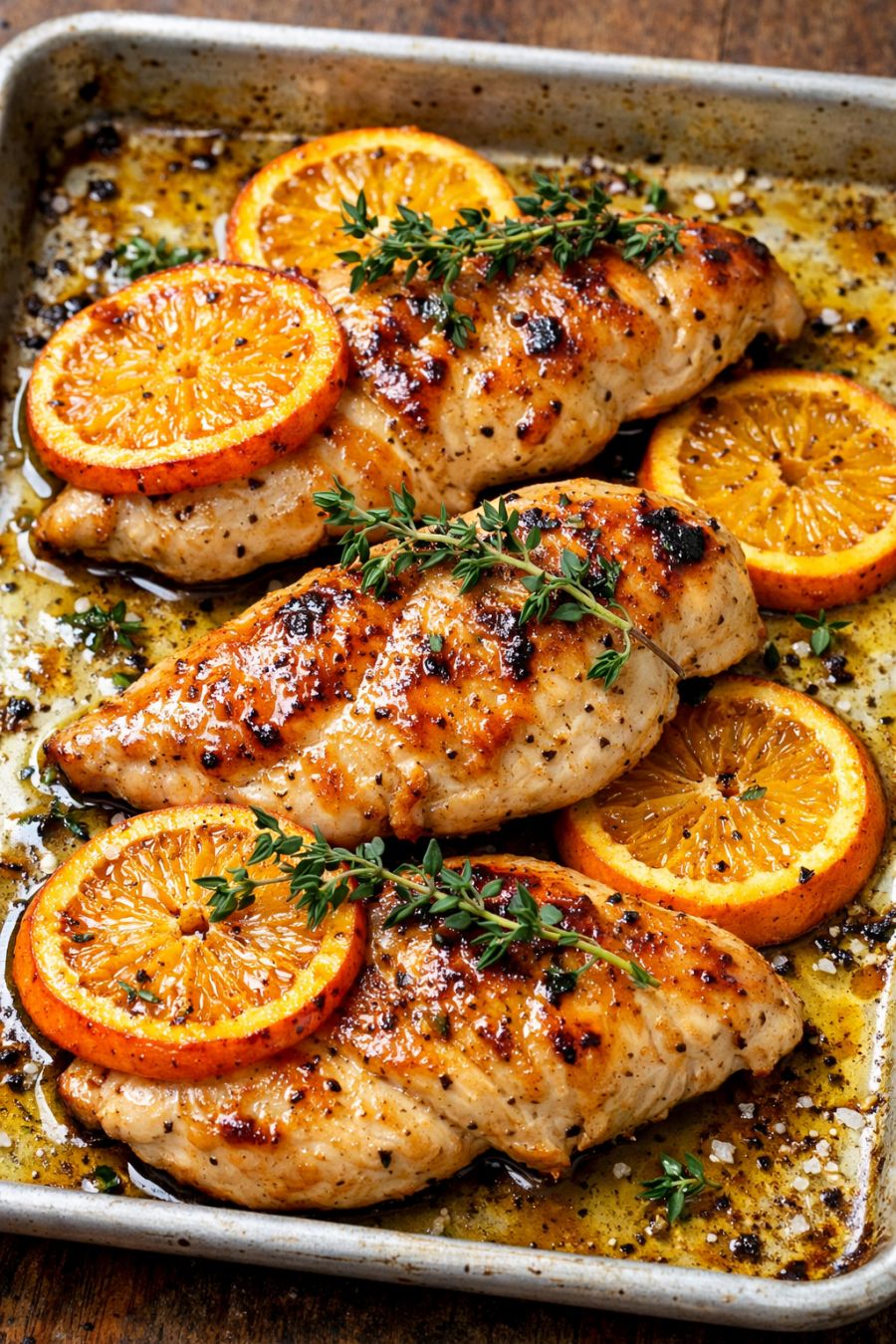
This oven baked orange thyme chicken is one of those weeknight dinners that looks way fancier than the effort it takes. I butterfly a few chicken breasts, lay them in a rimmed baking sheet, then layer fresh orange slices over the top so the juices drip down as everything bakes. With just three more simple ingredients—olive oil, fresh thyme, and garlic—you get juicy, flavorful chicken and a pan that smells like you’ve been cooking all afternoon. It’s the kind of no-fuss, always-a-yes meal I lean on after work when I want something bright and comforting without dirtying every dish in the kitchen.
Serve this orange thyme chicken with a simple side of roasted or steamed green beans, asparagus, or broccoli to keep things light and fresh. A pan of roasted potatoes or a pot of rice is great for soaking up the citrusy pan juices, and a side salad with a basic vinaigrette rounds it out nicely. If you’re planning ahead, this chicken is delicious sliced over mixed greens for lunch the next day, or tucked into a grain bowl with quinoa, leftover veggies, and a little extra squeeze of fresh orange.
Oven Baked Orange Thyme Chicken
Servings: 4
Ingredients
4 small boneless, skinless chicken breasts, butterflied (about 1 1/2 pounds total)
2 large navel oranges, thinly sliced (peels on, seeds removed)
2 tablespoons olive oil
2 teaspoons fresh thyme leaves (or 1 teaspoon dried thyme)
2 cloves garlic, minced
1 teaspoon kosher salt
1/2 teaspoon black pepper
Directions
Preheat your oven to 400°F (200°C). Lightly grease a rimmed baking sheet with a little olive oil or line it with parchment for easier cleanup.
Butterfly the chicken breasts: Place one chicken breast on a cutting board, lay your hand flat on top, and carefully slice horizontally through the thickest side, stopping just before cutting all the way through. Open it like a book so it lays flat. Repeat with the remaining chicken breasts.
Pat the butterflied chicken dry with paper towels and place the pieces in a single layer on the prepared rimmed baking sheet, leaving a little space between each piece so they roast instead of steam.
In a small bowl, whisk together the olive oil, minced garlic, thyme, salt, and pepper. Spoon or brush this mixture evenly over the tops of the chicken breasts, making sure each piece is coated.
Layer the fresh orange slices across the raw butterflied chicken breasts, slightly overlapping the slices so most of the chicken is covered. Tuck a few extra slices directly onto the baking sheet around the chicken so they can caramelize at the edges.
Transfer the rimmed baking sheet to the preheated oven and bake for 18–22 minutes, or until the chicken is cooked through and reaches an internal temperature of 165°F (74°C) in the thickest part.
Once done, remove the baking sheet from the oven and let the chicken rest for 5 minutes. This helps the juices settle so the meat stays tender.
To serve, remove the orange slices you don’t want to eat (or leave them on for presentation), spoon some of the pan juices over the chicken, and garnish with a few extra fresh thyme leaves if you have them.
Variations & Tips
For a slightly sweeter take, drizzle 1–2 teaspoons of honey over the chicken along with the olive oil mixture before layering on the orange slices. If you like a little kick, add 1/4 teaspoon red pepper flakes to the thyme and garlic mixture. You can swap thyme for rosemary or oregano if that’s what you have on hand, and blood oranges or Cara Cara oranges are beautiful if they’re in season. For meal prep, bake the chicken, let it cool, then slice it and store in airtight containers with some of the pan juices to keep it moist; it reheats well in the microwave or in a covered skillet over low heat. Food safety tips: Always wash your hands, cutting board, and knife thoroughly after handling raw chicken. Make sure the chicken reaches an internal temperature of 165°F (74°C) before serving; using an instant-read thermometer takes the guesswork out. Don’t reuse any leftover marinade or oil mixture that has touched raw chicken unless it has been fully cooked. Refrigerate leftovers within 2 hours of cooking and eat within 3–4 days.
