
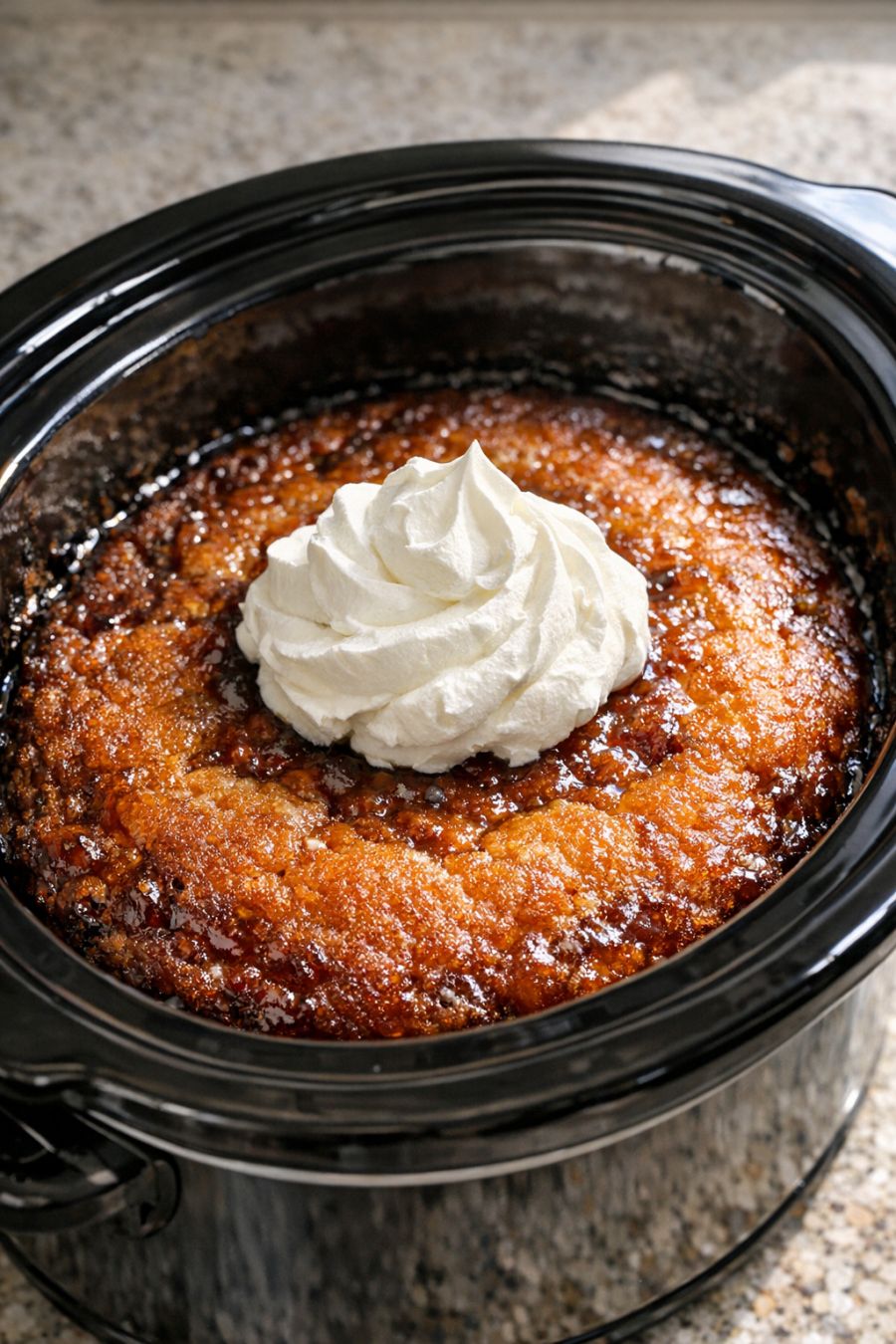
This 5-ingredient slow cooker vintage quince paste pudding cake is the kind of cozy dessert that makes the whole house smell like grandma’s kitchen. It leans on a jar of quince preserves (or quince paste loosened into preserves) and a few pantry staples to create a soft, self-saucing pudding cake with a caramelized, old-fashioned flavor. Everything goes straight into the slow cooker—no mixers, no separate bowls—so it’s perfect for busy evenings when you still want something warm and nostalgic to scoop into bowls after dinner.
Serve this pudding cake warm, straight from the slow cooker, spooned into bowls. It’s wonderful on its own, but a scoop of vanilla ice cream, a dollop of whipped cream, or a splash of heavy cream over the top really brings out the vintage, custardy feel. For a simple weeknight dessert, pair it with hot tea, coffee, or warm cider. If you’re serving guests, add a small plate of butter cookies or shortbread on the side for a little crunch next to the soft, jammy pudding.
5-Ingredient Slow Cooker Quince Pudding Cake
Servings: 6
Ingredients
1 jar (about 12–16 oz) quince preserves or quince paste loosened into a jam
1 cup all-purpose flour
1 cup granulated sugar
1 cup whole milk
4 tablespoons unsalted butter, melted, plus extra for greasing the slow cooker
Directions
Lightly grease the inside of a 4- to 6-quart slow cooker with a little butter to help prevent sticking and make cleanup easier.
Pour the quince preserves straight from the jar into the bottom of the greased slow cooker. Use a spatula or spoon to spread them into an even layer that covers the bottom.
In a medium bowl or large measuring cup, whisk together the flour and sugar until well combined and no big clumps of flour remain.
Add the milk and melted butter to the flour-sugar mixture and whisk until you have a smooth, pourable batter. It will be similar to a thick pancake batter.
Slowly pour the batter evenly over the quince preserves in the slow cooker. Do not stir; the preserves should stay on the bottom. As it cooks, the batter will rise up and the quince will turn into a thick, saucy layer underneath.
Cover the slow cooker with its lid. Cook on HIGH for about 2½ to 3 hours, or until the top of the pudding cake is set, lightly golden around the edges, and a toothpick inserted into the center of the cakey part comes out mostly clean (a little quince sauce on it is fine).
Once cooked, turn off the slow cooker and let the pudding cake sit, covered, for 10–15 minutes. This rest helps the sauce thicken slightly while keeping the cake tender.
To serve, spoon down through the cake so you get both the soft cake and the warm quince layer in each scoop. Serve warm with ice cream, whipped cream, or a drizzle of cream, if you like.
Variations & Tips
For a cozier spice note, stir 1 teaspoon ground cinnamon or apple pie spice into the flour and sugar before adding the milk and butter. If your family likes a little texture, sprinkle 1/2 cup chopped toasted walnuts or pecans over the quince preserves before pouring on the batter. For a slightly lighter dessert, you can use 2% milk and reduce the sugar to 3/4 cup; the pudding will be a bit less rich but still comforting. If quince preserves are very thick, you can warm the jar briefly in a bowl of hot tap water to help them pour more easily, or scoop and spread them with a spoon. For picky eaters who might be unsure about quince, you can swirl in a few tablespoons of familiar jam (like strawberry or apricot) right on top of the quince layer so the flavor feels more recognizable. Food safety tips: Always cook this pudding cake on HIGH, not on the WARM setting, to ensure it reaches a safe temperature. Use a clean spoon each time you taste or serve to avoid introducing bacteria into the slow cooker. Refrigerate leftovers within 2 hours of cooking; once cooled, transfer the pudding cake to a covered container and store in the fridge for up to 3 days. Reheat individual portions in the microwave until steaming hot before serving. If your slow cooker tends to run hot, start checking for doneness around the 2-hour mark to avoid overcooking or scorching the preserves at the edges.
