
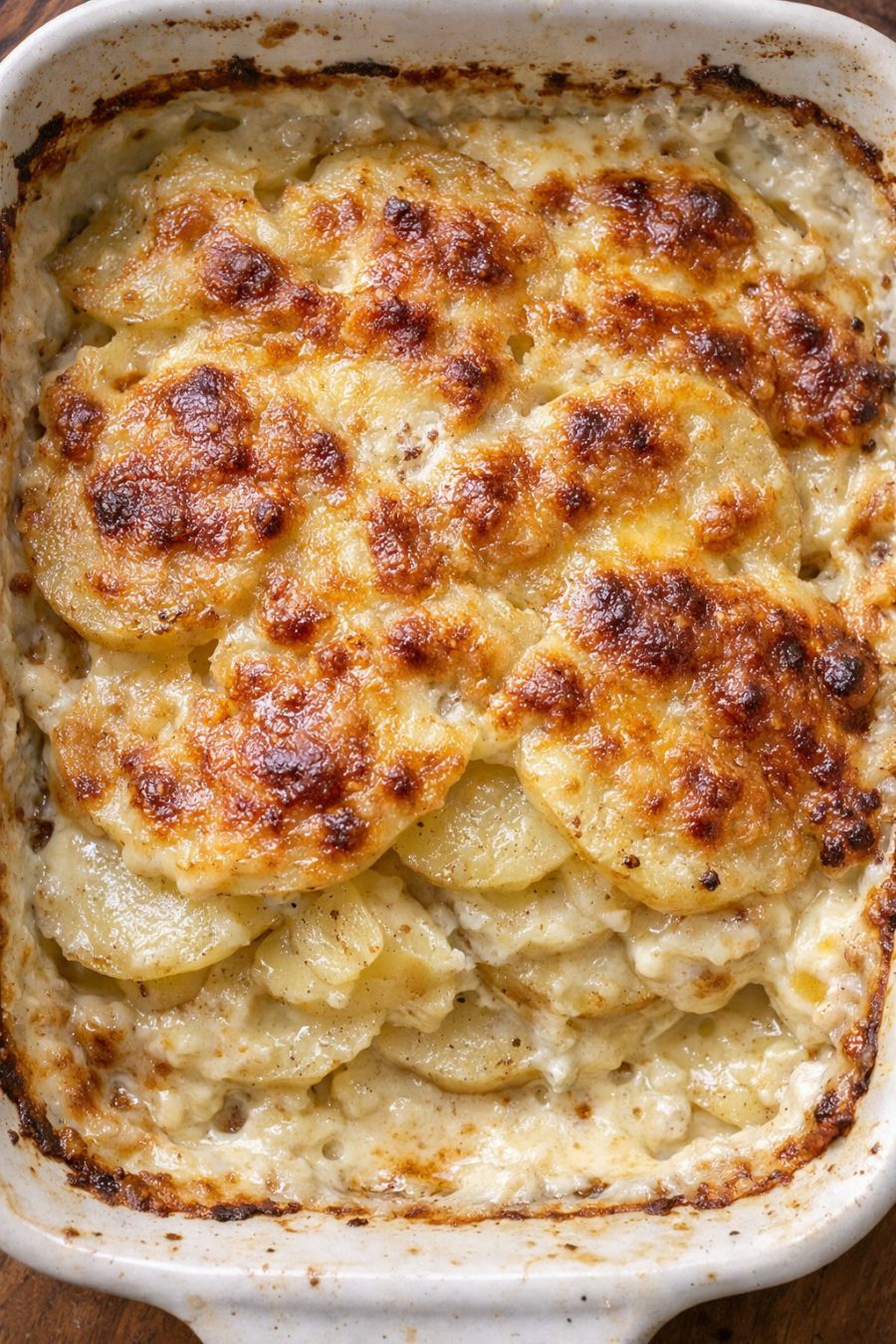
This cozy little potato casserole is my nod to the kind of side dish that showed up on every special occasion table in the late 1960s—especially at anniversaries and church suppers. It’s just four simple ingredients, layered into a deep baking dish and baked until the top is golden and crusty and the cream is bubbling around the edges. No fancy techniques, no extra fuss—just honest, buttery potatoes that taste like pure comfort and feel right at home next to a roast or a baked ham. It’s the kind of recipe you can imagine being passed around on a handwritten card, splattered with cream and memories.
Serve these plantation-style potatoes hot, straight from the oven, when the top is deeply golden and the cream is still bubbling at the edges. They’re perfect alongside roast chicken, baked ham, pot roast, or a simple meatloaf. Add a crisp green salad or buttered green beans to balance the richness, and maybe some dinner rolls to soak up the extra creamy sauce. For a more casual meal, I’ll sometimes make this the star and pair it with a big bowl of steamed broccoli and a platter of sliced sausages or smoked kielbasa.
Oven-Baked Plantation Potatoes
Servings: 6
Ingredients
3 pounds russet or Yukon Gold potatoes, peeled and thinly sliced (about 1/8 inch thick)
2 cups heavy cream (or half-and-half for a lighter version)
4 tablespoons unsalted butter, cut into small pieces, plus a bit more for greasing the dish
2 teaspoons kosher salt (or to taste), plus 1/2 teaspoon freshly ground black pepper if desired
Directions
Preheat your oven to 375°F (190°C). Generously butter a deep 9x13-inch stoneware or other heavy baking dish, making sure to coat the bottom and sides so the potatoes don’t stick and the edges brown nicely.
Peel the potatoes and slice them as evenly as you can into thin rounds, about 1/8 inch thick. A mandoline makes this easy, but a sharp knife and a little patience work just fine. Try to keep the slices similar in thickness so they cook at the same rate.
In a small bowl, stir together the salt and pepper (if using). This makes it easier to season the layers evenly instead of ending up with a salty top and bland middle.
Arrange a single, slightly overlapping layer of potato slices over the bottom of the buttered baking dish. Think of it like shingles on a roof—just enough overlap so there are no big gaps.
Sprinkle a pinch or two of the salt mixture evenly over the potato layer. Dot a few small pieces of butter across the top. Repeat with another layer of potatoes, more seasoning, and more butter. Continue layering until all the potatoes are used, finishing with a light sprinkle of salt and a few dots of butter on top.
Slowly pour the heavy cream over the potatoes, starting in one corner and working your way around so it seeps down between the layers. The cream should come almost to the top layer but not completely cover it—you want those top slices to brown and get that golden, crusty finish.
Cover the baking dish tightly with foil, tenting it slightly so it doesn’t press down on the top layer. Place the dish on a rimmed baking sheet to catch any cream that bubbles over, and slide it into the preheated oven.
Bake covered for 45–55 minutes, until the potatoes are tender when pierced with the tip of a knife. Carefully remove the foil, then return the dish to the oven.
Continue baking uncovered for another 20–30 minutes, or until the top is deeply golden brown, the edges are bubbling with cream, and you can see a slight crust forming on the upper layer of potatoes. If the top is browning too quickly, you can lay the foil loosely back over the dish for the last 5–10 minutes.
Once done, remove the casserole from the oven and let it rest for at least 10–15 minutes before serving. This rest time helps the creamy sauce thicken slightly so the layers hold together when you scoop it out, and it keeps little mouths from getting burned.
Serve warm, scooping down through all the layers so everyone gets a mix of tender potatoes, creamy sauce, and those irresistible golden top pieces.
Variations & Tips
To keep the spirit of a 1960s anniversary side dish, I like to keep this recipe very simple and let the cream, butter, and potatoes shine. Still, there are a few gentle variations you can try without losing that old-fashioned comfort. For extra richness, sprinkle 1/2 cup of shredded mild cheddar or Swiss cheese over the top for the last 10–15 minutes of baking. If your family loves onion flavor, you can very thinly slice half of a small yellow onion and tuck a few slices between the potato layers, or stir 1/2 teaspoon onion powder into the salt mixture before layering. For picky eaters, skip the pepper and any onion, and use Yukon Gold potatoes for a naturally buttery taste and creamier texture. If you need to lighten things up a bit, you can use half-and-half instead of heavy cream and reduce the butter to 3 tablespoons; just know the sauce will be slightly less thick and luxurious.
Food safety and prep tips: Always keep the potatoes refrigerated until you’re ready to peel and slice, and don’t let the sliced potatoes sit at room temperature for more than about 1 hour before baking. If you need to slice ahead, you can keep the potatoes in a bowl of cold water in the fridge to prevent browning, then drain and pat them very dry before layering so the cream doesn’t get watered down. Make sure the casserole reaches a safe internal temperature of at least 165°F (74°C) in the center before serving, especially if you’ve prepped it ahead and are reheating. When baking in a deep stoneware dish, remember that these dishes hold heat very well—use thick oven mitts, and keep the pan away from little hands when it comes out of the oven, as the sides stay hot for quite a while. Leftovers should be cooled, covered, and stored in the refrigerator within 2 hours, and are best eaten within 3–4 days. Reheat covered at 325°F (165°C) until hot all the way through, then uncover for the last few minutes to re-crisp the top.
