
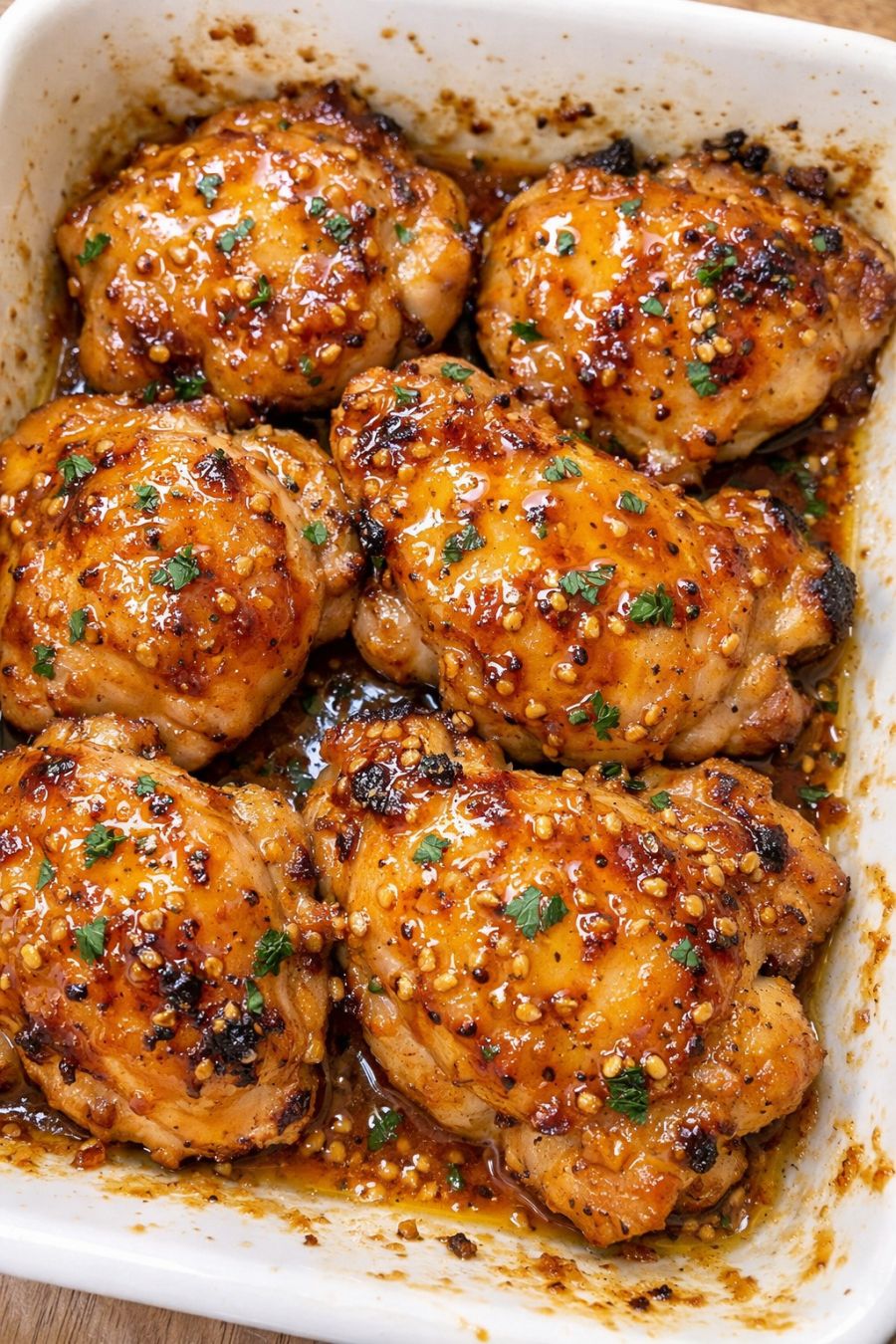
This little oven baked 3-ingredient Amish honey mustard chicken bake is the kind of dish that quietly steals the show at a potluck. My neighbor brought a pan of it to a church supper years ago, and before the evening was over, everyone was hovering over that white casserole dish, scraping up the last sticky bits and asking how she made it. The answer surprised us all: just three pantry ingredients whisked together, poured over chicken, and baked until the thighs turn golden and glazed. It has that simple, honest sweetness and tang you find so often in old Amish and Midwestern recipes—nothing fancy, just good, comforting food that tastes like it’s been on the table for generations.
This chicken is lovely with plain sides that soak up the extra sauce: buttered egg noodles, mashed potatoes, or a simple white rice all work beautifully. I like to add a green vegetable for balance—steamed green beans, roasted Brussels sprouts, or a crisp lettuce salad with a light vinaigrette. Warm dinner rolls or a slice of soft white bread are perfect for mopping up the sticky honey mustard from the bottom of the casserole dish. It also packs nicely for potlucks; just keep it in the baking dish and bring along a big spoon so folks can help themselves.
Oven Baked 3-Ingredient Amish Honey Mustard Chicken Bake
Servings: 4
Ingredients
2 1/2 to 3 pounds bone-in, skin-on chicken thighs (about 6 to 8 thighs)
1/2 cup Dijon mustard
1/2 cup honey
1/2 teaspoon kosher salt (optional, to taste)
1/4 teaspoon black pepper (optional, to taste)
Nonstick cooking spray or a little oil for greasing the dish
Directions
Preheat your oven to 375°F (190°C). Lightly grease a 9x13-inch white casserole dish with nonstick spray or a little oil so the chicken doesn’t stick.
Pat the chicken thighs dry with paper towels. This helps the skin brown and the sauce cling better. Arrange the thighs in a single layer in the casserole dish, skin side up, with a little space between each piece if possible.
In a small bowl, whisk together the Dijon mustard and honey until smooth and fully blended. Taste the sauce; if you like, season with the kosher salt and black pepper. The mixture should be sweet, tangy, and a little sharp from the mustard.
Spoon or pour the honey mustard mixture evenly over the chicken thighs, lifting the edges of the chicken slightly so some sauce slips underneath. Use the back of the spoon to spread it so every piece is well coated on top.
Place the casserole dish on the middle rack of the preheated oven. Bake, uncovered, for 35 to 45 minutes, or until the chicken is cooked through and the tops are a deep golden color with a sticky, bubbling glaze. The internal temperature should reach 165°F (74°C) when checked in the thickest part of the meat, not touching the bone.
If you’d like a deeper color and slightly thicker, stickier coating, turn the oven to broil for the last 2 to 3 minutes of cooking. Watch very closely so the honey in the sauce doesn’t burn; pull the dish out as soon as the glaze looks caramelized and glossy.
Let the chicken rest in the dish for about 5 to 10 minutes before serving. The sauce will thicken slightly as it cools, making a lovely sticky coating. Serve the thighs straight from the white casserole dish, spooning some of the extra honey mustard sauce over each piece.
Variations & Tips
You can play with this simple base while keeping the spirit of the recipe. For a slightly sharper flavor, use half Dijon mustard and half yellow mustard. If you prefer a milder, sweeter dish, use all yellow mustard instead of Dijon. A teaspoon of apple cider vinegar whisked into the honey mustard gives it a little extra tang that feels very traditional to old farmhouse cooking. If you enjoy herbs, a pinch of dried thyme or rosemary sprinkled over the chicken before baking adds a nice country touch without complicating things. Boneless, skinless chicken thighs or breasts can be used, but reduce the baking time to about 25 to 35 minutes and check early so they don’t dry out; they won’t brown quite as deeply without the skin, but they’ll still soak up the sauce. For smaller households, cut the recipe in half and use a smaller baking dish so the sauce doesn’t burn around the edges. Always handle raw chicken carefully: keep it separate from other foods, wash your hands and any surfaces it touches with hot, soapy water, and never reuse utensils or cutting boards that have touched raw poultry without washing them first. Be sure the chicken reaches 165°F (74°C) in the thickest part before serving, and refrigerate leftovers within 2 hours in a shallow container. Leftovers reheat well in a low oven, covered with foil, until warmed through; the glaze will loosen slightly but still tastes wonderful.
