
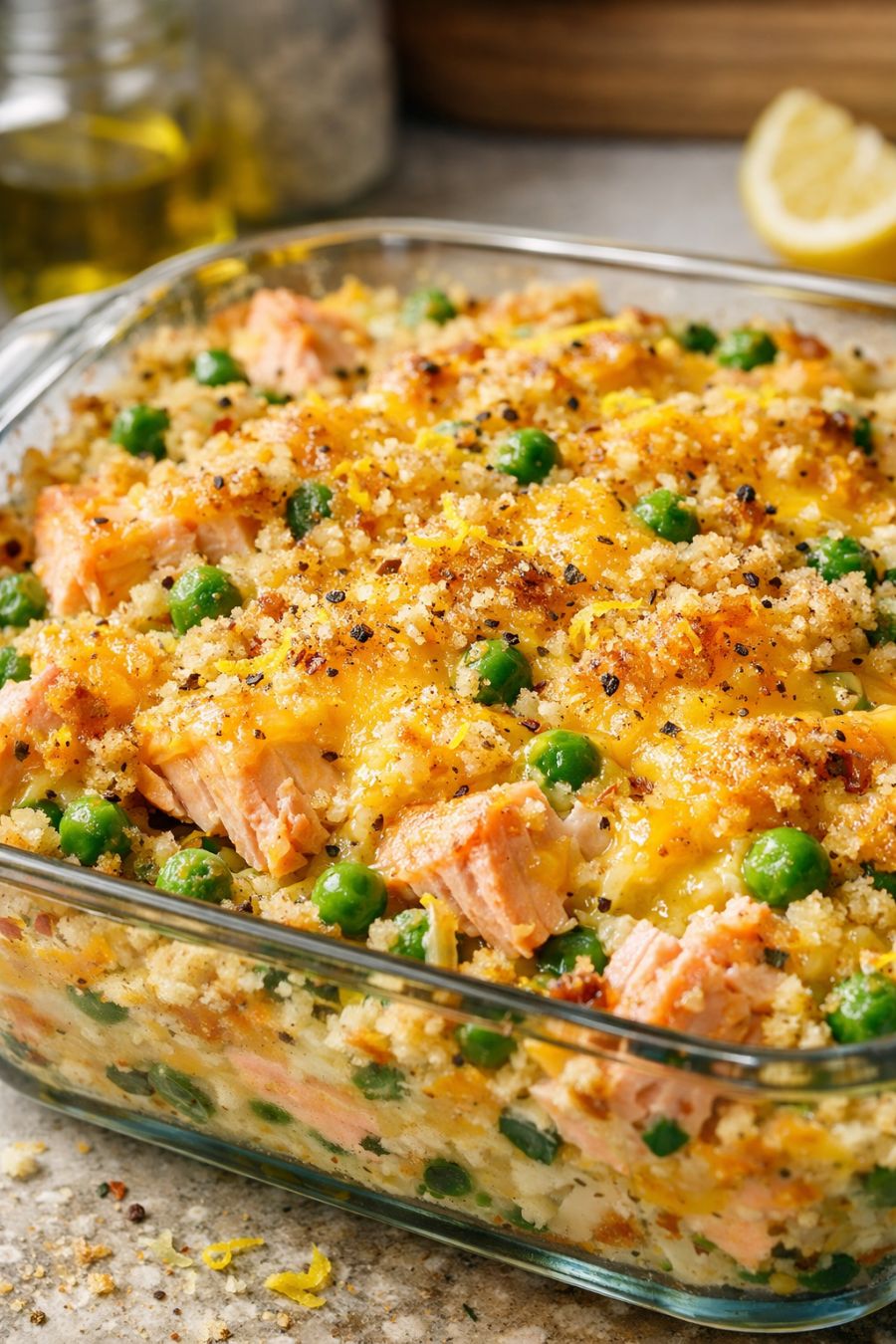
This 6-ingredient oven baked canned salmon is the kind of weeknight dish you can pull together in minutes, straight from your pantry. You literally pour the chunky canned salmon with bones and skin right from the tin into a glass casserole dish, add just five more simple ingredients, and let the oven do the rest. It’s cozy, budget-friendly, and full of calcium and healthy fats from those soft edible bones—exactly the kind of no-fuss comfort food that makes busy family nights feel special.
Serve this baked canned salmon hot with buttered egg noodles, rice, or mashed potatoes so all the creamy, savory sauce has something to soak into. A simple green salad, steamed green beans, or roasted broccoli on the side keeps the plate balanced and colorful. For a more casual feel, scoop the salmon over toast or tuck it into warm tortillas with shredded lettuce and a squeeze of lemon. Leftovers are great flaked over salad greens for an easy next-day lunch.
6-Ingredient Oven Baked Canned Salmon with Bones
Servings: 4
Ingredients
2 cans (14.75 oz each) chunky canned salmon with bones and skin, undrained
1 cup frozen peas (no need to thaw)
1 cup shredded mild cheddar cheese, divided
1/2 cup mayonnaise
1/2 cup milk
1/2 teaspoon garlic powder (or to taste)
Directions
Preheat your oven to 375°F (190°C). Lightly grease a 2-quart glass casserole dish with a bit of oil or nonstick spray so cleanup is easy.
Open the cans of chunky salmon and carefully pour everything—fish, juices, bones, and skin—straight from the tins into the center of the glass casserole dish. The bones are soft and edible and will break down more as it bakes.
Use a fork to gently break the salmon into large, rustic chunks, spreading it out evenly in the bottom of the dish. Don’t worry about the bones or skin; just mix them in so they’re scattered throughout.
Sprinkle the frozen peas evenly over the salmon layer so every bite gets a pop of sweetness and color.
In a small bowl, whisk together the mayonnaise, milk, and garlic powder until smooth. This makes a quick, creamy sauce without any canned soup.
Pour the creamy mixture evenly over the salmon and peas in the casserole dish, making sure it seeps down into the nooks and crannies.
Sprinkle 3/4 cup of the shredded cheddar cheese evenly over the top, reserving the remaining 1/4 cup for later. This first layer will melt into the sauce and help everything hold together.
Place the casserole dish on the middle rack of the preheated oven and bake for 20 minutes, uncovered, until the edges are bubbling and the center is hot.
Carefully pull the dish out just enough to sprinkle the remaining 1/4 cup cheese over the top. Return it to the oven and bake for another 5–10 minutes, until the cheese is fully melted and lightly golden in spots.
Remove from the oven and let the casserole rest for about 5 minutes so it can set up a bit and is easier to scoop. Serve warm, making sure to spoon up some of the creamy sauce from the bottom of the dish with each portion.
Variations & Tips
For picky eaters, you can mash the salmon a bit more with a fork before adding the peas so the bones and skin are less noticeable—they’re very soft and safe to eat, and baking makes them even more tender. If your family doesn’t love peas, swap them for frozen corn, mixed veggies, or small broccoli florets (cut tiny so they cook through). For extra flavor, add 1/4 teaspoon black pepper or a pinch of dried dill or parsley to the sauce. If you prefer a richer dish, use whole milk; for lighter, you can use 2% milk and reduce the mayonnaise slightly. To make it a little heartier, stir in 1 cup of cooked rice or small pasta right into the casserole before baking, adding a splash more milk if it looks too thick. Food safety tips: Always check that canned salmon is within the expiration date and the cans are not bulging, rusted, or badly dented before using. Once opened, don’t leave the salmon sitting out at room temperature for more than 2 hours; get the casserole into the oven promptly. Leftovers should be cooled, covered, and refrigerated within 2 hours and eaten within 2–3 days. Reheat leftovers until steaming hot all the way through before serving.
