
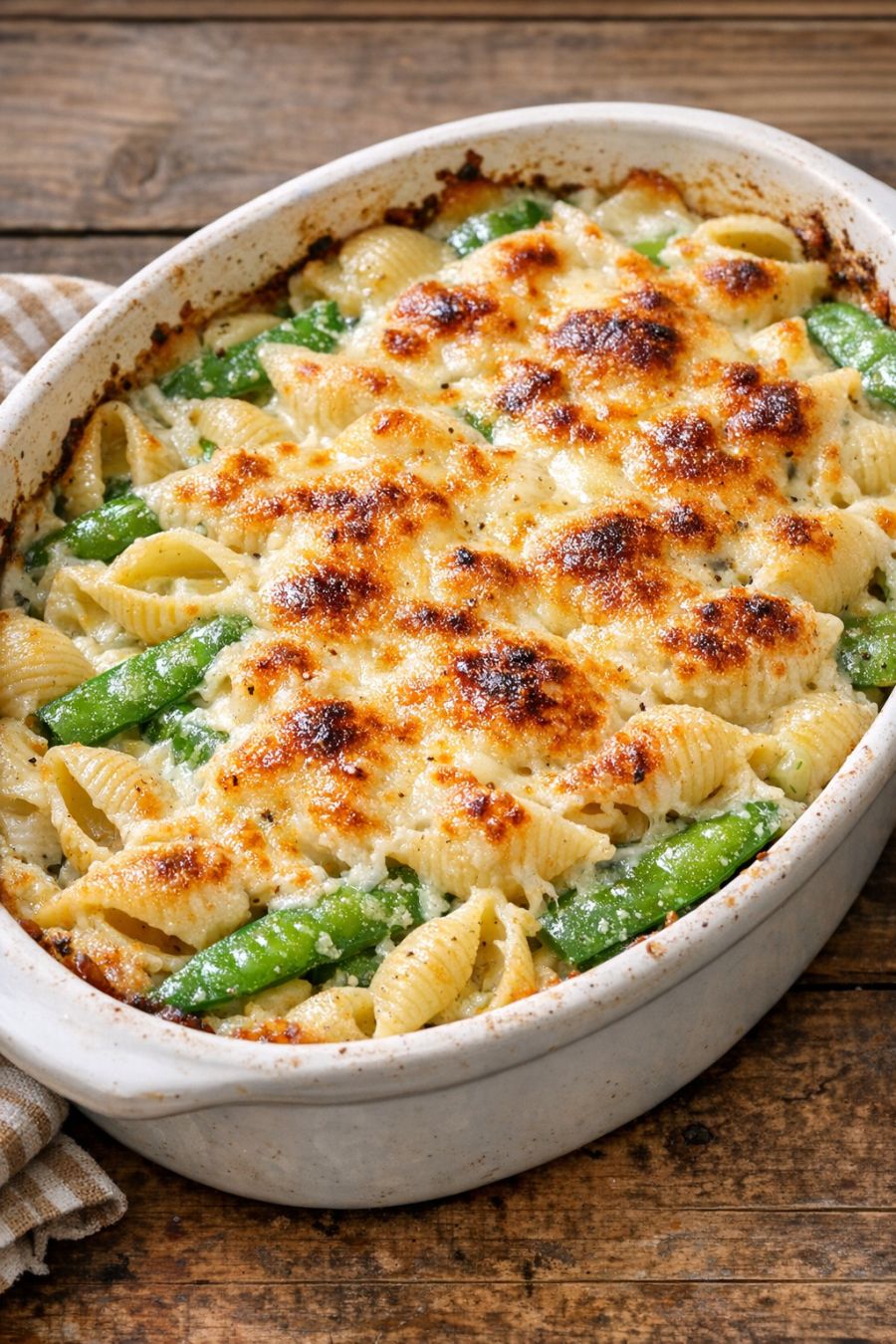
This is my cozy, default weeknight pasta: dry shell pasta goes straight into a ceramic casserole dish, then I scatter raw whole snow peas over the top, add just two more simple ingredients, and let the oven do the rest. It’s loosely inspired by the no-fuss, pantry-friendly style of Amish baked casseroles—minimal prep, humble ingredients, and a comforting, creamy finish. On nights when I’m staring into the fridge with no plan and not much energy, this is the meal I can always count on to come together with almost no effort and very few dishes.
I usually serve this snow pea pasta with a simple green salad dressed in olive oil and lemon, or just sliced cucumbers with salt and pepper if I’m really short on time. Garlic bread or buttered toast makes it feel extra cozy and helps scoop up the creamy sauce that collects at the bottom of the dish. If you want more protein, pair it with rotisserie chicken, baked fish, or even pan-seared sausages on the side. A squeeze of fresh lemon over each serving brightens the rich, creamy flavors without adding any extra work to the main recipe.
Oven-Baked Amish Snow Pea Shell Pasta
Servings: 4
Ingredients
12 ounces dry medium shell pasta
8 ounces fresh whole snow peas, rinsed and patted dry
2 cups heavy cream
1 1/2 cups shredded mild white cheese (like Monterey Jack or mild cheddar), loosely packed
1 teaspoon kosher salt
1/2 teaspoon black pepper
1 tablespoon olive oil or softened butter (for greasing the dish)
Directions
Preheat your oven to 375°F (190°C). Lightly grease a medium ceramic casserole dish (about 9x13 inches or similar size) with olive oil or butter so the pasta doesn’t stick.
Pour the dry shell pasta directly into the bottom of the ceramic casserole dish and spread it into an even layer. The shells should mostly cover the bottom without piling up too high.
In a large measuring cup or bowl, whisk together the heavy cream, salt, and black pepper until the seasoning is evenly distributed. This will be the simple sauce that cooks the pasta in the oven.
Slowly pour the seasoned cream all over the dry pasta in the casserole dish, tilting the dish gently if needed so the cream settles in and around the shells. Most of the pasta should be touching some liquid, even if a few pieces on top peek out.
Sprinkle about half of the shredded cheese evenly over the cream-soaked pasta. This first layer melts down into the shells and helps create a creamy, cozy sauce as everything bakes.
Scatter the raw whole snow peas over the top of the dry shell pasta and cheese layer with your hands, just like in the photo: a loose, even layer, not packed too tightly. Some peas will nestle down between the shells and some will stay on top, which is perfect.
Top the snow peas with the remaining shredded cheese, sprinkling it evenly so there’s a light blanket of cheese across the whole surface of the casserole.
Cover the ceramic dish tightly with foil, making sure it’s sealed around the edges to trap steam. This helps the dry pasta cook through in the cream without drying out.
Bake the covered casserole on the middle rack for 30 minutes. During this time, the pasta will start to soften and absorb the cream, and the snow peas will steam gently.
After 30 minutes, carefully remove the foil (watch out for hot steam). Return the dish to the oven, uncovered, and bake for another 15–20 minutes, or until the pasta is tender when you taste a shell, the sauce is bubbly, and the top is lightly golden in spots.
If the top isn’t as browned as you like, you can switch the oven to broil for 1–3 minutes, watching very closely so the cheese doesn’t burn. This step is optional but adds a nice, cozy casserole look and a bit of texture.
Let the casserole rest on the counter for 5–10 minutes before serving. The sauce will thicken slightly as it cools, making it easier to scoop. Taste and adjust with a little extra salt and pepper at the table if needed, then serve straight from the dish.
Variations & Tips
To keep this recipe true to the headline, the core method is always the same: scatter raw whole snow peas over dry shell pasta in a ceramic casserole dish and add just two simple supporting ingredients (here, heavy cream and shredded cheese). You can still tweak within that framework. For a lighter version, swap half of the heavy cream for whole milk, understanding the sauce will be a bit looser and less rich. You can also use any mild, good-melting cheese you have on hand (mozzarella, Colby Jack, or even a mix of odds and ends from your cheese drawer). If you like more texture on the snow peas, pull the foil off a little earlier so they keep more crunch; if you prefer them softer, leave the foil on for an extra 5 minutes before uncovering. For extra flavor without adding more core ingredients, lean on pantry staples: sprinkle dried Italian herbs, garlic powder, onion powder, or red pepper flakes over the top before baking. If you need more protein but want to keep the process simple, serve the casserole alongside baked chicken thighs or add pre-cooked, diced ham or shredded rotisserie chicken on top of the pasta before pouring in the cream (just keep the total volume similar so the pasta still has room to cook). Food safety tips: Always use fresh, refrigerated heavy cream and keep it chilled until you’re ready to assemble. Don’t leave the assembled, unbaked casserole at room temperature for more than 30 minutes before baking. Make sure the casserole is heated until the cream is bubbling and the center is piping hot to ensure safe temperatures. Leftovers should be cooled, then refrigerated within 2 hours of baking and eaten within 3–4 days, reheating thoroughly before serving.
