
This is my go-to weeknight salmon when I’m walking in the door at 5:30, everyone’s hungry, and I have exactly zero energy for fussy prep. You literally open the package, drop the raw skin-on salmon portions into a baking dish, scatter four pantry ingredients over the top, and slide it into the oven. No marinating, no mixing bowls, no stovetop splatter. The salmon comes out tender, flavorful, and just a little bit caramelized around the edges—the kind of dinner where my family actually hovers by the oven and then quietly negotiates over who gets the last piece.
Serve these salmon portions with something just as low-effort: a bagged salad kit, microwaveable rice, or roasted veggies you toss onto a second sheet pan while the fish bakes. Lemon wedges on the side are great for a fresh squeeze over each piece, and a simple buttered pasta or mashed potatoes works well if you’re feeding kids who love their carbs. If you’re packing lunches, tuck leftover salmon into meal prep containers with quinoa and steamed broccoli—it reheats nicely and makes a fast, protein-packed workday meal.
5-Ingredient Oven-Baked Salmon Portions
Servings: 4
Ingredients
4 skin-on salmon portions (about 5–6 ounces each)
2 tablespoons olive oil
2 tablespoons soy sauce (low-sodium if preferred)
2 tablespoons pure maple syrup
1 teaspoon garlic powder
Optional: pinch of black pepper and lemon wedges for serving (not counted in 5 ingredients)
Directions
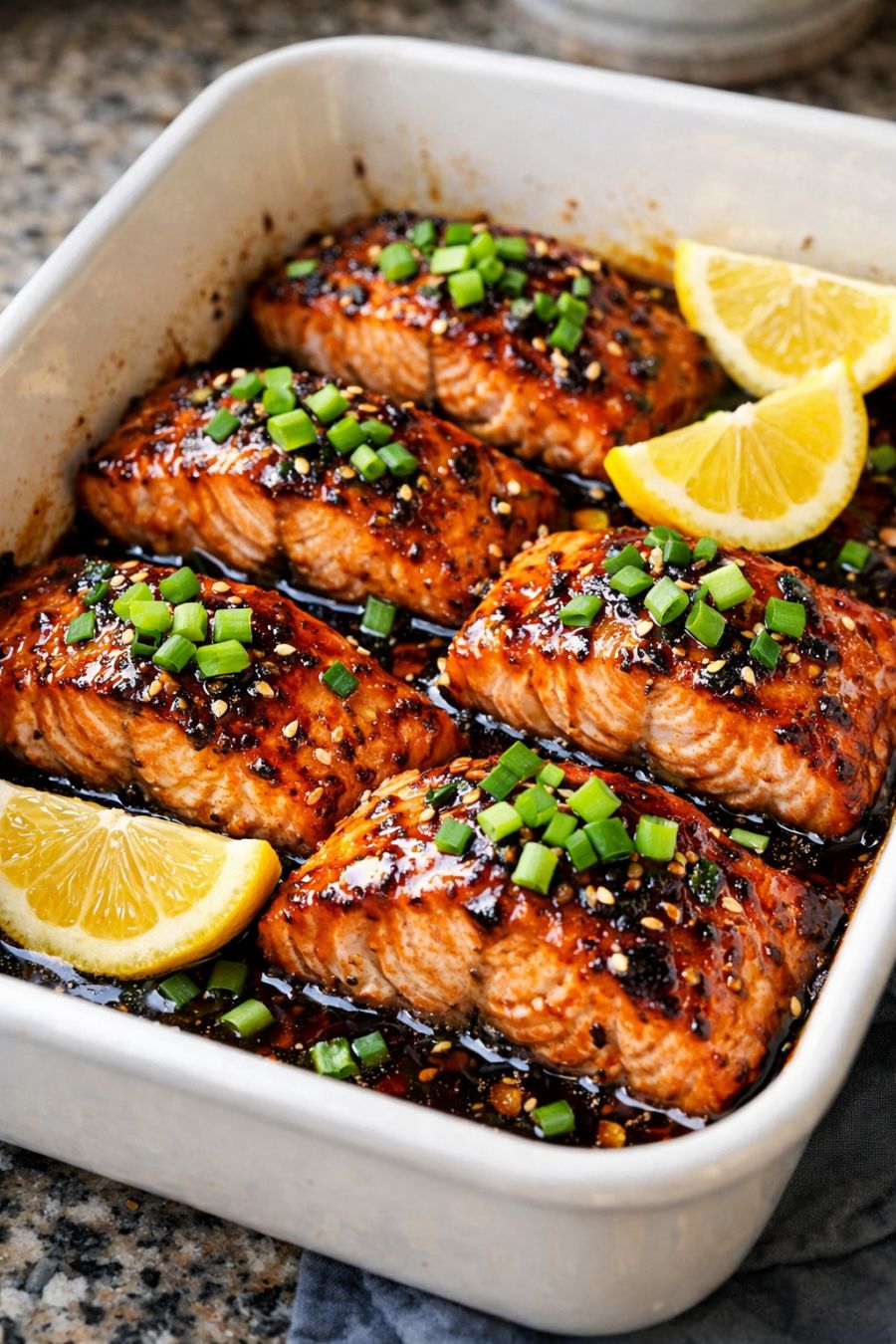
Preheat your oven to 400°F (200°C). Grab a medium white ceramic baking dish that will hold all the salmon portions in a single layer.
Open the package of raw skin-on salmon portions and place them straight into the baking dish, skin side down. No need to rinse—just pat the tops dry quickly with a paper towel if they look very wet.
Drizzle the olive oil evenly over the tops of the salmon portions, using a spoon or your fingers to lightly rub it over the surface so each piece is coated.
Pour the soy sauce and maple syrup directly over the salmon portions in the dish, letting it pool a bit around the sides. Sprinkle the garlic powder evenly over all the pieces. If using, add a pinch of black pepper.
Use the back of a spoon to gently spread the seasonings over each portion so every bite gets some of the salty-sweet garlicky mixture. The salmon should be arranged snugly together with the silver skin visible on the bottom and the tops well-coated.
Place the baking dish on the middle rack of the preheated oven and bake for 12–15 minutes, depending on thickness, until the salmon is just opaque in the center and flakes easily with a fork. Thicker pieces may need up to 17 minutes.
For a slightly caramelized top, switch the oven to broil for the last 1–2 minutes, watching closely so the maple syrup doesn’t burn.
Remove the baking dish from the oven and let the salmon rest for 3–5 minutes. Spoon some of the pan juices over each portion before serving. Add lemon wedges on the side if you like, and get ready for everyone to argue over who gets the last piece.
Variations & Tips
To change up the flavor while keeping the same easy method, swap the maple syrup for honey and the garlic powder for onion powder, or use teriyaki sauce in place of the soy sauce and maple syrup together (about 1/4 cup total). You can also add a teaspoon of Dijon mustard to the dish before baking and gently smear it over the tops of the salmon for a tangier glaze. If your family likes a little heat, sprinkle on a pinch of red pepper flakes along with the garlic powder. For a Mediterranean twist, replace the soy sauce and maple syrup with 2 tablespoons of lemon juice and 2 tablespoons of olive oil, then add 1 teaspoon of dried Italian seasoning. Food safety tips: Always start with properly refrigerated salmon and keep it cold until you’re ready to cook. Do not leave raw fish sitting at room temperature for more than 1–2 hours (or 1 hour if your kitchen is very warm). The FDA recommends cooking fish to an internal temperature of 145°F (63°C), measured at the thickest part with a food thermometer. If you prefer a slightly more tender, medium-cooked salmon, aim for 130–135°F but understand this is below the official guideline; use your own comfort level and always use fresh, high-quality salmon from a trusted source. Avoid cross-contamination by washing your hands, cutting boards, and any utensils that touched the raw fish before using them on cooked food. Leftover cooked salmon should be cooled, then stored in an airtight container in the refrigerator within 2 hours and eaten within 2–3 days.
