
This old-fashioned Indian pudding is the kind of dessert our grandmothers made when the pantry was bare but company was coming anyway. It’s a simple New England classic that traveled well to Midwestern farm kitchens like mine: yellow cornmeal slowly baked in milk until it turns thick, custardy, and deeply caramelized. I’ve pared it down to four humble ingredients and tucked it into the slow cooker, so you get that vintage flavor without babysitting the oven all afternoon. As it bubbles away, the house fills with a warm, toasty, molasses-sweet smell that seems to wander right out the door—don’t be surprised if the neighbors come sniffing around.
Serve this warm Indian pudding straight from the slow cooker, spooned into bowls so you catch some of the dark glossy sauce from the edges. It’s lovely just as it is, but a small scoop of vanilla ice cream or a spoonful of lightly sweetened whipped cream melting over the top makes it downright company-worthy. A hot cup of coffee or black tea is perfect alongside, especially on a cold evening when you want something that feels like a hug in a bowl.
4-Ingredient Slow Cooker Vintage Indian Pudding
Servings: 6
Ingredients
4 cups whole milk
1/2 cup yellow cornmeal
1/2 cup unsulphured molasses
1/2 teaspoon kosher salt
Directions
Generously butter the inside of a round slow cooker crock (4- to 6-quart size works well). This helps prevent sticking and encourages those dark, sticky edges that make the pudding so good.
In a medium saucepan, whisk together the whole milk, yellow cornmeal, molasses, and kosher salt until the cornmeal is evenly dispersed and there are no dry clumps. The mixture will look thin at this point.
Place the saucepan over medium heat and cook, whisking often, until the mixture just begins to steam and thicken slightly, 5–8 minutes. Do not let it boil hard—gentle heat keeps the milk from scorching. It should be pourable but noticeably thicker than plain milk.
Pour the warm mixture into the prepared slow cooker. Use a spatula to scrape every bit from the pan into the crock so the pudding cooks evenly and nothing scorches in the saucepan.
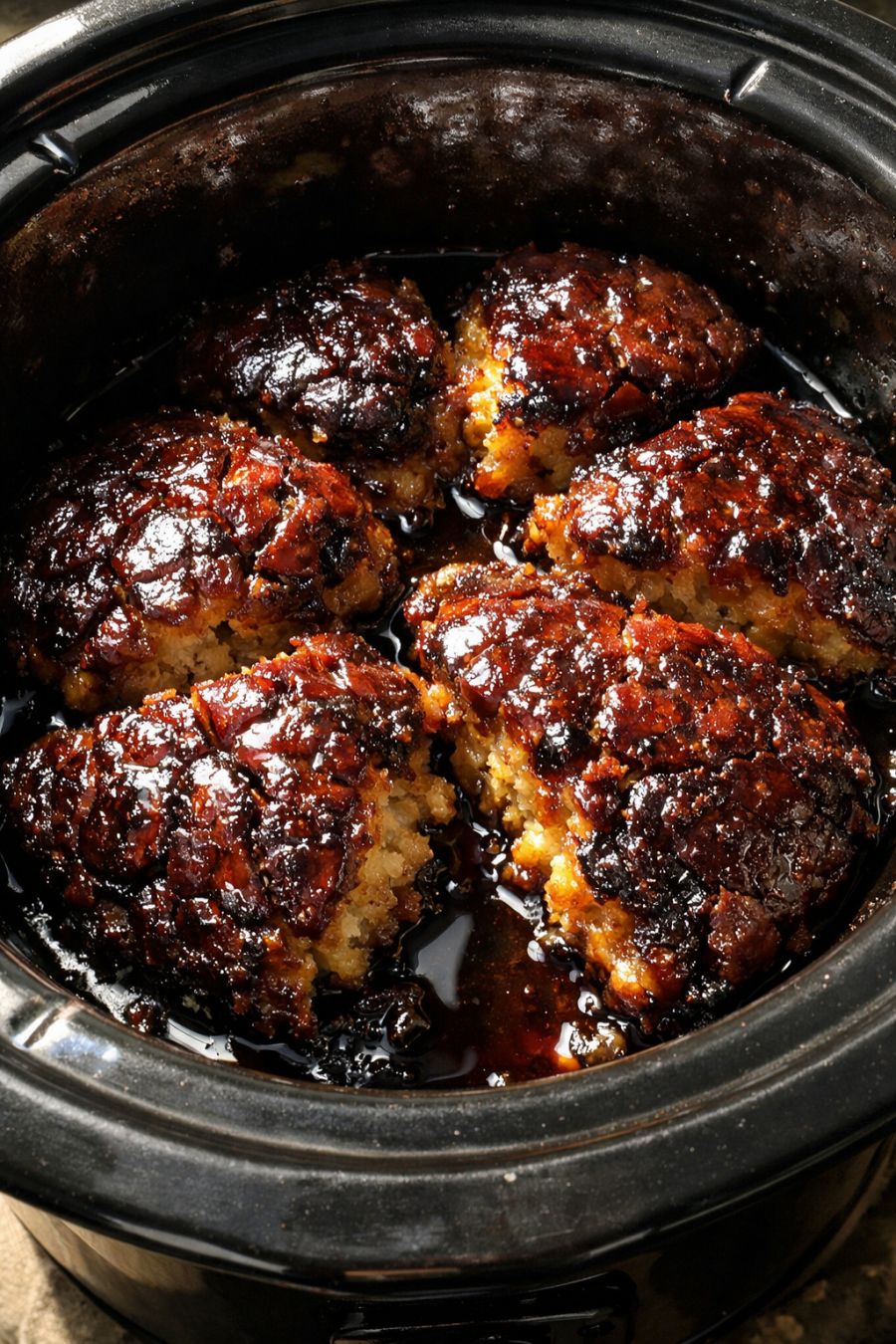
Cover the slow cooker with its lid. Cook on LOW for 4–6 hours, without stirring, until the top is deeply caramelized and mahogany-colored, with crackled edges and a glossy, almost sticky surface. The center will be softly set and tender, and you’ll see darker, saucy puddles forming around the sides.
Once the pudding is cooked, turn off the slow cooker and let it rest, covered, for 20–30 minutes. This helps it firm up just enough to spoon neatly while staying moist inside.
To serve, run a large spoon around the edge to scoop up some of the dark sauce, then lift out portions so each serving has a bit of crackled top, tender center, and glossy syrup from the sides. Serve warm and enjoy the way the aroma fills the whole house.
Variations & Tips
For a slightly richer pudding, you can replace 1 cup of the whole milk with heavy cream, keeping the total liquid at 4 cups. If you like a stronger molasses flavor, increase the molasses to 2/3 cup; for a milder, more kid-friendly sweetness, reduce it slightly and add a spoonful of white or brown sugar if you don’t mind going beyond the four-ingredient spirit. A pinch of warm spices—such as cinnamon, ginger, or nutmeg—turns this into a more traditional holiday-style Indian pudding, and a splash of vanilla stirred in with the milk adds a gentle bakery aroma. If you prefer a looser, more saucy texture, shorten the cooking time slightly; for a firmer, sliceable pudding, let it go toward the longer end of the range and cool it a bit more before serving. Food safety tips: Warm the milk mixture slowly and stir often to prevent scorching, which can give a burnt flavor. Keep the slow cooker covered while cooking so the pudding stays at a safe, steady temperature. Once cooked, do not leave the pudding in the slow cooker on the counter for more than 2 hours; refrigerate leftovers promptly in a shallow container. Reheat leftovers gently in the microwave or in a low oven until steaming hot throughout before serving.
