
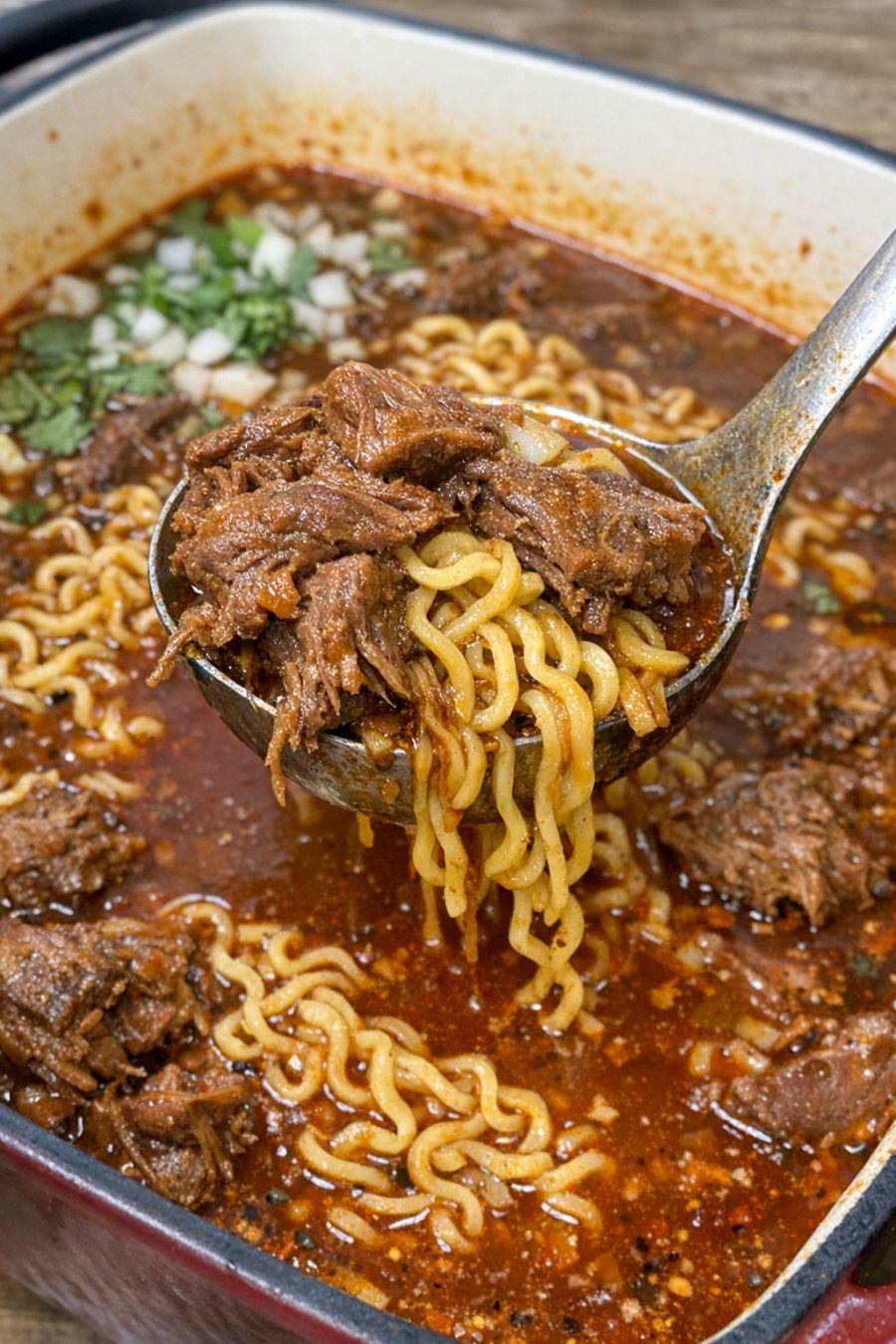
This oven baked 4-ingredient birria ramen noodles dish is my secret weapon when my husband’s poker buddies come over—they request it every single time. It borrows the deep, chile-forward flavor of Mexican birria, a slow-braised meat stew traditionally served with consommé and tortillas, and marries it with the cozy slurpability of instant ramen. Instead of tending a pot on the stove all night, we let the oven do the work in one deep casserole dish. The result is tender, pull-apart beef and wavy noodles bathing in a rich red broth that tastes like you fussed all day, even though you only used four ingredients.
Serve this birria ramen straight from the casserole dish with a big serving spoon so everyone can scoop beef, noodles, and plenty of broth into deep bowls. I like to put out a simple spread: lime wedges, chopped cilantro, and sliced jalapeños for those who want extra heat. Warm flour or corn tortillas on the side are great for dunking into the consommé and wrapping around chunks of beef. A crisp green salad with a tangy vinaigrette or a tray of crunchy cucumber sticks with salt and chili powder helps cut through the richness. For drinks, cold beer, a light red wine, or sparkling water with lime all pair nicely.
Oven Baked 4-Ingredient Birria Ramen Noodles
Servings: 6
Ingredients
3 pounds boneless beef chuck roast, cut into 3–4 large chunks
2 (24-ounce) jars prepared birria-style cooking sauce or birria marinade with consommé base
4 cups low-sodium beef broth
6 (3-ounce) packages instant ramen noodles, seasoning packets discarded
Directions
Preheat your oven to 325°F (165°C). Choose a deep 9x13-inch casserole dish or similar oven-safe pan with high sides; it should be large enough to hold the beef, broth, and noodles with a little room at the top to prevent spilling.
Place the beef chuck pieces in the casserole dish in a single layer, leaving a bit of space between each piece so the sauce can flow around them. If there are any large, thick fat caps, you can trim them lightly, but leave some fat for flavor and tenderness.
Pour the birria-style cooking sauce evenly over the beef, turning the pieces with tongs to coat them thoroughly. The meat should be well covered in sauce; if any pieces are exposed, spoon sauce over the top so everything is coated.
Add the beef broth to the dish, pouring it around the sides so you don’t wash off too much of the sauce from the top of the meat. The liquid level should come at least halfway up the beef, ideally to about three-quarters. If your dish is very deep and the liquid seems low, you can add a bit more broth or water so there’s plenty for the noodles later.
Cover the casserole dish tightly with a double layer of foil, crimping the edges well to trap steam. This helps the beef braise gently and stay moist in the oven. Place the covered dish on a rimmed baking sheet to catch any drips.
Bake the beef at 325°F (165°C) for 2½ to 3 hours, or until it is very tender. The meat should shred easily with two forks and the liquid will have turned into a rich, red consommé. Ovens vary, so start checking around the 2½-hour mark. If the beef resists shredding, cover and return it to the oven, checking every 20–30 minutes.
Carefully remove the hot casserole dish from the oven and peel back the foil away from you to avoid steam burns. Using two forks, shred the beef directly in the dish, pulling it into bite-sized pieces. Stir to mix the shredded meat evenly into the broth and sauce so you have a uniform, beefy consommé.
Taste a spoonful of the broth. If it seems too intense or salty, you can stir in a splash of hot water or a bit more beef broth. If it tastes a little flat, remember the flavors will concentrate around the noodles as they bake, so avoid adding extra salt at this stage unless absolutely needed.
Raise the oven temperature to 375°F (190°C). While the oven heats, break the ramen noodle blocks in half or into large chunks with your hands. Nestle the dry noodles down into the beef and broth, making sure each piece is at least partially submerged so it can soften and absorb flavor. Gently press them under the liquid with a spoon; it’s fine if a few edges poke out.
Cover the dish loosely with foil again, this time just tenting it so steam can circulate but the top doesn’t dry out too quickly. Return the casserole dish to the oven and bake at 375°F (190°C) for 10–12 minutes, until the noodles are mostly tender but still slightly firm in the center.
Remove the foil, give the noodles and beef a gentle stir to break up any clumps of ramen, and bake uncovered for another 3–5 minutes. This allows the top to look a bit more rustic and lets some of the broth concentrate while keeping the noodles wavy and distinct in the red consommé.
Once the noodles are fully cooked and the casserole is bubbling around the edges, take the dish out of the oven. Let it rest for about 5 minutes so the broth settles slightly. Then, using a large serving spoon, scoop generous portions of beef and noodles into bowls, making sure everyone gets plenty of the rich red broth from the bottom of the dish. Serve hot, straight from the casserole.
Variations & Tips
Because this recipe leans on a prepared birria-style sauce, the flavor can vary by brand; choose one labeled as a cooking sauce or marinade with a consommé-style base meant for braising. If you can’t find a dedicated birria sauce, you can substitute a thick red enchilada sauce mixed with a spoonful of chipotle in adobo and a pinch of dried oregano for a similar profile, still keeping your ingredient list short. For a spicier version, stir a bit of the adobo from canned chipotles into the broth before baking the noodles. If your crowd prefers milder heat, look for a “mild” birria or enchilada sauce and serve hot sauce on the side instead. You can also swap the beef chuck for boneless short ribs or beef shank; just keep the total weight about the same and braise until fork-tender. For a leaner option, use boneless skinless chicken thighs and begin checking for tenderness around 1½ hours, as they cook faster than beef. If you’d like some vegetables without adding more ingredients to the main dish, serve it over a handful of baby spinach or shredded cabbage in the bowl; the hot broth will wilt them slightly. Food safety notes: Always keep raw beef refrigerated until you’re ready to cook, and wash your hands, cutting boards, and knives thoroughly after handling it to avoid cross-contamination. Make sure the braising liquid and meat reach at least 165°F (74°C) internally; by the time the beef is shreddable after several hours in the oven, it will be well above that. Cool leftovers promptly—within 2 hours—and store in shallow containers in the refrigerator for up to 3–4 days. Reheat leftovers until steaming hot all the way through, adding a splash of water or broth if the noodles have absorbed too much liquid.
