
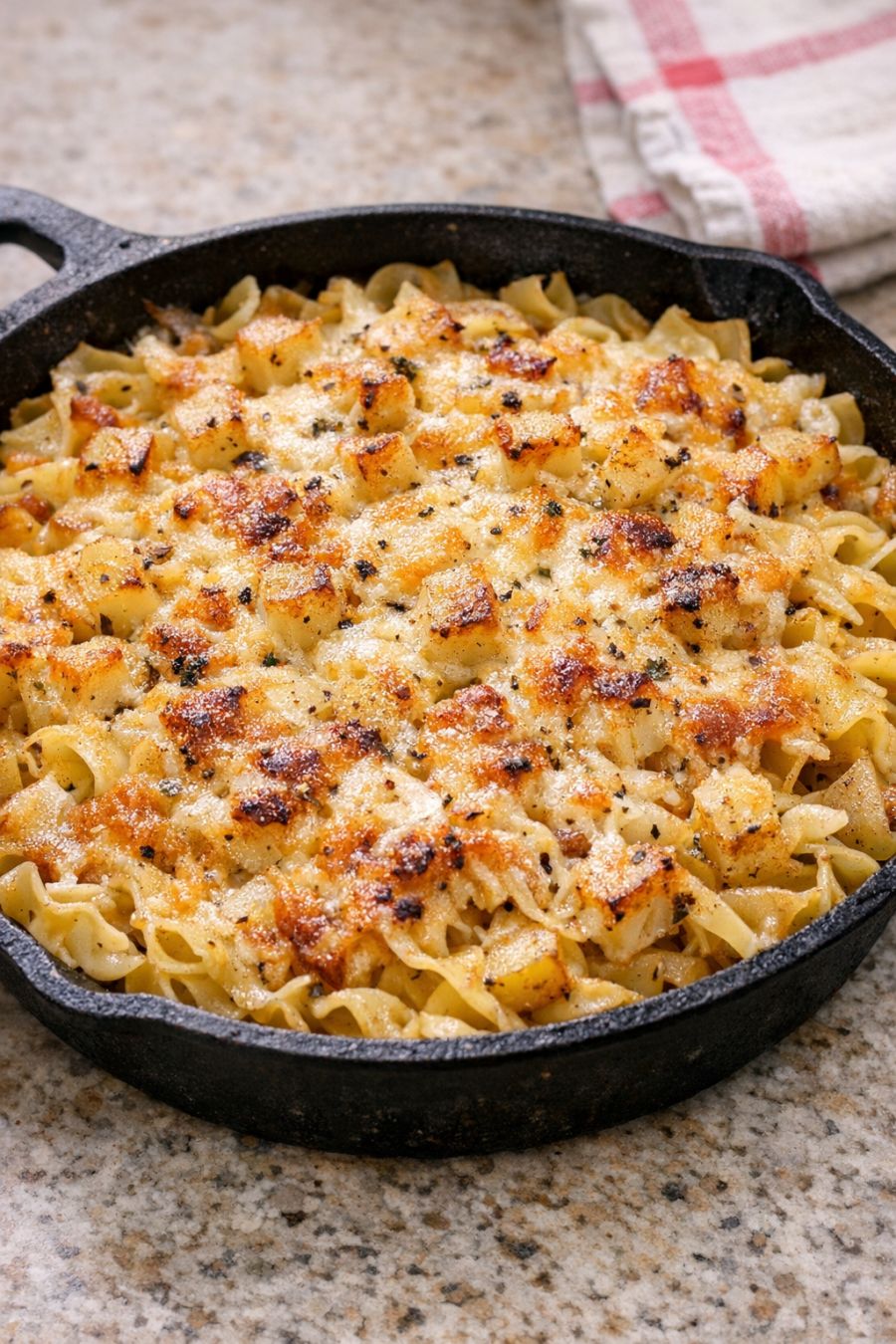
This is my no-brainer, weeknight Amish-style kohlrabi noodle casserole: four ingredients, one cast iron pan, and almost no prep. The idea is super simple and very Midwest—dry wide egg noodles go straight into the pan, then you pile on a mountain of diced raw kohlrabi, add just two more pantry staples, and let the oven do the work. It’s cozy, humble, and practical, the kind of hearty dinner I can throw together after work without even thinking, especially when kohlrabi shows up in our CSA box or at the local farm stand.
I usually serve this casserole with something fresh and crunchy on the side, like a simple green salad with a tangy vinaigrette or sliced cucumbers and tomatoes tossed with a little salt and vinegar. Buttered peas or green beans also fit that classic Amish-style comfort vibe. A slice of crusty bread or dinner rolls is nice if you want to stretch the meal, and if you eat meat, leftover roast chicken or smoked sausage on the side turns it into an extra-hearty plate.
Amish Kohlrabi Noodle Cast Iron Casserole
Servings: 4
Ingredients
8 oz dry wide egg noodles
3 cups diced raw kohlrabi (about 2 medium bulbs, peeled and cut into 1/2-inch cubes)
2 cups whole milk
1 cup shredded mild cheese (such as Colby, Monterey Jack, or mild cheddar)
1 tsp kosher salt (plus more to taste)
1/2 tsp black pepper
1 tbsp butter or oil for greasing the pan (optional but recommended)
Directions
Preheat your oven to 375°F (190°C). Place a 10- to 12-inch cast iron skillet or similar cast iron baking pan on the counter so it’s ready to fill. Lightly grease the pan with butter or oil if you’d like easier cleanup and a bit of extra richness.
Peel the kohlrabi with a sturdy vegetable peeler or a small knife, trimming off any tough outer skin and stems. Dice the kohlrabi into roughly 1/2-inch cubes so it cooks at the same rate as the noodles. You want enough to make a generous layer over the noodles.
Spread the dry wide egg noodles evenly over the bottom of the cast iron pan. Don’t cook them first—this recipe is designed for the noodles to soften and absorb liquid right in the oven.
In a medium bowl or large measuring cup, whisk together the whole milk, shredded cheese, kosher salt, and black pepper. It will be a loose, cheesy milk mixture rather than a thick sauce—that’s exactly what you want so the noodles can soak it up as they bake.
Pour the milk and cheese mixture evenly over the dry noodles in the cast iron pan, nudging the noodles gently with a spoon so the liquid can settle down into the gaps. You should see most of the noodles moistened, with some peeking out on top.
Now pile the diced raw kohlrabi over the noodles. Use your hands to scatter the cubes across the surface, then mound them up a bit in the center so you get that rustic, piled look. It’s okay if some kohlrabi falls between the noodles; that just means more flavor down in the casserole.
Use clean hands or a spoon to gently press the kohlrabi down just enough to help it nestle into the liquid underneath, without fully submerging it. You still want plenty of kohlrabi pieces visible on top for a nice roasted finish.
Cover the cast iron pan tightly with foil. Bake on the center rack for 35 to 40 minutes, until the noodles are mostly tender and the kohlrabi is starting to soften. Covering traps the steam so the dry noodles can cook through safely and evenly in the milk mixture.
Carefully remove the foil (watch out for steam), then return the pan to the oven uncovered. Bake for another 15 to 20 minutes, until the top kohlrabi pieces are lightly golden in spots, the cheese is melted, and the noodles are fully tender when you test one from the center.
Let the casserole rest for about 5 to 10 minutes before serving. This short rest helps the sauce thicken slightly and makes it easier to scoop neat portions. Taste and add a pinch more salt or pepper at the table if needed. Serve straight from the cast iron pan while warm.
Variations & Tips
You can easily tweak this four-ingredient base to fit your family and what you have on hand. For extra protein, stir 1 to 1 1/2 cups of cooked, chopped ham, bacon, or shredded chicken into the dry noodles before adding the milk mixture. If you prefer a richer, creamier casserole, swap 1/2 cup of the milk for heavy cream or evaporated milk. To keep things lighter, use 2% milk and reduce the cheese slightly, understanding the sauce will be a bit less thick. Any mild, good-melting cheese works—try Swiss for a more traditional Amish vibe, or mozzarella for extra stretch. You can also add 1/2 tsp garlic powder, onion powder, or a pinch of paprika to the milk mixture for more flavor without adding extra ingredients to the main formula. If you like a crisper top, scatter a small handful of extra cheese or buttered breadcrumbs over the kohlrabi in the last 10 minutes of baking. For food safety, be sure to keep the milk refrigerated until you’re ready to assemble, and don’t leave the unbaked casserole sitting out at room temperature for more than 30 minutes before baking. Check that the center is hot and bubbling and that the noodles are fully tender before serving, which indicates the dish has reached a safe temperature. Store leftovers in the refrigerator within 2 hours of baking and eat within 3 to 4 days; reheat thoroughly in the oven or microwave until steaming hot all the way through.
