
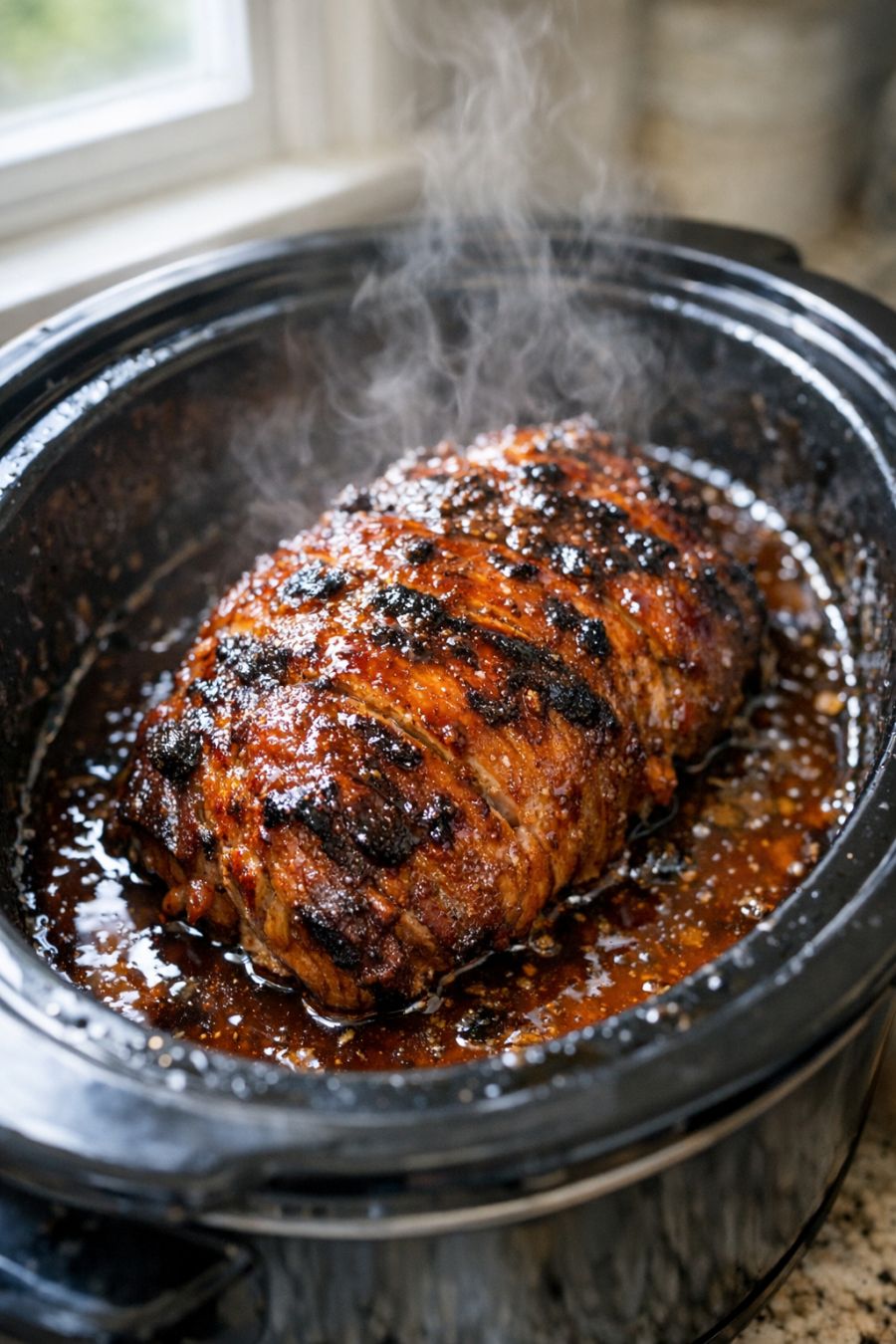
This 4-ingredient slow cooker vintage glazed pork sirloin roast is the kind of company dish our Midwestern moms leaned on: minimal effort, big payoff, and a house that smells incredible all day. The idea nods to those classic 1960s–70s roasts built on pantry staples—think brown sugar, mustard, and a splash of something tangy—only here we let the slow cooker do the work. A boneless pork sirloin roast takes beautifully to long, gentle heat, turning tender while a simple amber glaze cooks down into a glossy, caramelized finish that looks (and tastes) like you fussed far more than you did.
Slice the glazed pork and spoon some of the thick sauce over the top, then pair it with buttery mashed potatoes or a simple rice pilaf to soak up every bit of the juices. On the lighter side, a crisp green salad with a mustardy vinaigrette or roasted spring vegetables—carrots, asparagus, or green beans—play nicely with the sweet-tangy glaze. Leftovers make excellent sandwiches on soft rolls with a little mayonnaise and crunchy lettuce, or tucked into tacos with shredded cabbage and a squeeze of lime.
4-Ingredient Slow Cooker Glazed Pork Sirloin Roast
Servings: 6
Ingredients
3 to 3 1/2 lb boneless pork sirloin roast, trimmed of excess surface fat
1 cup brown sugar, packed (light or dark)
1/3 cup Dijon or brown mustard
1/4 cup apple cider vinegar
Directions
Pat the boneless pork sirloin roast dry with paper towels. Trimming off any very thick exterior fat cap will help the glaze cling and caramelize rather than just melt into the cooker.
In a medium bowl, whisk together the brown sugar, Dijon or brown mustard, and apple cider vinegar until smooth and glossy. The mixture should be thick but pourable, like a loose barbecue sauce.
Place the pork sirloin roast into the slow cooker, fat side up if there is a small cap remaining. Pour the glaze evenly over the top and sides of the roast, using a spoon or spatula to coat it well. Some glaze will pool around the bottom—this will become the base of your sauce.
Cover and cook on LOW for 7 to 8 hours, or on HIGH for 3 1/2 to 4 hours, until the pork is very tender and an instant-read thermometer inserted into the center reads at least 145°F (63°C). During cooking, do not lift the lid more than once or twice, as this releases heat and extends cooking time.
About 30 minutes before serving, carefully ladle 1/2 to 3/4 cup of the cooking liquid from the slow cooker into a small saucepan, trying to include some of the thicker glaze but leaving the roast in place. Bring this liquid to a brisk simmer over medium-high heat and cook, stirring occasionally, for 8 to 10 minutes, or until it reduces and thickens to a shiny, spoon-coating glaze.
While the glaze reduces, preheat your oven broiler and line a small roasting pan or baking sheet with foil for easy cleanup. Using two spatulas or large forks, gently transfer the cooked pork sirloin roast from the slow cooker to the prepared pan, keeping it as intact as possible.
Brush or spoon the reduced glaze generously over the top and sides of the roast, letting it drip into the pan. Place the roast under the broiler, 6 to 8 inches from the heat source, for 3 to 5 minutes, watching closely, until the surface is caramelized, lightly charred in spots, and glistening.
Transfer the glazed roast to a cutting board and let it rest for 10 minutes to allow the juices to settle. Meanwhile, skim any excess fat from the remaining juices in the slow cooker. If you like a thicker sauce, you can simmer an extra cup of those juices in the same saucepan until slightly reduced.
Slice the pork sirloin roast across the grain into 1/2-inch slices. Arrange on a warm platter, spoon some of the slow-cooker juices or extra reduced glaze over the top, and serve the rest of the sauce on the side for passing at the table.
Variations & Tips
For a more pronounced vintage flavor, substitute yellow salad mustard for the Dijon and add a pinch of ground cloves or allspice to the glaze; these warm spices were common in mid-century roasts. For a smokier, almost ham-like profile, stir 1 teaspoon of smoked paprika into the brown sugar mixture. If you prefer a slightly less sweet glaze, reduce the brown sugar to 3/4 cup and increase the apple cider vinegar to 1/3 cup for more tang. You can also swap in honey or maple syrup for half of the brown sugar for a different style of sweetness, keeping the total sweetener volume the same so the glaze still thickens properly. To keep the ingredient list to four but add aromatic depth, choose a mustard that already includes herbs or horseradish, which will subtly perfume the roast as it cooks. Food safety notes: Always start with fully thawed pork; cooking from frozen in a slow cooker keeps the meat in the temperature “danger zone” for too long. Use a dedicated cutting board and knife for raw pork, and wash hands, tools, and surfaces thoroughly with hot, soapy water before handling other foods. Confirm doneness with an instant-read thermometer inserted into the thickest part of the roast, aiming for at least 145°F (63°C), then rest the meat before slicing. Refrigerate leftovers within 2 hours of cooking in shallow containers, and reheat to 165°F (74°C) before serving.
