
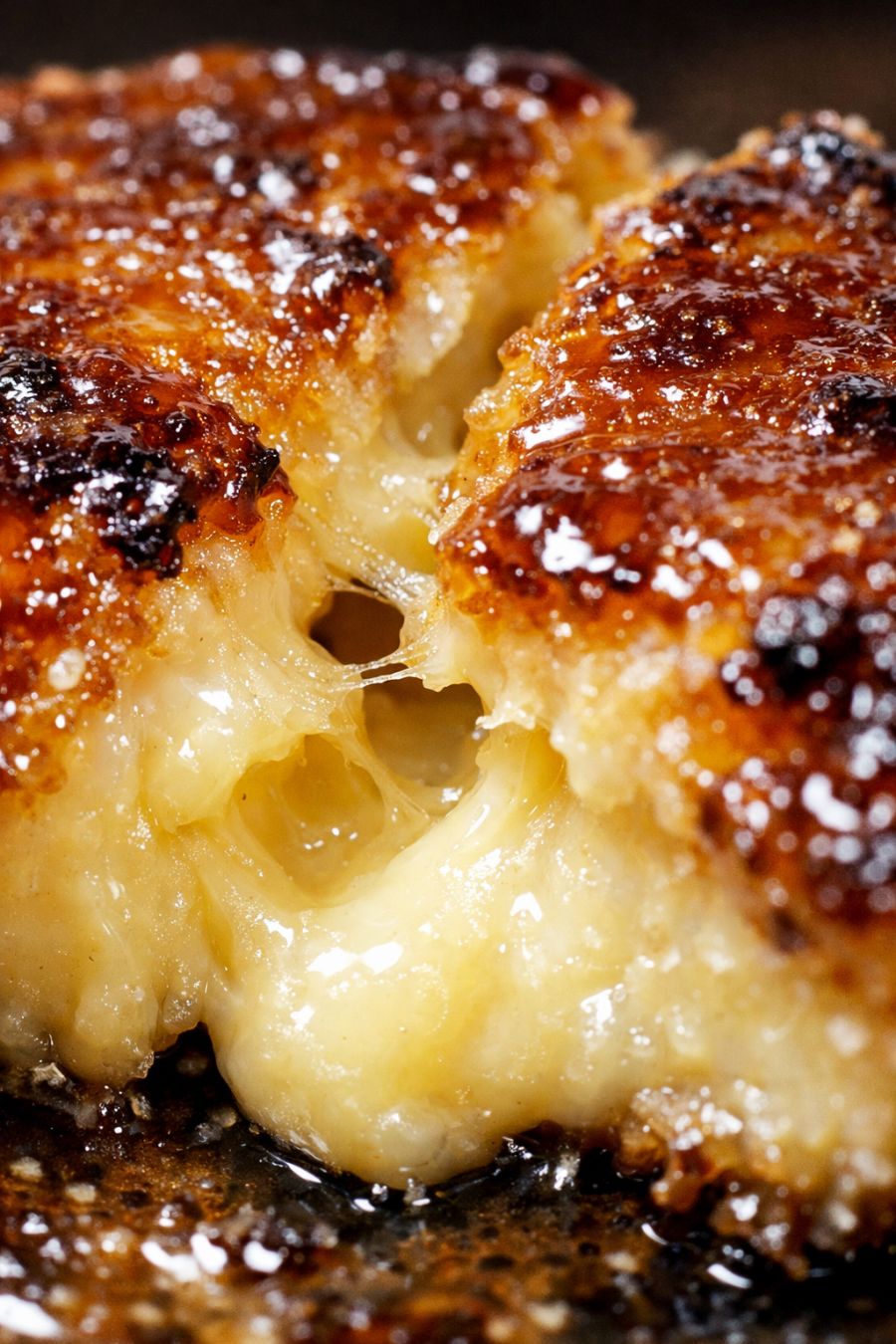
This slow cooker amber custard is my kind of weeknight dessert: four pantry-friendly ingredients, five minutes of hands-on time, and a silky, caramel-scented treat waiting when you walk in the door. It borrows from classic baked custards and flan-style desserts you see across Europe and Latin America, but we skip the fussy water bath and let the slow cooker do the gentle cooking. The result is a softly set custard with a glistening amber and ivory marbled surface—caramel pooling into creamy streaks and caramelized edges that pull apart to reveal a tender, spoonable interior.
Serve the custard warm or at cool room temperature, scooped into shallow bowls so you can show off the amber-and-ivory marbling. A few fresh berries or sliced stone fruit are lovely alongside, especially in spring when the fruit is bright and tart against the mellow sweetness of the custard. I like a small cup of coffee or black tea with this, or a glass of lightly sweet dessert wine if you’re making it for company. Because it’s rich, keep portions modest and pair with something simple and fresh—a crisp green salad and light dinner beforehand makes this feel like just the right ending to a long day.
4-Ingredient Slow Cooker Spring Amber Custard
Servings: 4–6
Ingredients
3/4 cup granulated sugar, divided
2 1/2 cups whole milk, at room temperature
4 large eggs, at room temperature
1 1/2 teaspoons pure vanilla extract
Directions
Lightly prepare the slow cooker: Set a 1 1/2- to 2-quart heatproof baking dish or loaf pan inside your slow cooker to be sure it fits with the lid on; remove it and lightly grease the inside of the dish with a thin film of neutral oil or softened butter. This will help the caramelized edges release while still letting them cling enough to form that slightly pulled-apart, textured look.
Make the amber caramel base: Add 1/2 cup of the granulated sugar to a small, light-colored saucepan. Cook over medium heat, watching closely, without stirring at first. When the sugar begins to melt and liquefy around the edges, gently swirl the pan occasionally so it melts evenly. Continue cooking until the sugar turns a deep amber color—rich brown with a hint of red—and smells toasty but not burned, 5–8 minutes total depending on your stove.
Coat the dish for marbling: Immediately pour the hot amber caramel into the prepared baking dish. Working quickly, tilt and rotate the dish so the caramel flows over the bottom and just slightly up the sides. It will thicken and harden as it cools; that’s expected. The uneven thickness is what will create those glistening amber streaks and caramelized edges against the pale custard.
Warm the milk gently: In a separate saucepan, add the whole milk and warm it over low heat just until it feels pleasantly warm to the touch but not hot or steaming, about 3–5 minutes. This helps the sugar dissolve and encourages a smoother, more even set in the slow cooker without shocking the eggs.
Mix the custard base: In a medium bowl, whisk the remaining 1/4 cup sugar with the eggs until the mixture looks smooth and slightly lightened, about 30–60 seconds. Whisk in the vanilla extract. While whisking constantly, slowly pour in the warm milk in a thin stream. This gradual mixing keeps the eggs from curdling and builds a silky custard.
Combine custard and caramel: Once the caramel in the baking dish has fully hardened, slowly pour the custard mixture over it. If you see a bit of caramel cracking or floating, that’s fine; as it cooks, those pieces will melt back in and help create the ivory-and-amber marbling and slightly gelatinous, jiggly surface.
Set up the slow cooker water bath: Place the filled baking dish back into the slow cooker. Carefully pour hot tap water into the slow cooker around the outside of the dish until it reaches about halfway up the sides of the dish, creating a gentle water bath that mimics an oven bain-marie. Avoid getting any water into the custard itself.
Slow cook until just set: Cover the slow cooker with its lid. Cook on LOW for 2 1/2 to 3 1/2 hours, depending on your slow cooker. Begin checking at 2 1/2 hours: the custard is done when the edges look set and slightly darker, with caramelized, almost pulled-away sides, and the center still has a soft, even jiggle when you nudge the dish. There should be no obvious liquid sloshing in the middle.
Cool for the marbled surface: Carefully lift the baking dish out of the slow cooker (use oven mitts; it will be hot) and place it on a towel-lined counter or cooling rack. Let it cool at room temperature for 30–45 minutes. As it cools, the hot caramel will soften some of the custard’s underside and seep in streaks, creating that glistening amber and ivory marbled, slightly gelatinous surface and tender interior.
Chill briefly or serve warm: For a more pronounced, hyper-glossy marbled look and a slightly firmer, restaurant-style slice, chill the custard for at least 1–2 hours before serving. For a softer, spoonable texture with caramelized edges that gently pull apart, serve warm or just barely warm, scooping down through the amber layer into the creamy custard.
Serve and store: To serve, spoon the custard into shallow bowls, making sure to dig down to capture some of the caramelized edges and the glossy amber sauce. If you prefer a more dramatic presentation, you can run a thin knife around the edge, invert onto a platter, and let the amber caramel drip over the top, though this will soften some of the pulled-apart edge effect. Store leftovers covered in the refrigerator for up to 3 days, and enjoy chilled or gently rewarmed in a low oven or microwave.
Variations & Tips
For a lighter texture, you can replace 1/2 cup of the whole milk with half-and-half or even a splash of cream, which will give the custard a richer mouthfeel and a slightly more custard-forward, less gelatinous set. For a spring twist, infuse the milk with a strip of lemon peel or a split vanilla bean pod before warming—just remove the peel or pod before whisking the milk into the eggs. If you enjoy a subtle floral note, a few crushed cardamom pods steeped in the milk, then strained out, can give a gentle aromatic layer without adding more ingredients to the final custard. You can also play with the caramel: cook it slightly lighter for a honey-colored, milder flavor, or take it just to the edge of deep amber for a more pronounced, almost smoky bitterness that contrasts beautifully with the sweet, ivory custard. For a slightly firmer, more sliceable custard that holds cleaner edges in photos, add 1 extra egg yolk (this technically makes it a fifth component, but if you’re already cracking eggs, it can be a helpful tweak). Food safety tips: Always cook the custard until it is just set and no longer liquid in the center; if you have an instant-read thermometer, the center should reach about 170–175°F (77–80°C) but stay below 185°F to avoid curdling. Use pasteurized eggs if serving to very young children, pregnant individuals, older adults, or anyone with a compromised immune system. Cool leftovers promptly and refrigerate within 2 hours of cooking. Reheat gently, if at all, to avoid overcooking and splitting the custard.
