
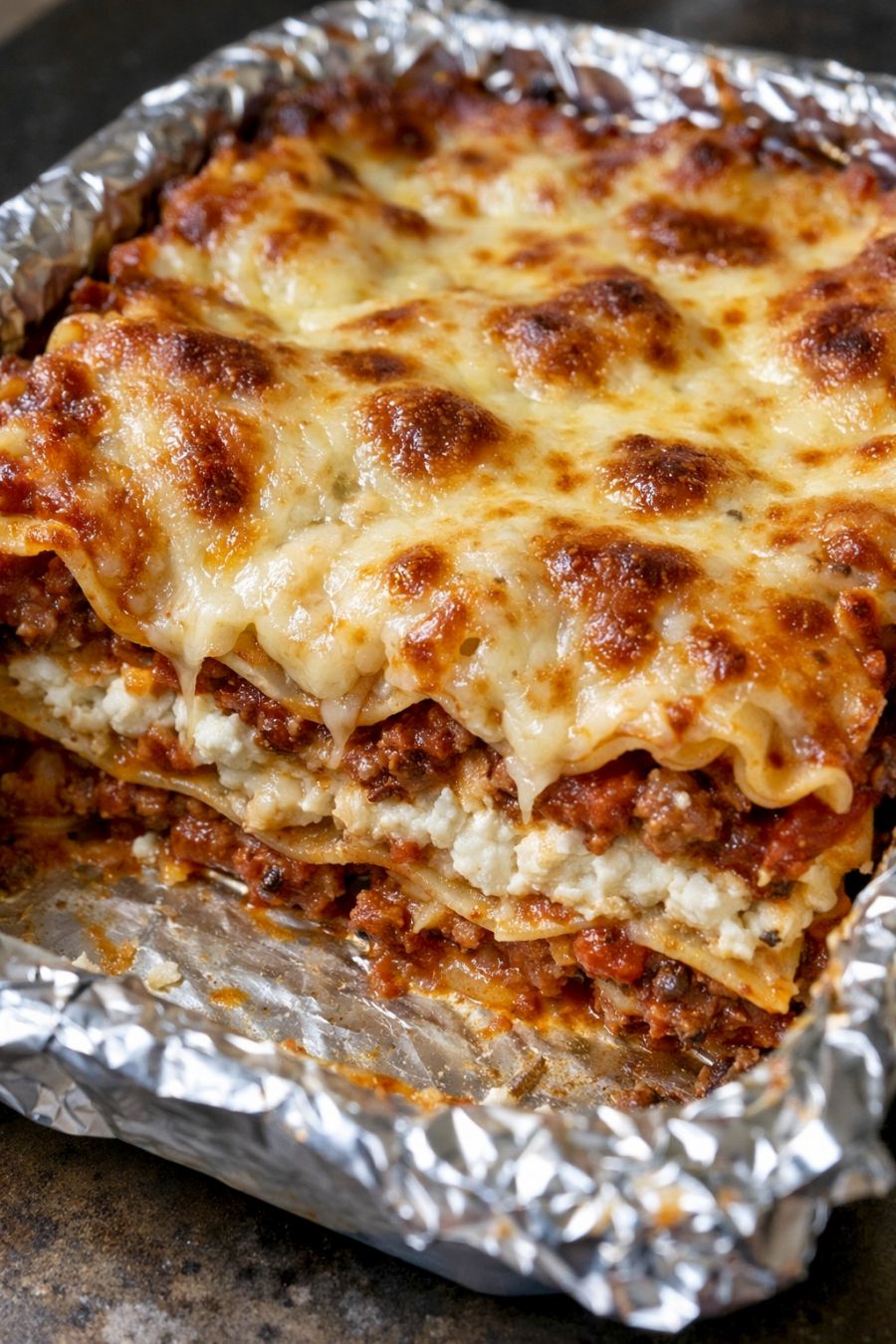
My sister and I have been making lasagna since the 1970s, back when a bubbling pan of noodles, sauce, and cheese meant a Sunday crowd was coming. Over the years I fussed with fancy versions, but this three-ingredient sheet pan cottage cheese lasagna is the one my sister now swears by. It bakes up in a humble foil-lined pan, with golden, bubbly cheese on top and tidy layers you can see from the side, and it tastes like the comforting Midwestern lasagna we grew up with—just pared down to what really matters. If you want a practical, no-fuss, family-style lasagna that still feels like a hug from the oven, this is the one.
Serve this sheet pan lasagna in generous squares with a simple green salad dressed in vinaigrette to cut through the richness, and some buttery garlic bread or warm dinner rolls to swipe through the extra sauce. A side of steamed green beans or roasted carrots fits right in with the old-fashioned, meat-and-potatoes kind of table many of us grew up with. For gatherings, I like to set the pan right in the middle of the table on a trivet, add a bowl of grated Parmesan on the side, and let everyone help themselves, just like we did at church potlucks.
3-Ingredient Sheet Pan Cottage Cheese Lasagna
Servings: 8
Ingredients
1 (16-ounce) box no-boil lasagna noodles
2 (24-ounce) jars thick marinara or pasta sauce (about 6 cups total), divided
2 (24-ounce) tubs small-curd cottage cheese, divided
2 cups shredded mozzarella cheese (optional but strongly recommended, taken from the cottage cheese tubs if they are blended with mozzarella or added as a simple fourth pantry staple)
Nonstick cooking spray, for the foil
Aluminum foil, enough to line a rimmed half sheet pan (about 18x13 inches)
Directions
Preheat your oven to 375°F (190°C). Line a rimmed half sheet pan (about 18x13 inches) completely with aluminum foil, letting it come up and over the sides so cleanup is easy. Lightly spray the foil with nonstick cooking spray so the bottom layer of noodles won’t stick.
Spread about 1 cup of marinara sauce evenly over the bottom of the prepared sheet pan. This thin layer keeps the noodles from drying out and gives you that nice saucy edge everyone fights over.
Lay a single layer of no-boil lasagna noodles over the sauce, breaking pieces as needed so they fit and cover most of the pan. It’s fine if there are a few small gaps; the noodles will expand slightly as they bake.
Dollop about 2 cups of cottage cheese over the noodles, then gently spread it out with the back of a spoon or an offset spatula. If you’re using shredded mozzarella, sprinkle about 1/2 cup over the cottage cheese now. You want an even layer, but it doesn’t have to be perfect—this is a homey pan, not a restaurant dish.
Spoon about 1 1/2 cups of marinara sauce over the cheese layer and spread it gently so you don’t drag the cheese around too much. You should still see clear layers from the side of the pan.
Repeat the layers: noodles, cottage cheese, a sprinkle of mozzarella (if using), then sauce. Keep going until you’ve used most of the noodles and cottage cheese, finishing with a layer of noodles on top. You should have enough sauce left to generously cover the top layer (about 2 cups). If the noodles seem very dry, add a bit more sauce so everything is well-coated; this helps them soften in the oven.
Spread the remaining marinara sauce over the top noodles, making sure no corners are left uncovered, or they may turn too crisp. Sprinkle the remaining mozzarella evenly over the top so it will melt into a bubbly, golden-brown blanket.
Cover the sheet pan loosely with foil, tenting it a bit so it doesn’t press down into the cheese. Seal the edges lightly so steam can help soften the noodles without the cheese sticking to the foil.
Bake on the middle rack for 25 to 30 minutes, until the sauce is hot and the noodles are just about tender when you peek under a corner with a fork. Carefully remove the top foil and return the pan to the oven.
Continue baking uncovered for another 15 to 20 minutes, or until the lasagna is bubbling around the edges and the top is melted and golden brown in spots. If you like a deeper brown, you can broil it for 1 to 2 minutes at the end, watching closely so it doesn’t scorch.
Remove the pan from the oven and let the lasagna rest on a cooling rack for at least 15 to 20 minutes. This rest time is the secret to clean slices and visible layers; the cheese and sauce thicken slightly as they cool, just like the big Sunday pans we grew up with.
Once set, slice the lasagna into squares right in the foil-lined sheet pan. Use a sturdy spatula to lift out pieces, showing off those cottage cheese and sauce layers from the side. Serve warm, and store any leftovers tightly wrapped in the refrigerator for up to 4 days.
Variations & Tips
You can nudge this simple lasagna in a few directions without losing its three-ingredient spirit. If you like a meatier, more old-fashioned Midwestern pan, choose a hearty meat-based marinara so you still only have sauce, noodles, and cottage cheese to think about. For extra creaminess, stir a beaten egg and a handful of shredded mozzarella into the cottage cheese before layering; my sister started doing this once the kids left home and she didn’t have to stretch every dollar so tightly. If you prefer a milder flavor, use a plain tomato-basil sauce; for more zip, pick a garlicky, chunky marinara. You can also sprinkle a little dried Italian seasoning or black pepper over each cheese layer, though the recipe works just fine without any extras. To make a smaller batch, use a quarter sheet pan and halve the ingredients, checking for doneness about 10 minutes earlier. For those watching sodium, look for low-sodium cottage cheese and marinara, and taste the sauce ahead of time so it doesn’t come out too salty once concentrated in the oven. Food safety notes: Keep cottage cheese refrigerated until you’re ready to assemble, and don’t leave the assembled but unbaked lasagna at room temperature for more than 1 to 2 hours. Bake until the center is piping hot and the sauce is bubbling; leftovers should be cooled, covered, and refrigerated within 2 hours of baking, then reheated until steaming throughout before serving. If you line the pan well with foil and avoid tearing it, you can lift the cooled lasagna out in one piece to cut and reheat squares easily, which is especially handy if you’re cooking ahead for family visits or church suppers.
