
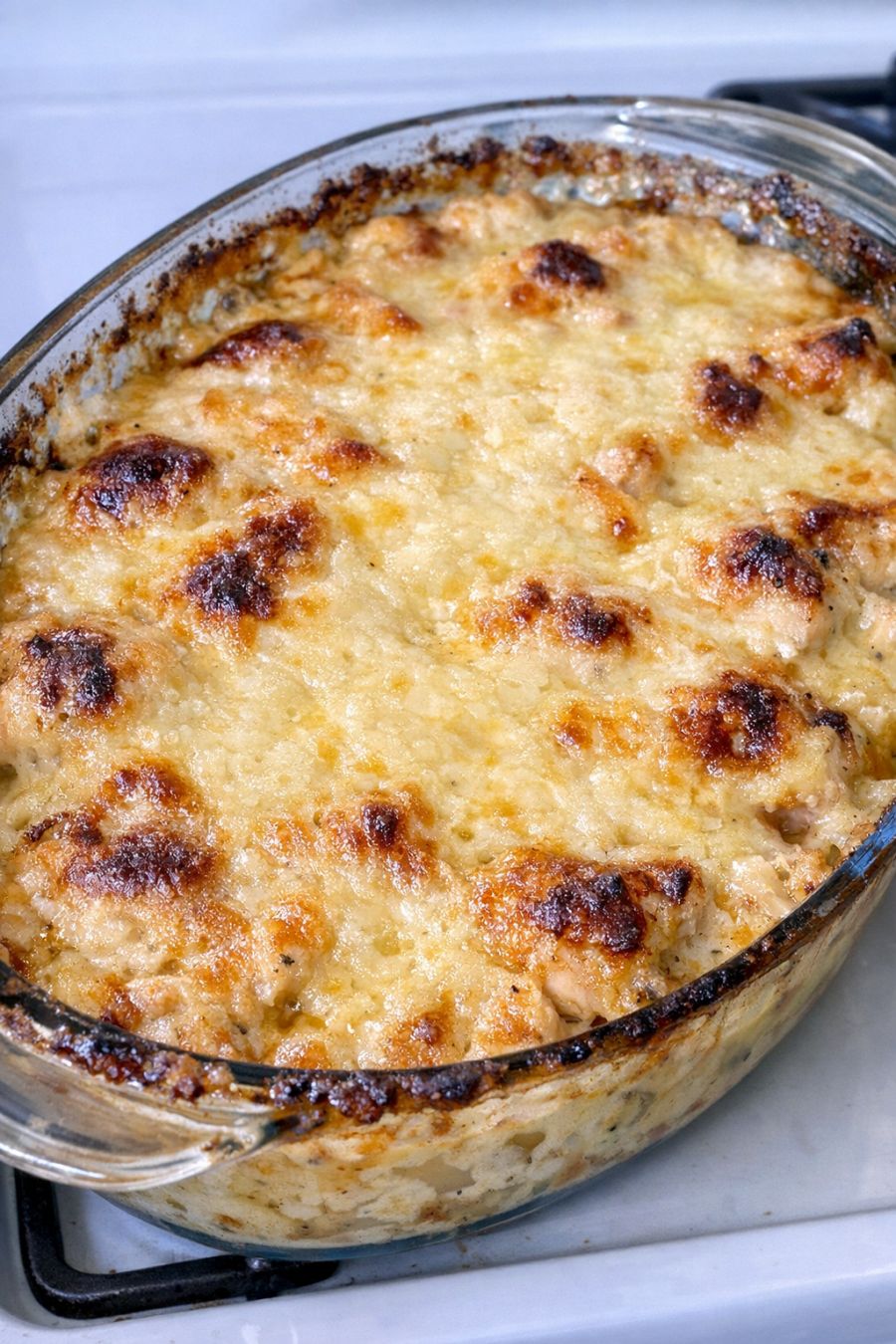
This 3-ingredient oven bridge club chicken casserole is pure spring comfort food, the kind of dish that feels fancy enough for company but easy enough for a Tuesday. The recipe comes from my mother-in-law, who used to make it for her bridge club back in the day. She still talks about how the ladies would hover around the oven, waiting for that bubbly, golden, creamy top to appear. It’s the kind of no-fuss casserole you can toss together in minutes, slide into the oven, and forget about until the edges caramelize and your kitchen smells like nostalgia.
Serve this chicken casserole straight from the oven with a simple green salad dressed in a light vinaigrette to balance the creamy sauce. Buttered egg noodles, mashed potatoes, or steamed rice are perfect for soaking up the extra sauce. If you want to keep it very old-school bridge club style, add a side of buttered peas or green beans and some soft dinner rolls. For a spring touch, sliced strawberries or a simple fruit salad on the side makes the whole meal feel fresh without adding much work.
3-Ingredient Bridge Club Chicken Casserole
Servings: 4
Ingredients
2 pounds boneless, skinless chicken thighs (about 6–8 pieces)
2 (10.5-ounce) cans condensed cream of chicken soup
1 (1-ounce) packet dry onion soup mix
Directions
Preheat your oven to 350°F (175°C). Lightly grease an oval glass baking dish so the chicken doesn’t stick and the edges can caramelize nicely.
Pat the chicken thighs dry with paper towels and trim any large pieces of excess fat. Arrange the chicken in a single layer in the prepared oval glass baking dish, tucking pieces close together but not overlapping too much so they cook evenly.
In a medium bowl, stir together the condensed cream of chicken soup and the dry onion soup mix until well combined. The mixture will be thick and very flavorful—that’s exactly what you want for a rich, creamy top.
Pour the soup mixture evenly over the chicken, using a spatula or the back of a spoon to spread it so every piece is completely covered. Make sure the entire surface is coated; this helps create that glistening, bubbly, golden top as it bakes.
Place the baking dish on the middle rack of the preheated oven. Bake uncovered for 45–55 minutes, or until the casserole is bubbling all over, the top is golden with some caramelized brown patches around the edges, and the chicken reaches an internal temperature of 165°F (74°C). The sauce should be thickened and glossy.
If you want extra caramelized edges and a deeper golden color on top, switch the oven to broil for the last 2–3 minutes, watching very closely so it doesn’t burn. You’re looking for small browned spots and a lightly blistered, bubbly surface.
Remove the casserole from the oven and let it rest for 5–10 minutes before serving. The sauce will thicken slightly as it cools, and you’ll see those crispy browned patches along the rim of the glass dish. Spoon the chicken and plenty of sauce over your chosen side and serve warm.
Variations & Tips
You can swap boneless, skinless chicken breasts for the thighs if that’s what you have on hand; just check for doneness at the 40-minute mark since they can dry out more quickly. For a slightly lighter version, use one can of cream of chicken soup and one can of cream of mushroom or cream of celery to change up the flavor while keeping the 3-ingredient simplicity. If you like a bit of tang, stir 2–3 tablespoons of sour cream into the soup mixture (this technically adds an ingredient, but it’s a nice bridge between creamy and slightly bright). To stretch the casserole for a crowd, nestle parboiled baby potatoes or thick-sliced carrots under the chicken before pouring on the sauce, understanding that this moves beyond the strict 3-ingredient core. For food safety, always start with fully thawed chicken; baking from frozen can cause uneven cooking and unsafe internal temperatures. Use a meat thermometer to ensure the thickest part of the chicken reaches 165°F (74°C). Let leftovers cool, then refrigerate within 2 hours in a shallow container; they’ll keep safely for up to 3–4 days. Reheat leftovers until steaming hot all the way through, and avoid reheating more than once for best texture and safety.
