
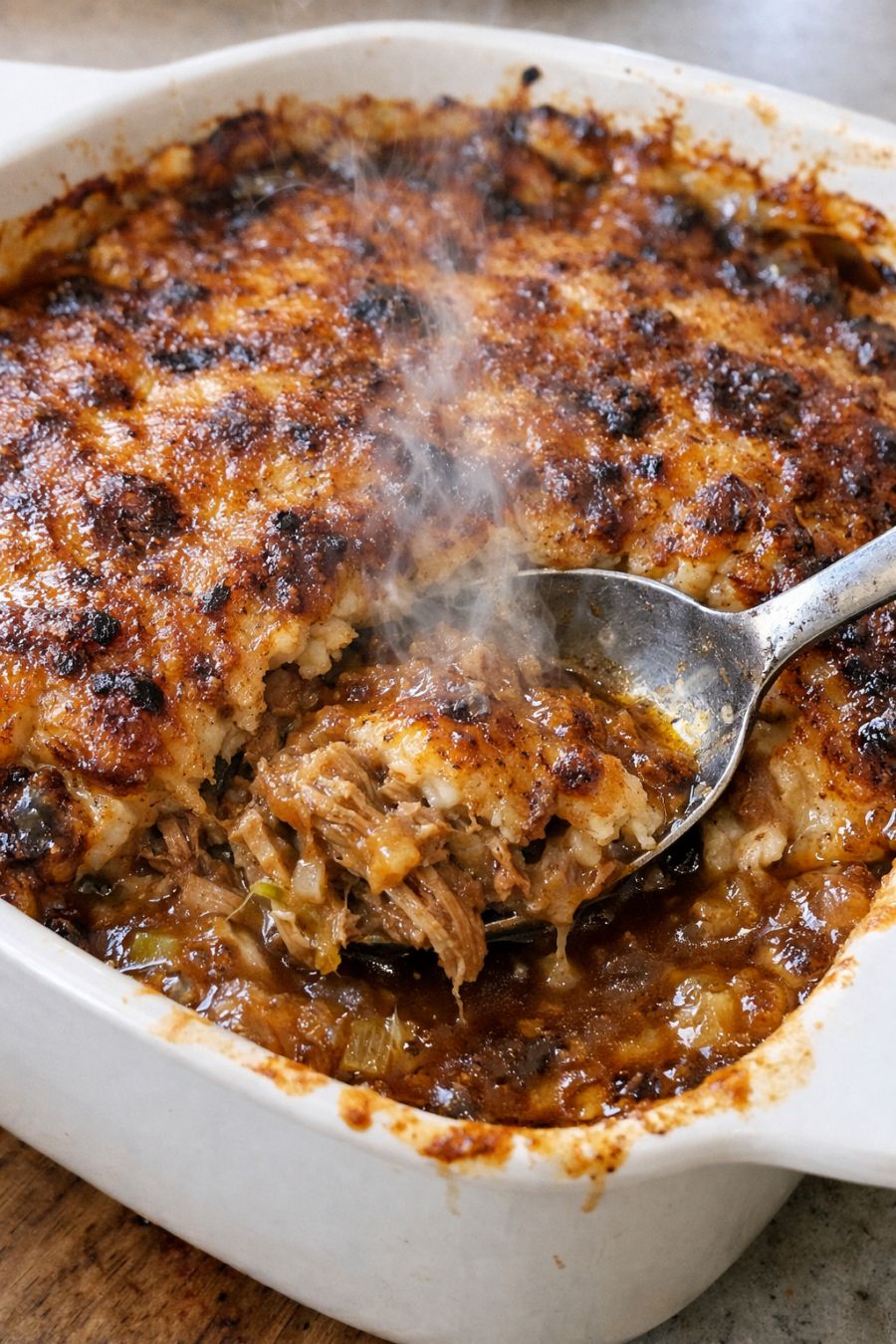
This 5-ingredient oven beef is my kind of spring weeknight bake: you layer well-marbled beef slices with a few pantry staples, slide the pan into the oven, and then forget about it while you reclaim your evening. The marbling slowly renders into a glossy, deeply savory sauce, giving you those restaurant-style caramelized edges without any stovetop babysitting. It’s loosely inspired by simple European oven roasts—think French daube or Italian brasato—but streamlined for a Tuesday night and a modern Midwest kitchen. If you can slice an onion and open a carton of broth, you can make this.
Serve this bubbling beef bake spooned over buttery mashed potatoes, wide egg noodles, or a bed of creamy polenta to catch all the juices. A crisp green salad with a mustardy vinaigrette or simply dressed spring greens balances the richness nicely. On warmer evenings, I like it with roasted asparagus or green beans and a crusty baguette for mopping up the glossy sauce. A light red wine, like a Beaujolais or domestic Pinot Noir, or even a malty amber beer, pairs well with the caramelized, umami-heavy flavors.
5-Ingredient Oven Beef Bake
Servings: 4
Ingredients
2 pounds well-marbled beef chuck, thinly sliced across the grain into 1/4-inch slices
2 large yellow onions, thinly sliced
1 cup low-sodium beef broth
1/3 cup Worcestershire sauce
2 tablespoons neutral oil (such as canola or vegetable oil)
1 teaspoon kosher salt (optional, only if needed after tasting)
1/2 teaspoon freshly ground black pepper (optional, to taste)
Directions
Preheat your oven to 325°F (165°C). Lightly grease a 9x13-inch baking dish or similar casserole with a bit of the neutral oil.
Pat the sliced beef dry with paper towels to help it brown and prevent excess moisture. If any slices are very large, cut them in half so they layer more easily.
Toss the sliced onions with the remaining neutral oil in a bowl to lightly coat them. This helps them soften and caramelize in the oven.
Layer about one-third of the onions evenly over the bottom of the prepared baking dish. Top with roughly one-third of the beef slices, fanning them out slightly and overlapping them to create an even layer with some space for juices to circulate.
Repeat the layering process twice more with the remaining onions and beef, finishing with a layer of beef on top. This creates those distinct, spoonable layers you see when you break into the casserole.
In a measuring cup or small bowl, whisk together the beef broth and Worcestershire sauce. Pour this mixture evenly over the layered beef and onions, tilting the pan slightly so the liquid seeps down into the layers.
Cover the baking dish tightly with heavy-duty aluminum foil, crimping the edges well to trap steam. Place the dish on the middle rack of the preheated oven.
Bake covered for 1 1/2 hours, undisturbed. During this time the beef will gently braise and the onions will soften into the sauce, so there’s no need to check or stir.
After 1 1/2 hours, carefully remove the foil (watch for escaping steam). Increase the oven temperature to 400°F (200°C). Return the uncovered dish to the oven.
Bake uncovered for an additional 25 to 35 minutes, or until the top is deeply caramelized and golden brown in spots, the edges are bubbling, and the sauce has reduced to a glossy consistency pooling around the sides.
Remove the casserole from the oven and let it rest for 10 minutes. This brief rest allows the juices to settle slightly so the layers hold together when you spoon into them.
Taste a bit of the sauce and beef. Add kosher salt and black pepper only if needed, keeping in mind that Worcestershire contributes both saltiness and depth. Spoon the layered beef and onions over your chosen side and serve hot, making sure to scoop up plenty of the glossy sauce from the edges.
Variations & Tips
For a slightly different profile while still keeping the spirit of a 5-ingredient weeknight bake, you can swap the Worcestershire sauce for an equal amount of soy sauce plus a teaspoon of brown sugar for a more East Asian-leaning umami; the sugar will also encourage deeper browning on top. If you prefer a lighter, more spring-forward take, use part beef broth and part dry white wine, and tuck a few sprigs of fresh thyme between the layers (remove the herbs before serving). To make the dish a bit leaner, you can use top round or sirloin instead of chuck, but be aware that leaner cuts will be slightly less succulent and may benefit from slicing even thinner and checking for tenderness 10 minutes earlier. Add sliced mushrooms or carrots between the layers if you do not need to strictly adhere to 5 ingredients; they soak up the sauce beautifully. For make-ahead convenience, assemble the casserole up to the point of adding the liquid, cover, and refrigerate for up to 12 hours, then bake as directed, adding 5 to 10 minutes to the covered baking time if starting from cold. Food safety notes: Always keep raw beef refrigerated until you are ready to assemble and bake, and avoid leaving the uncooked casserole at room temperature for more than 30 minutes. Use separate cutting boards and knives for raw meat and vegetables, or wash thoroughly with hot, soapy water between uses. Cook the beef until it is tender and the sauce is bubbling vigorously; the internal temperature of the thickest portion should reach at least 145°F (63°C), though braised dishes like this are typically cooked well beyond that for texture. Refrigerate leftovers within 2 hours in shallow containers and reheat until steaming hot before serving.
