
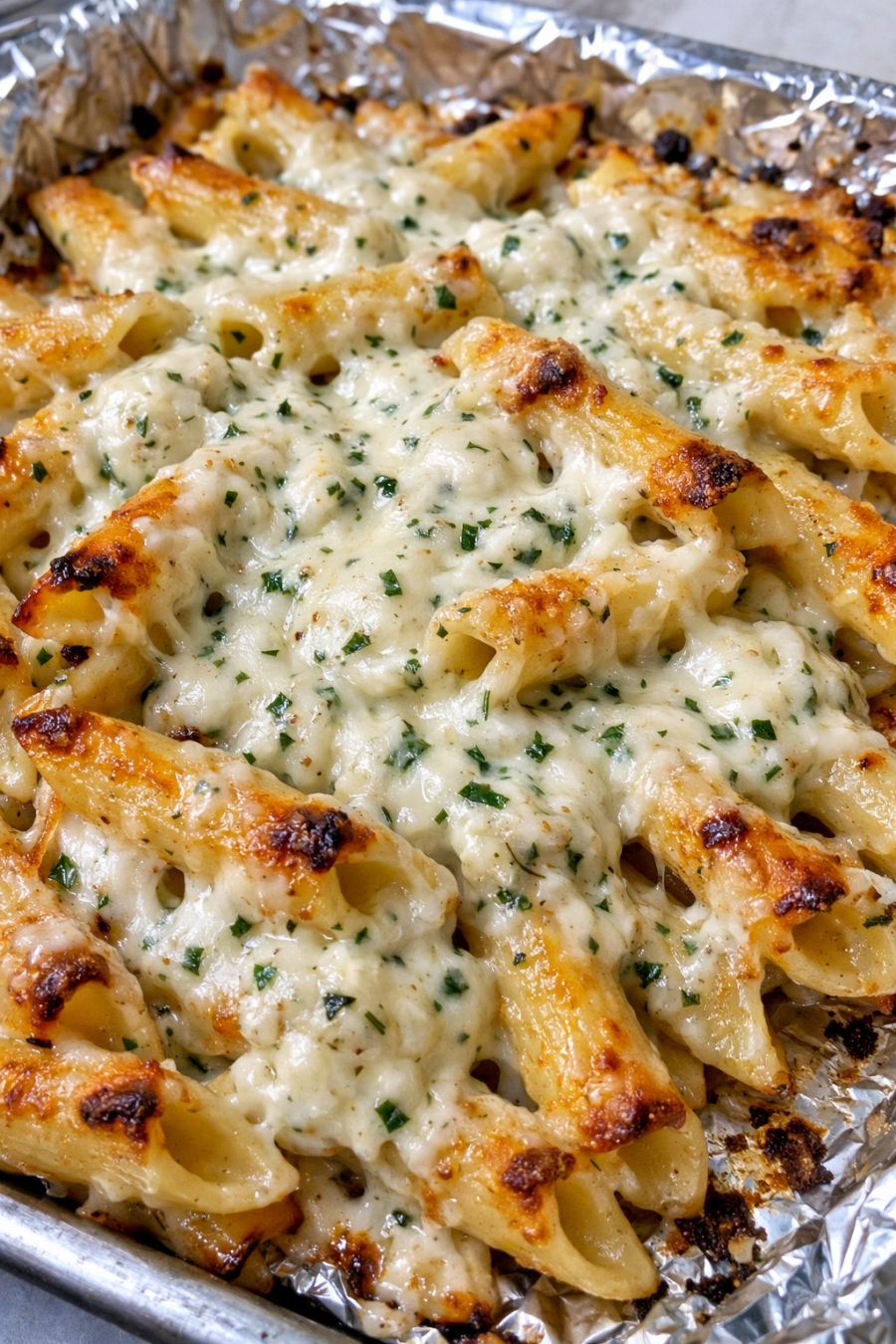
This oven baked 3-ingredients sheet pan Boursin pasta is exactly the kind of dish that quietly shows up at a family game night and then somehow becomes non‑negotiable at every gathering afterward. It’s built for real life: one pan, almost no chopping, and ingredients you can grab at any supermarket on the way home from work. A block of garlic and herb Boursin melts into hot, starchy pasta in the oven, creating a silky sauce with crisp, golden edges that everyone ends up scraping off the pan. While baked pasta has roots in many European traditions, this version leans into modern convenience—no boiling, no béchamel, just smart use of the oven and foil to do the work for you.
Serve this pasta straight from the sheet pan while it’s still bubbling and the edges are toasty. I like to pair it with a simple green salad dressed in a sharp vinaigrette to cut through the richness, and a bowl of roasted or steamed vegetables—broccoli, green beans, or asparagus all work well. Warm, crusty bread or garlic toast is ideal for swiping up the creamy sauce left on the foil. For drinks, a crisp white wine like Pinot Grigio, a light red such as Pinot Noir, or a citrusy sparkling water balances the garlicky, herby Boursin nicely.
Oven Baked 3-Ingredients Sheet Pan Boursin Pasta
Servings: 6
Ingredients
12 oz (about 3 1/2 cups) dry penne pasta
2 (5.2 oz) rounds garlic & fine herbs Boursin cheese (unwrapped)
3 to 3 1/2 cups water (hot tap water or just‑boiled), plus more as needed
1 tsp kosher salt (optional, to season the water and pasta)
Freshly ground black pepper (optional, for serving)
Olive oil spray or 1 tsp neutral oil (optional, for greasing foil)
Directions
Preheat your oven to 400°F (200°C). Line a large rimmed sheet pan (about 18x13 inches) with aluminum foil, pressing it into the corners so it sits flat. Lightly grease the foil with a quick spray of oil or a thin smear of neutral oil to help prevent sticking and make cleanup easier.
Spread the dry penne pasta evenly over the foil-lined sheet pan in a single, fairly even layer. It’s fine if some pieces overlap, but avoid piling it too deeply in one spot so it cooks evenly.
Nestle the two rounds of garlic & fine herbs Boursin cheese into the center of the pasta, spacing them a few inches apart so they can melt and spread. They should sit on top of the pasta rather than directly on the foil.
Carefully pour 3 cups of hot water over the pasta, distributing it as evenly as possible across the pan. The pasta will not be fully submerged; that’s okay. Sprinkle with the kosher salt, if using. Gently shake or tilt the pan so the water runs underneath and around the pasta, helping it settle into an even layer.
Cover the entire sheet pan tightly with a second sheet of foil, crimping the edges all the way around to seal in steam. This step is important—the trapped steam is what allows the pasta to hydrate and cook without pre‑boiling.
Place the covered pan on the center rack of the preheated oven and bake for 25 minutes. During this first stage, the pasta will soften and the Boursin will begin to melt into the starchy water.
After 25 minutes, carefully remove the pan from the oven and peel back the top foil away from you to avoid steam. Stir the pasta gently with a spatula or tongs, breaking up and mixing in the softened Boursin so it starts to form a creamy sauce. If the pasta looks very dry or there are still many hard, uncooked pieces, add up to 1/2 cup more hot water and stir again.
Re-cover the pan loosely with the foil (you don’t need to crimp it as tightly this time) and return it to the oven for another 10–15 minutes, or until the pasta is al dente and most of the liquid has been absorbed into a thick, creamy sauce. Stir once more to check texture; if needed, add a splash of hot water to loosen.
For golden, crispy edges like everyone fights over at game night, remove the top foil completely and bake the uncovered pan for an additional 5–8 minutes. Watch closely during this stage: you’re looking for lightly browned, toasty pasta tips around the edges and small golden spots where the Boursin has caramelized, not dry or burnt pasta.
Remove the pan from the oven and let it rest for 3–5 minutes. This short rest allows the sauce to thicken slightly and cling to the pasta. Taste and adjust seasoning with a bit more salt and freshly ground black pepper, if you like.
Serve the Boursin pasta directly from the sheet pan, scooping up both the creamy center and the crispy edges. If you’re feeding a crowd, set the pan in the middle of the table with a big spoon and let everyone help themselves—just warn them that the pan and foil will be very hot.
Variations & Tips
Because this recipe is so simple, it’s easy to adapt once you’ve made it once or twice. For a bit more flavor complexity without adding much effort, you can swap one of the garlic & herbs Boursin rounds for a different variety, such as shallot & chive or black pepper. If you’d like more color and nutrients, scatter 1 to 2 cups of halved cherry tomatoes or small broccoli florets over the pasta before adding the water; they’ll roast and soften as the pasta cooks. A handful of baby spinach can be stirred in during the final 5–10 minutes of baking so it wilts into the sauce. To add protein, toss in a cup of cooked, shredded rotisserie chicken or crumbled cooked Italian sausage when you first stir the melted Boursin into the pasta. For a spicier version, finish with crushed red pepper flakes or a drizzle of chili oil just before serving. If you prefer a slightly richer sauce, stir in a splash (2–3 tablespoons) of heavy cream or half‑and‑half after the pasta is tender and bake uncovered for a few extra minutes.
For texture, you can sprinkle 1/4 to 1/3 cup grated Parmesan or pecorino over the top before the final uncovered bake to create an extra golden, savory crust. If you don’t have penne, most short, sturdy pastas—rigatoni, rotini, fusilli—will work, but avoid very tiny shapes like ditalini, which can overcook quickly on a sheet pan.
Food safety and practicality tips: Always handle the hot sheet pan and foil with oven mitts, and open the foil away from your face and hands to avoid steam burns. If you add cooked meats (like chicken or sausage), make sure they were cooled and stored properly beforehand and that the finished dish reaches at least 165°F in the center when reheated. Leftover pasta should be cooled to room temperature within 2 hours, transferred to a shallow container, and refrigerated; use within 3–4 days. Reheat in a 350°F oven, covered, with a splash of water or milk to re‑loosen the sauce. Because this recipe uses dry pasta and dairy, don’t leave the finished dish sitting out at room temperature for more than 2 hours, especially at warm gatherings.
