
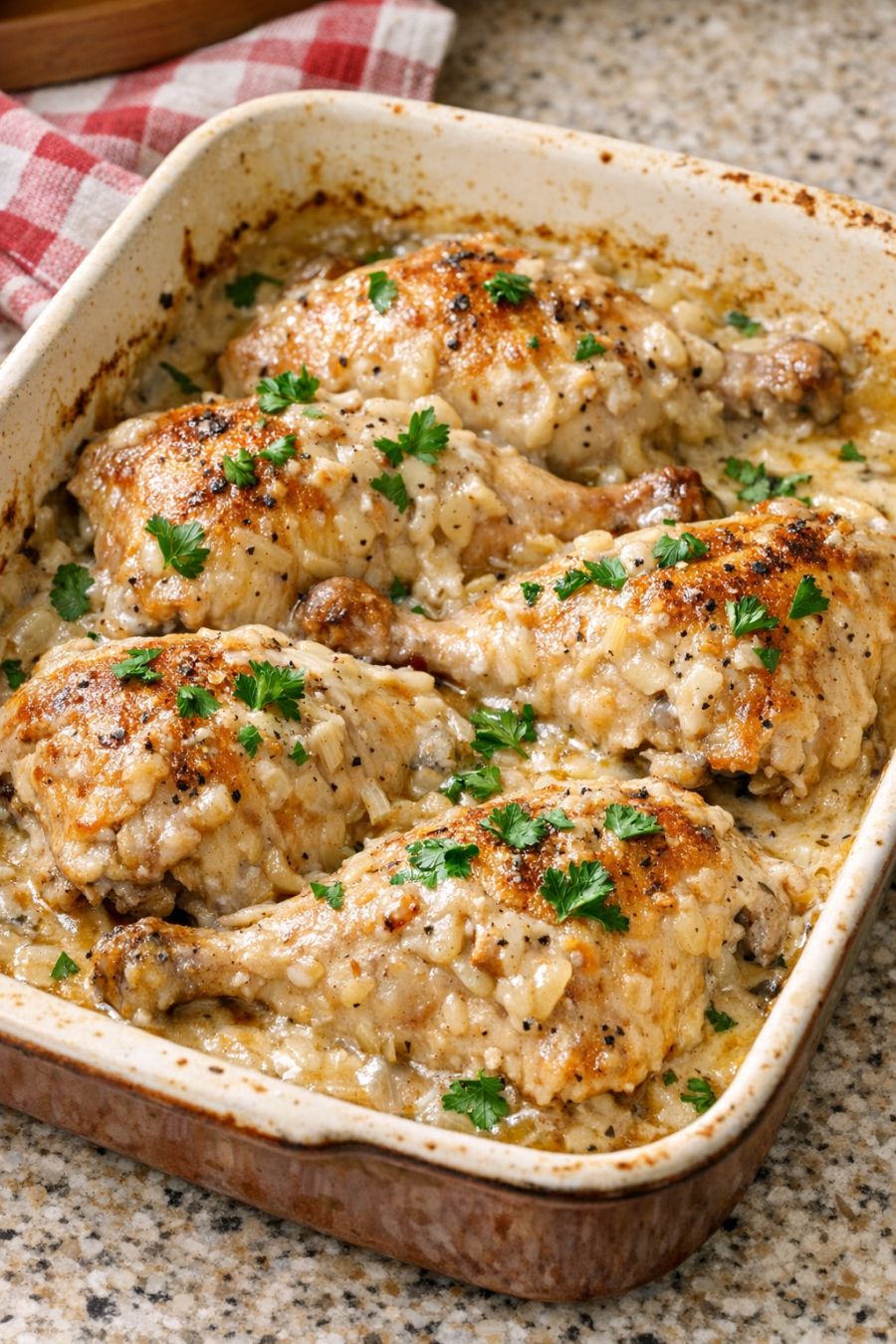
This 4-ingredient oven 1950s freezer chicken using frozen chicken leg quarters is the kind of no-fuss, crowd-pleasing dish our grandmas leaned on when the day got away from them. You literally dump still-frozen leg quarters into a casserole dish, scatter a few trusty pantry staples over the top, and let the oven do the work. The result is tender, saucy chicken with a cozy, old-fashioned flavor that tastes like a Sunday dinner—even if you threw it together on a Tuesday night.
Serve these saucy chicken leg quarters over fluffy white rice, buttered egg noodles, or mashed potatoes so all that savory sauce has something to soak into. A simple side of green beans, frozen mixed vegetables, or a tossed salad rounds out the plate without much extra effort. If you want to stretch the meal for a bigger crowd, add a basket of warm dinner rolls or buttered toast for dipping into the juices.
4-Ingredient Oven 1950s Freezer Chicken
Servings: 4
Ingredients
4 frozen chicken leg quarters (about 3–3 1/2 pounds total, not thawed)
1 (10.5-ounce) can condensed cream of mushroom soup
1 (1-ounce) packet onion soup mix
1/2 cup water
Directions
Preheat your oven to 350°F (175°C). Lightly grease a 9x13-inch white ceramic or glass casserole dish, if you have one, to help with cleanup.
Place the frozen chicken leg quarters in a single layer in the casserole dish. It’s okay if they touch a little, but try not to stack them so they cook evenly.
In a medium bowl, stir together the condensed cream of mushroom soup, onion soup mix, and water until mostly smooth. It will be thick—that’s what you want.
Pour the soup mixture evenly over the frozen chicken leg quarters, using a spatula or spoon to spread it so each piece is coated. It will thin out and turn into a sauce as it bakes.
Cover the casserole dish tightly with foil. This helps the chicken start cooking gently and keeps it from drying out while it’s still frozen in the middle.
Bake, covered, for 1 1/2 hours. At this point, carefully remove the foil (watch for steam) and spoon some of the sauce from the bottom of the dish over the tops of the chicken.
Return the dish to the oven, uncovered, and bake for another 30–40 minutes, or until the chicken is very tender, the sauce is bubbly and lightly browned at the edges, and the internal temperature in the thickest part of each leg quarter reaches at least 165°F (74°C).
If you’d like the skin more browned, you can turn the oven to broil for 2–4 minutes at the end, watching closely so it doesn’t burn.
Let the chicken rest in the casserole dish for about 5–10 minutes so the juices settle. Spoon the creamy onion sauce over each piece when serving.
Variations & Tips
You can swap the cream of mushroom soup for cream of chicken or cream of celery if that’s what you have in the pantry. For a slightly sweeter, more kid-friendly flavor, stir 1–2 tablespoons of ketchup into the soup mixture before pouring it over the chicken. If you have picky eaters who don’t like visible onion bits, choose a cream of chicken soup and use only half the onion soup mix packet, then whisk it very well so the pieces are smaller. For extra richness, you can replace some or all of the water with milk, but keep in mind it may brown a bit more around the edges. To make it feel more like a full one-pan meal, scatter baby carrots or drained canned green beans around the chicken before baking, understanding they’ll be very soft and saucy, just like old-fashioned casseroles. FOOD SAFETY TIPS: Always cook frozen chicken leg quarters until the internal temperature in the thickest part of the meat (not touching bone) reaches at least 165°F (74°C); use an instant-read thermometer to be sure. Because you’re starting from frozen, avoid baking at a lower temperature than 350°F, and do not use a slow cooker for this exact method, as frozen poultry can sit too long in the unsafe temperature zone. Don’t rinse the frozen chicken; any surface bacteria will be killed during proper baking, and rinsing can spread germs around your sink. Refrigerate leftovers within 2 hours of cooking, store in a covered container, and use within 3–4 days, reheating to 165°F before serving again.
