
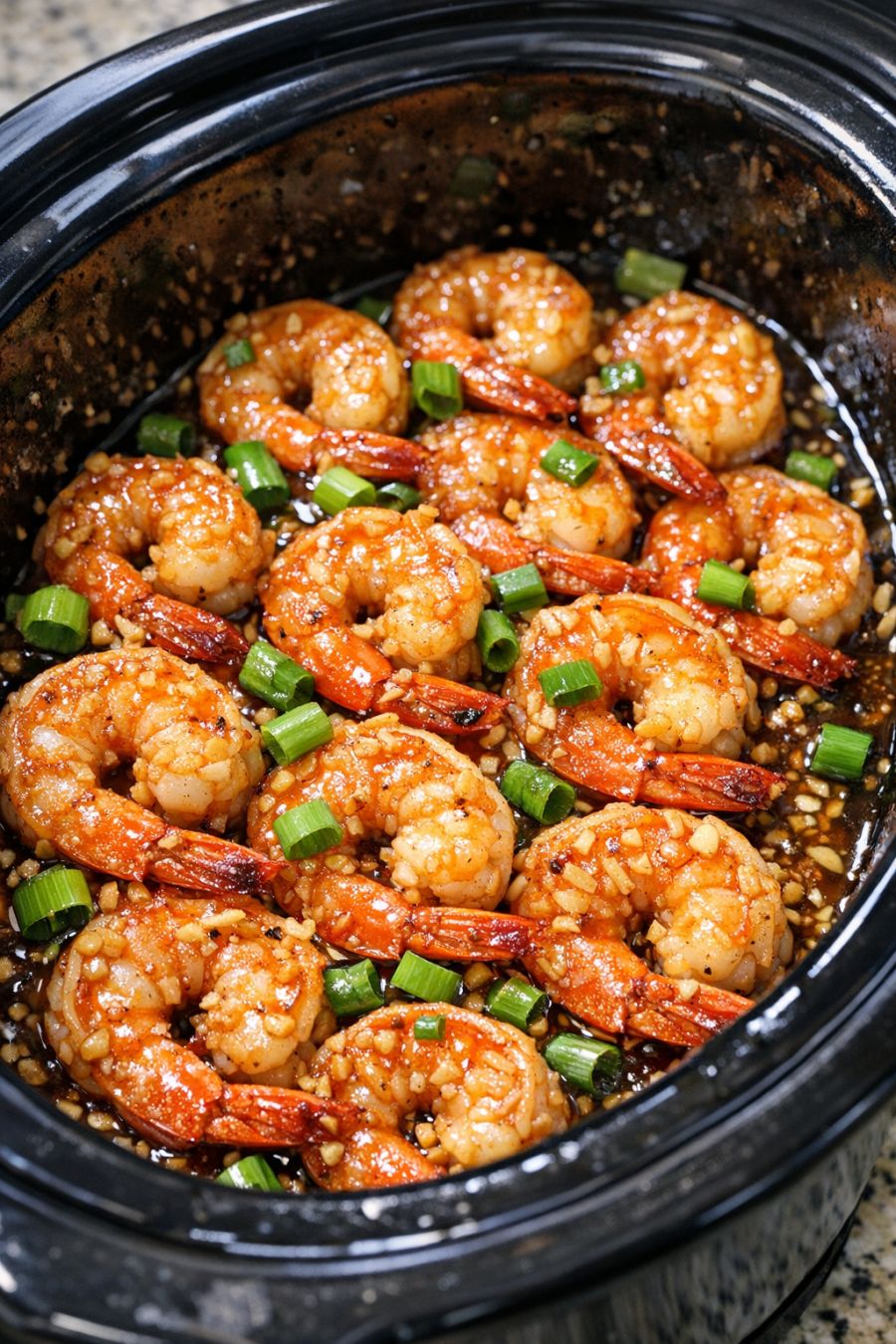
This slow cooker 4-ingredient honey garlic shrimp is the kind of weeknight recipe I lean on when I’m short on time but still want something that feels a little special. You start with raw frozen shrimp, drizzle on bottled honey and just three pantry ingredients, then let the slow cooker do the work. While honey-garlic combinations show up in many Asian-inspired dishes, this version is streamlined for home cooks: no searing, no mixing bowls, and minimal cleanup. It’s sticky, sweet, garlicky, and perfect for spooning over rice or noodles when you want takeout flavors without leaving the house.
Serve the honey garlic shrimp over steamed jasmine or basmati rice to soak up the sticky sauce. A side of quickly sautéed or steamed vegetables—such as broccoli, snap peas, or green beans—adds color and crunch. If you prefer noodles, ladle the shrimp and sauce over rice noodles or thin spaghetti. A simple cucumber salad with rice vinegar and a pinch of salt makes a fresh counterpoint to the sweetness of the dish, and a squeeze of lime at the table brightens everything.
Slow Cooker 4-Ingredient Honey Garlic Shrimp
Servings: 4
Ingredients
1 1/2 pounds raw frozen shrimp, peeled and deveined (tails on or off)
1/3 cup bottled honey
1/4 cup low-sodium soy sauce
3 tablespoons bottled minced garlic (or garlic paste)
1 tablespoon rice vinegar (or apple cider vinegar)
Directions
Place the raw frozen shrimp in an even layer in the bottom of a 4- to 6-quart slow cooker. Do not thaw the shrimp first; they should go in straight from the freezer.
Drizzle the bottled honey evenly over the frozen shrimp, letting it coat as much of the surface as possible. This is your main source of sweetness and that sticky glaze.
Pour the soy sauce over the shrimp and honey, then add the bottled minced garlic and the vinegar directly into the slow cooker. Use a spatula or spoon to gently nudge the shrimp so the liquids and garlic settle around them, but there’s no need to stir thoroughly at this point.
Cover the slow cooker with the lid and cook on LOW for 1 1/2 to 2 hours, or just until the shrimp are pink, opaque, and cooked through. Cooking time can vary slightly depending on your slow cooker and the size of the shrimp, so begin checking around the 1 1/2-hour mark.
Once the shrimp are cooked, gently stir them in the sauce so every piece is coated in the sticky honey garlic mixture. If the sauce seems thin, turn the slow cooker to HIGH, prop the lid slightly ajar, and cook for an additional 10 to 15 minutes to reduce and thicken slightly, stirring once or twice.
Taste the sauce and adjust if needed: add a small drizzle of extra honey for more sweetness, or a splash more vinegar for brightness. Serve the shrimp hot, spooning some of the honey garlic sauce over each portion.
Variations & Tips
For a bit of heat, add 1/4 to 1/2 teaspoon red pepper flakes or a drizzle of sriracha along with the other ingredients before cooking. To lean more into an Asian-inspired profile, finish the cooked shrimp with a teaspoon of toasted sesame oil and a sprinkle of sliced green onions and toasted sesame seeds. If you prefer a thicker, almost glaze-like sauce, whisk 1 teaspoon cornstarch with 1 tablespoon cold water and stir it into the slow cooker during the last 15 minutes on HIGH, letting it bubble slightly to activate the starch. For a slightly less sweet version, reduce the honey to 1/4 cup and add an extra tablespoon of soy sauce. You can also swap rice vinegar for apple cider vinegar if that’s what you keep on hand; both provide a gentle tang that balances the honey. Food safety tips: Always start with raw frozen shrimp that have been properly stored (tightly sealed and kept at 0°F/-18°C or below). Do not leave shrimp at room temperature to thaw before putting them in the slow cooker; this recipe is designed for shrimp going straight from freezer to cooker. Make sure the shrimp reach an internal temperature of 145°F (63°C) and are fully opaque and pink before serving. Avoid cooking on the WARM setting, as it may not keep the shrimp at a safe temperature during the cooking phase. Refrigerate leftovers within 2 hours of cooking and consume within 2 days, reheating gently just until warmed through to prevent overcooking.
