
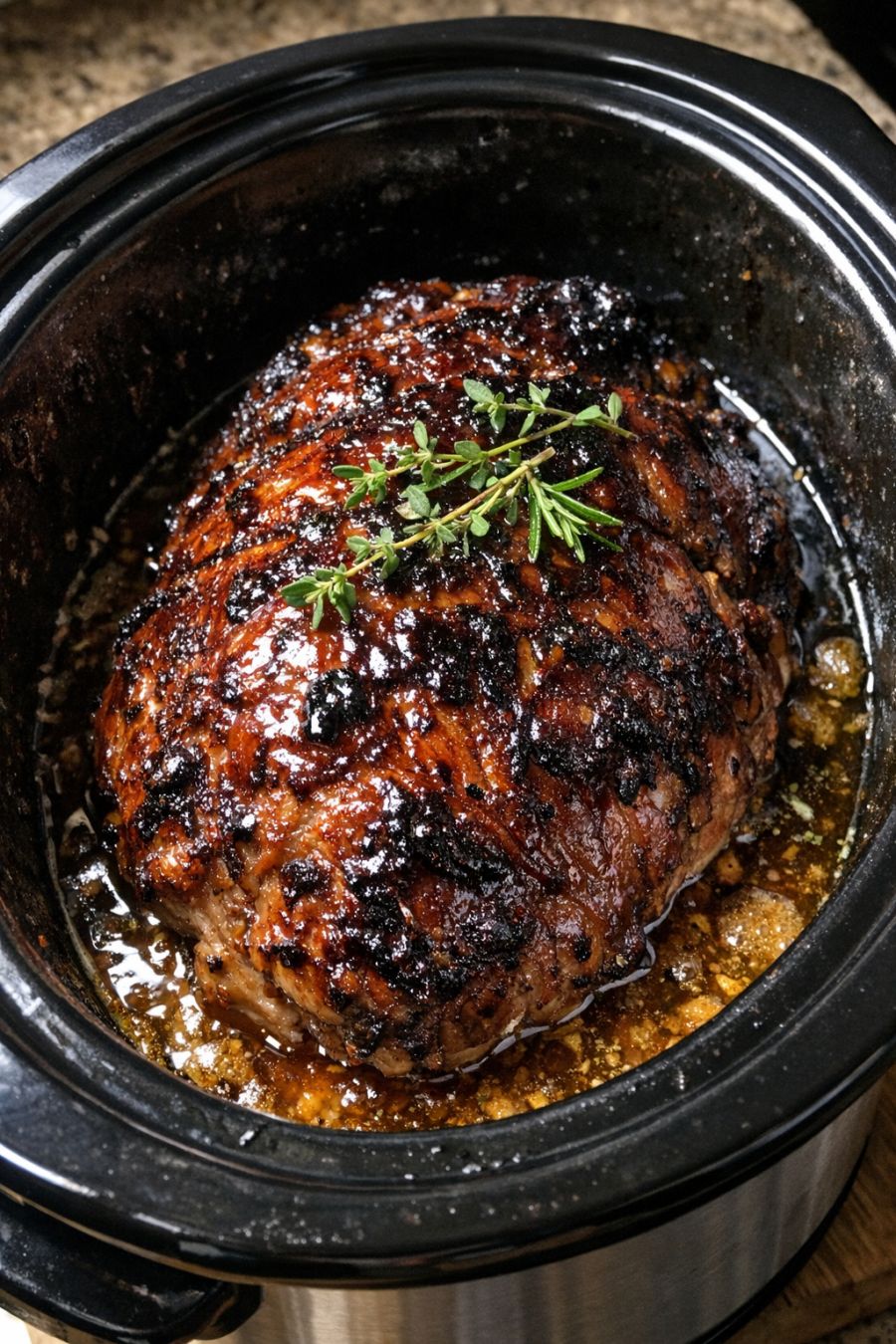
This 4-ingredient slow cooker vintage glazed pork shoulder blade roast is the kind of dish our mothers and grandmothers leaned on when Sundays were for family, not fussing in the kitchen. It’s built around a bone-in pork shoulder blade roast, the same thrifty, flavorful cut that showed up on many Midwestern tables after church. A simple sweet-and-savory glaze goes on once, then the slow cooker does the rest, filling the house with that cozy, old-fashioned aroma while you sit, visit, and enjoy Mother’s Day instead of hovering over the stove.
Serve thick slices of the glazed pork shoulder with buttery mashed potatoes or egg noodles to catch all those amber juices. A simple side of green beans or buttered corn keeps it true to its farmhouse roots, and a crisp green salad or tangy coleslaw brightens the plate. Warm dinner rolls or sliced bread are perfect for mopping up the sticky, caramelized glaze. For a special touch, garnish the platter with a few fresh herb sprigs—rosemary, thyme, or parsley—to echo the old-fashioned Sunday roast feeling.
4-Ingredient Slow Cooker Vintage Glazed Pork Shoulder Blade Roast
Servings: 8
Ingredients
1 bone-in pork shoulder blade roast, 4 to 5 pounds, excess surface fat trimmed
1 cup brown sugar, packed (light or dark)
1/2 cup yellow mustard (classic hot dog style)
1/4 cup apple cider vinegar
Directions
Pat the bone-in pork shoulder blade roast dry with paper towels and trim away any thick, hard surface fat, leaving a thin layer for flavor. Set the roast aside while you mix the glaze.
In a medium bowl, whisk together the brown sugar, yellow mustard, and apple cider vinegar until smooth and glossy. The mixture should be thick but pourable, like a loose barbecue sauce.
Place the pork shoulder roast into the bowl of a large oval slow cooker, fat side up. This helps the fat slowly baste the meat as it cooks and creates those golden pools of flavorful juices.
Pour the glaze evenly over the top and sides of the roast, using a spoon or spatula to coat as much of the surface as you can. Spoon some of the glaze back over the top so it forms a generous layer that will caramelize as it cooks.
Cover the slow cooker with the lid and cook on LOW for 8 to 10 hours, or on HIGH for 4 to 5 hours, until the pork is very tender and pulls away from the bone easily. Do not remove the lid during the first few hours, as that releases heat and slows the cooking.
Once the pork is tender, carefully ladle a few spoonfuls of the cooking juices over the top of the roast to moisten the glaze. If you’d like a deeper, stickier caramelized finish, you can transfer the roast and some glaze to an oven-safe dish and broil for 3 to 5 minutes, watching closely, until the surface is deeply browned and lacquered.
Let the roast rest in the slow cooker (with the heat turned to WARM or off) for about 10 to 15 minutes so the juices settle. Gently lift the roast out with large spatulas or tongs, or serve directly from the slow cooker, spooning the amber glaze and juices over the top.
Garnish the glistening roast with a few fresh herb sprigs if you like for a pretty, vintage-style presentation. Slice or pull the pork from the bone and serve with extra glaze spooned over each portion.
Variations & Tips
For a slightly smokier, more old-timey flavor, replace 2 tablespoons of the yellow mustard with prepared brown mustard or a spoonful of molasses. If your family prefers a little gentle heat, add 1/2 teaspoon of black pepper or a pinch of red pepper flakes to the glaze. You can also tuck a sliced onion under the roast before glazing for extra sweetness and an easy side to serve alongside the pork (this adds an ingredient but doesn’t change the main 4-ingredient roast itself). For a bit more tang, increase the apple cider vinegar to 1/3 cup and reduce the brown sugar slightly. Food safety tips: Always start with a fully thawed pork roast; never put a frozen roast directly into the slow cooker, as it will stay too long in the temperature “danger zone” (40°F to 140°F). Keep the lid on the slow cooker as much as possible to maintain a safe cooking temperature. The pork should reach at least 190°F internally for fall-apart tenderness, though it is considered safe to eat at 145°F; a probe thermometer is the most reliable way to check. Refrigerate leftovers within 2 hours of cooking in shallow containers, and reheat gently to at least 165°F before serving again. If you broil the roast at the end, watch it closely so the sugar in the glaze doesn’t burn; you want a deep caramel color and sticky shine, not blackened spots.
