
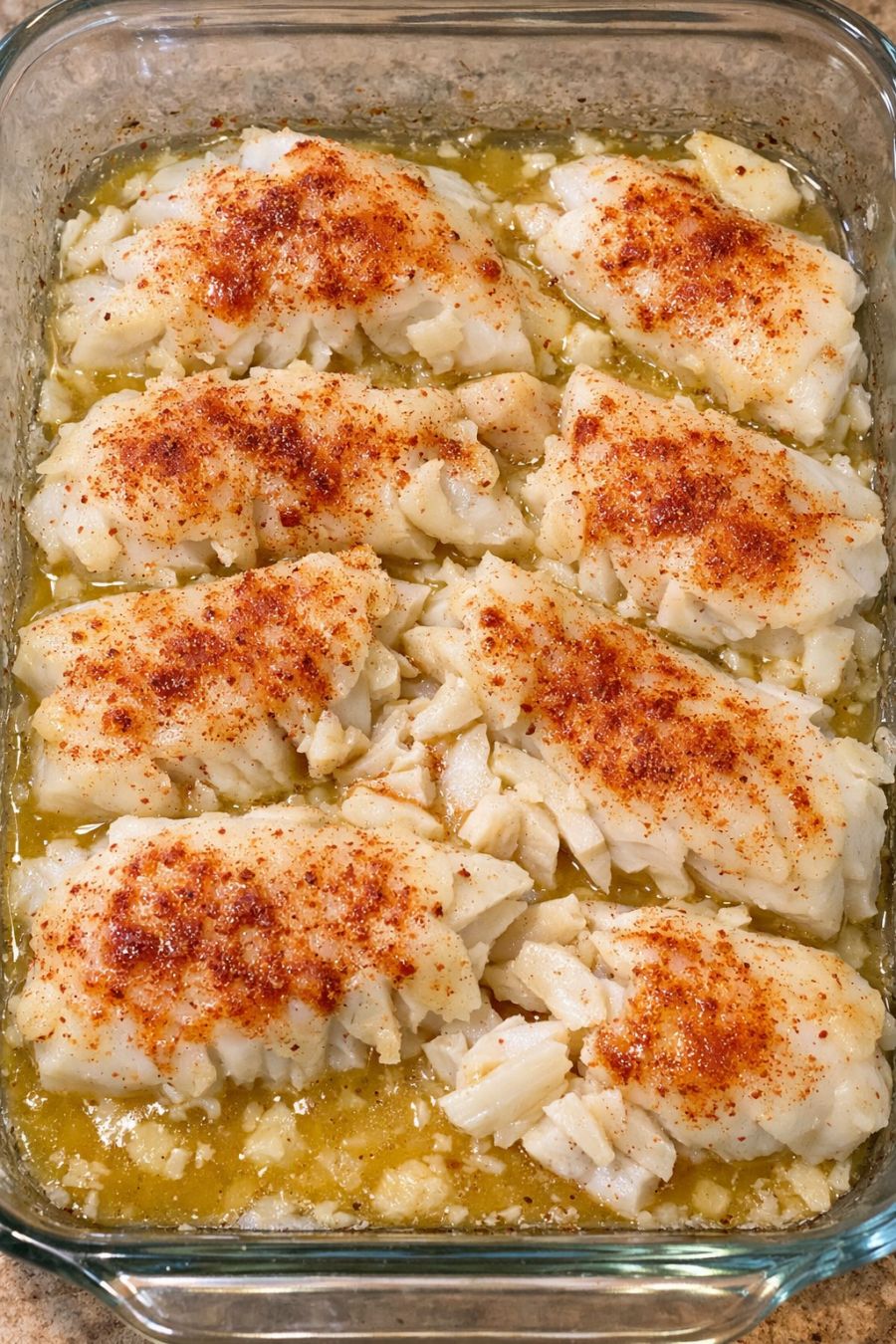
This low carb Amish baked fish is the sort of simple, gentle supper our Aunt Sarah would slide onto the table after a long day in the garden. Just four ingredients, no fuss, and the whole house smells like springtime and melted butter. It’s rooted in old Midwestern farmhouse cooking, where fresh-caught or church-sale fish met a hot oven, real butter, and a dusting of paprika. The fillets bake up flaky and tender, almost spoon-soft, and the rich butter sauce puddles in the glass baking dish, just begging to be spooned over the top. If you’re tired and want something comforting but light, this is the kind of recipe you can make on autopilot.
Serve this baked fish straight from the glass baking dish, spooning the buttery juices over each portion. It’s lovely alongside simply cooked green beans or asparagus, a crisp garden salad with a vinegar dressing, or some steamed broccoli to keep things low carb. If you’re not strictly counting carbs, a small scoop of mashed cauliflower or a slice of buttered Amish-style homemade bread fits right in with the farmhouse feel. A wedge of lemon on the side brightens everything, and a glass of iced tea or a light white wine makes it feel like a proper springtime supper.
Low Carb Amish Baked Fish
Servings: 4
Ingredients
1 1/2 to 2 pounds mild white fish fillets (such as cod, haddock, or pollock), thawed if frozen
6 tablespoons salted butter, melted
1 teaspoon kosher salt (or to taste)
1 teaspoon sweet paprika (plus a pinch more for garnish, optional)
Directions
Preheat your oven to 375°F (190°C). Set out a 9x13-inch glass baking dish (a clear Pyrex-style dish works perfectly so you can see the buttery juices bubbling around the fish).
Pat the fish fillets dry on both sides with paper towels. This helps them bake up flaky instead of watery. Lay the fillets in a single layer in the glass baking dish. If some pieces are thinner, tuck the thin ends under so they cook more evenly.
In a small bowl or measuring cup, melt the butter gently, either on the stovetop or in the microwave. Stir in the salt until it dissolves a bit.
Pour the melted butter evenly over the fish fillets, making sure each piece is well coated and some butter settles around them in the bottom of the dish.
Sprinkle the paprika evenly over the top of the buttered fish. You want a soft, even dusting that gives everything a warm red glow without burying the fish. If you like, add just a pinch more for a deeper color.
Slide the baking dish into the preheated oven and bake for 15 to 20 minutes, depending on the thickness of your fillets. The fish is done when it turns opaque and flakes easily with a fork in the thickest part. Thinner fillets may be ready closer to 12 to 15 minutes, so start checking early.
Once the fish flakes easily, remove the dish from the oven and let it rest for 3 to 5 minutes. The butter will settle into a glossy sauce, and the fish will finish cooking gently in the hot dish.
To serve, carefully lift the flaky fish from the dish with a wide spatula and spoon some of the melted butter and paprika juices over each portion. Serve warm, straight from the baking dish, just the way Aunt Sarah would have done after a long day in the garden.
Variations & Tips
For a touch of brightness, squeeze a little fresh lemon juice over the fish just before serving, or add a few thin lemon slices to the dish before baking. If you like a hint of onion without adding carbs, sprinkle a small pinch of onion powder over the fish along with the paprika, keeping the total ingredients at four by swapping it for the salt if your butter is already salted enough. You can also use different mild white fish, such as tilapia or walleye, depending on what’s available or what’s biting at the local lake. For a slightly smoky flavor, replace part or all of the sweet paprika with smoked paprika, but use a light hand so it doesn’t overwhelm the delicate fish. To keep this recipe low carb, avoid adding flour, bread crumbs, or sweet glazes, and stick with simple seasonings and real butter. Food safety tips: Always thaw frozen fish in the refrigerator, not on the counter, and cook it the same day it is fully thawed. Patting the fish dry before baking helps it cook evenly and reduces excess moisture. Bake until the fish is opaque and flakes easily with a fork; if you use a thermometer, the internal temperature should reach 145°F (63°C) in the thickest part. Refrigerate leftovers within two hours, store them in a covered container, and use within 1 to 2 days, reheating gently so the fish stays tender and doesn’t dry out.
