
This 3-ingredient peanut butter bread is an old-fashioned, Depression-era style loaf that my grandfather made every spring when the pantry was looking a little bare. It’s dense, nutty, and incredibly moist inside without a single egg or pinch of yeast, relying instead on the richness of peanut butter and the gentle lift of baking powder already in the self-rising flour. It’s the kind of simple, sturdy comfort food that fills the house with a cozy smell and makes thick, satisfying slices for breakfast, snacks, or an easy dessert.
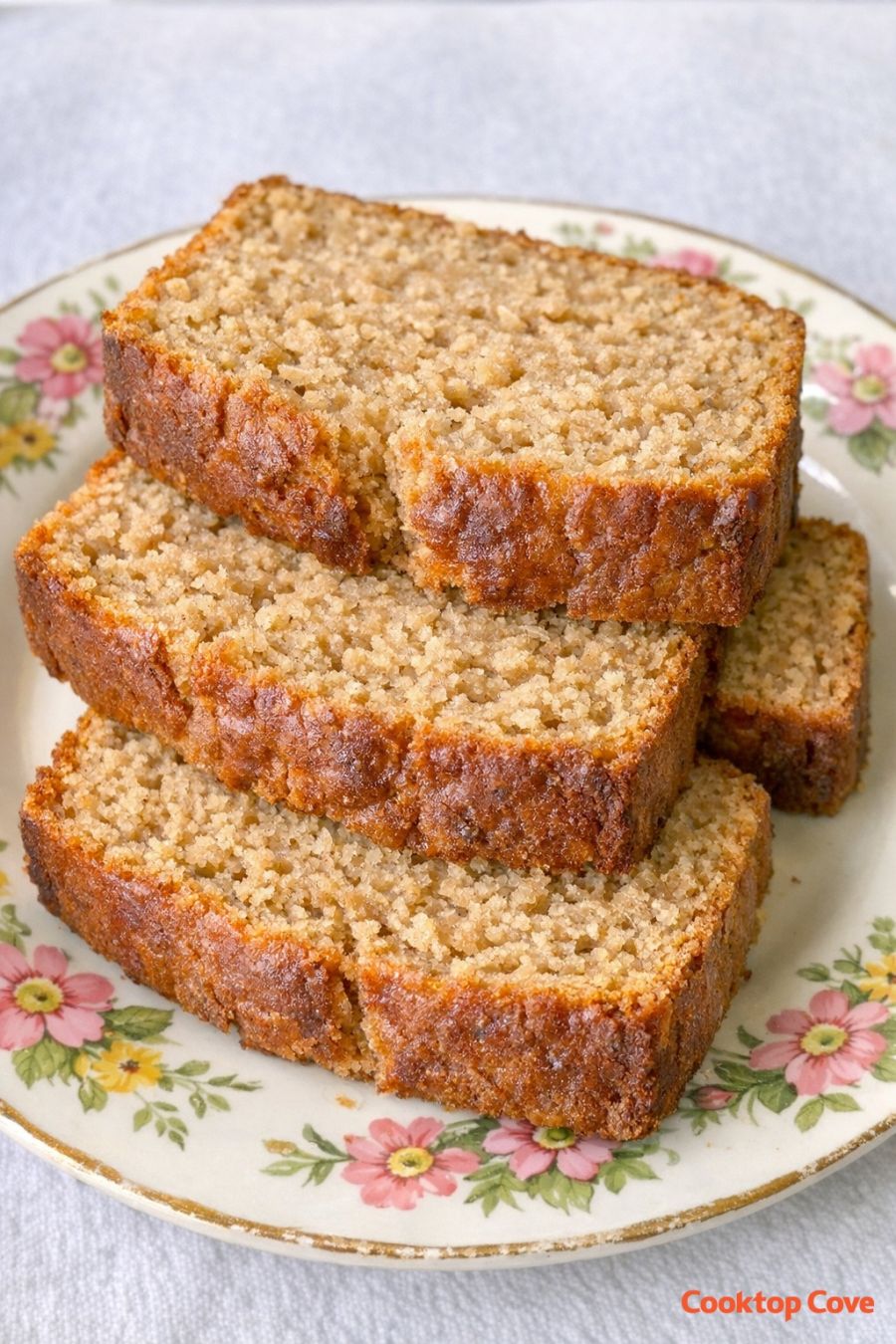
Serve thick slices slightly warm on a vintage floral plate with a smear of softened butter or a drizzle of honey. It pairs wonderfully with a cold glass of milk, hot coffee, or tea. For a more dessert-like treat, top with a spoonful of jam or a scoop of vanilla ice cream. My family likes to tuck slices into lunchboxes, and any leftover bread is lovely toasted the next day, which brings out even more of that nutty aroma.
3-Ingredient Peanut Butter Bread
Servings: 8
Ingredients
1 1/2 cups creamy peanut butter (well-stirred)
2 cups whole milk
2 cups self-rising flour
Directions
Preheat your oven to 350°F (175°C). Lightly grease a standard 9x5-inch loaf pan, then line the bottom with a strip of parchment paper for easy removal.
In a medium saucepan or microwave-safe bowl, gently warm the peanut butter just until it loosens slightly and becomes easier to stir, about 20–30 seconds in the microwave. Do not let it get hot or bubbly.
Pour the milk into a large mixing bowl. Add the warmed peanut butter and whisk together until the mixture is mostly smooth and well combined. A few small streaks are okay; just be sure there are no big clumps.
Sprinkle the self-rising flour over the peanut butter mixture. Using a wooden spoon or spatula, gently fold the flour in until no dry patches remain. The batter will be thick and heavy, more like a loose dough than a cake batter—this is what gives the bread its dense, moist crumb.
Spoon the batter into the prepared loaf pan. Use the back of the spoon or a spatula to press it into the corners and smooth the top as best you can. Tap the pan firmly on the counter a couple of times to help settle the batter and release any large air pockets.
Bake on the center rack for 45–55 minutes, or until the top is a deep golden brown and a toothpick inserted into the center comes out mostly clean, with just a few moist crumbs clinging to it. If the top is browning too quickly near the end, loosely tent with foil.
Remove the pan from the oven and let the bread cool in the pan on a wire rack for at least 15–20 minutes to set the crumb. Then run a knife around the edges, lift the loaf out using the parchment, and transfer it to the rack to cool until just warm or fully cooled before slicing.
For thick, sturdy slices like my grandfather served, use a sharp serrated knife and cut into 8–10 slices. The inside should look tan and dense with a moist, nutty center and a golden brown crust. Serve warm or at room temperature.
Variations & Tips
For kids (or picky eaters), you can use smooth, mild-flavored peanut butter so the taste isn’t too intense, and serve the bread with their favorite jam to make it feel more like a treat. If you’d like a slightly sweeter loaf without adding more ingredients to the batter, drizzle warm slices with honey or maple syrup right before serving. For a heartier breakfast, toast slices lightly in a skillet with a little butter until the edges are crisp and browned. You can also use this bread as a base for peanut butter and jelly sandwiches—just slice a bit thinner since it’s dense. If you don’t have whole milk, 2% will work, though the bread may be just a touch less rich. Always make sure the bread is baked through to the center; because it’s very moist, underbaking can leave the middle gummy. Let it cool at least partially before slicing so it doesn’t collapse. Store leftovers tightly wrapped at room temperature for up to 2 days, or in the refrigerator for up to 4 days. For food safety, use fresh milk and peanut butter that hasn’t passed its expiration date, and cool the loaf completely before wrapping to prevent condensation and mold. If anyone in your home has a peanut allergy, do not prepare this bread for them—substituting other nut or seed butters may be possible in theory, but always check for allergies carefully and label leftovers clearly so kids know what’s in it.
