
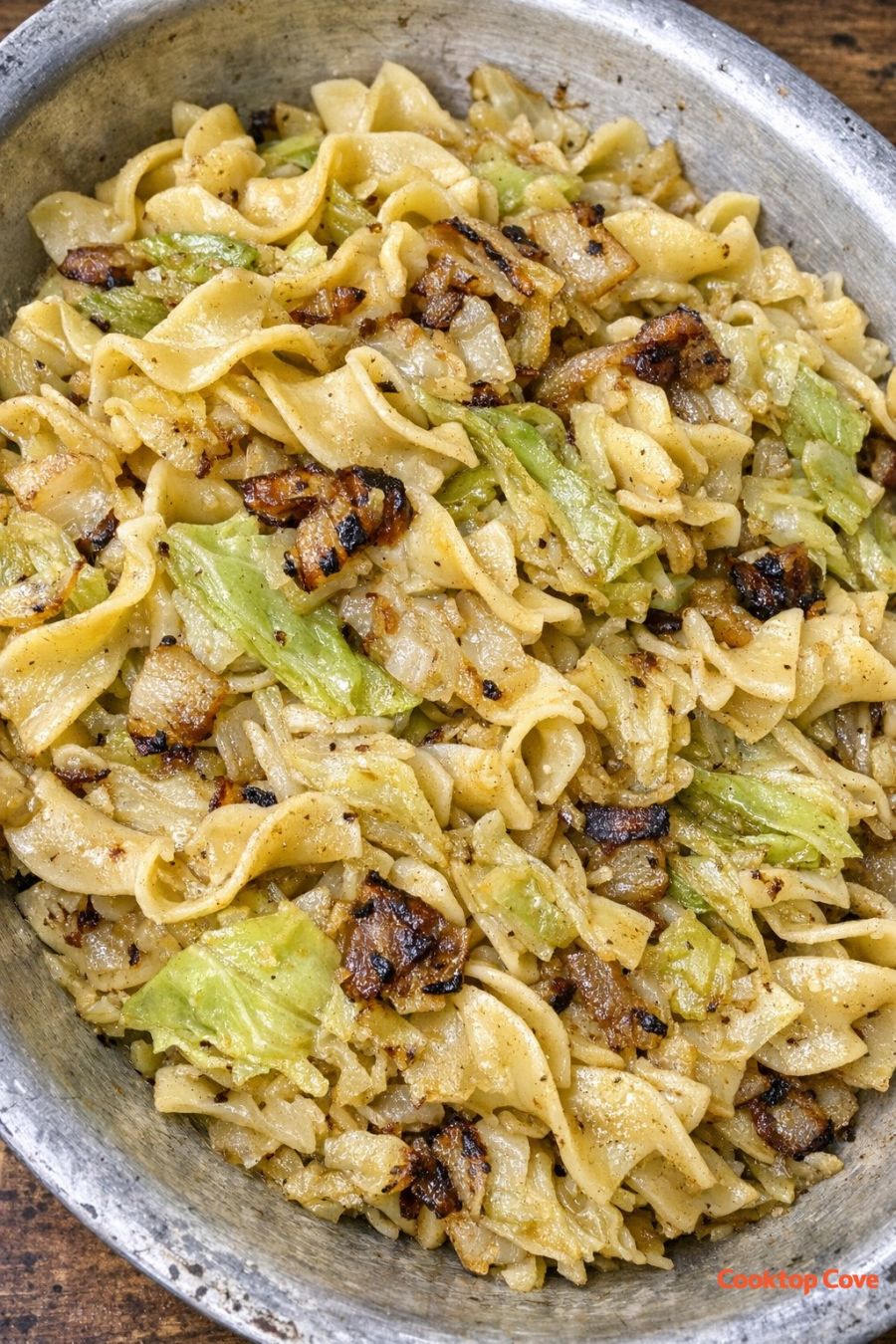
This 4-ingredient fried cabbage and noodles is the kind of simple, filling comfort meal that could absolutely carry someone through hard times—my own grandfather talked about dishes just like this getting him through the lean years of the thirties. It uses humble pantry staples, stretches to feed a family, and turns basic cabbage, onions, and egg noodles into buttery, savory ribbons that practically melt in your mouth. It’s the sort of recipe you make when money is tight, time is short, or you just need something warm and nostalgic in a big old pan on the table.
Serve this fried cabbage and noodles straight from a worn skillet or aluminum roasting pan so everyone can scoop their own. It’s hearty enough to be a main dish on its own, but you can round it out with sliced apples, a simple cucumber salad, or a side of cottage cheese to keep that old-fashioned farmhouse feel. A sprinkle of black pepper at the table is lovely, and if your crowd isn’t strictly sticking to four ingredients, pass a dish of sour cream or grated cheese so folks can dress up their own bowl.
4-Ingredient Fried Cabbage and Noodles
Servings: 4
Ingredients
8 tablespoons (1 stick) unsalted butter, divided
1 large yellow onion, thinly sliced
1 small to medium green cabbage (about 2 to 2 1/2 pounds), cored and thinly sliced into ribbons
12 ounces wide egg noodles, uncooked
1 1/2 teaspoons kosher salt, plus more to taste
1/2 teaspoon black pepper, optional for serving
Directions
Bring a large pot of salted water to a boil for the egg noodles. While the water heats, prepare the vegetables by thinly slicing the onion and cutting the cabbage into narrow, ribbon-like shreds. The thinner you slice the cabbage, the more tender and buttery it will feel in the finished dish.
Cook the egg noodles in the boiling salted water according to package directions until just tender. Drain well and set aside. If they’re done far ahead of the cabbage, toss them with a tablespoon of the butter to keep them from sticking together.
While the noodles cook, melt 4 tablespoons (half the stick) of butter in a large, heavy skillet or wide pot over medium heat. Add the sliced onion and 1/2 teaspoon of the salt. Cook, stirring occasionally, until the onions are soft, golden, and caramelized around the edges, 10 to 15 minutes. Adjust the heat as needed so they slowly turn a deep golden color without burning.
Add the sliced cabbage to the skillet with the onions. It will look like a lot at first, but it cooks down. Sprinkle on the remaining 1 teaspoon of salt. Stir to coat the cabbage in the buttery onions, then cook over medium to medium-low heat, stirring every few minutes, until the cabbage is very soft, reduced in volume, and has plenty of browned, caramelized spots, 20 to 30 minutes. The goal is tender, sweet, and lightly golden cabbage ribbons.
When the cabbage is silky and nicely browned in spots, add the remaining 4 tablespoons of butter to the skillet and let it melt into the vegetables. Taste and adjust the seasoning with a little more salt if needed. If you like a bit of pepper, you can add some now or save it for the table.
Add the drained egg noodles directly into the skillet with the buttery cabbage and onions. Toss gently but thoroughly so every noodle is coated and tangled up with the cabbage ribbons. Let the mixture cook together for another 3 to 5 minutes, pressing it lightly into the pan so some of the noodles and cabbage pick up a few extra golden, fried edges.
Transfer the fried cabbage and noodles to a worn aluminum serving platter or leave it right in the pan for that cozy, family-style feel. Serve hot, with black pepper at the table if you like. The leftovers reheat well in a skillet with just a pat of butter.
Variations & Tips
To keep with the spirit of a true four-ingredient Depression-era meal, the base recipe sticks to butter, onion, cabbage, and egg noodles, plus basic salt and optional pepper. If you’re not being strict, there are some easy ways to adjust it for your family. For extra protein, you can stir in leftover cooked sausage, diced ham, or shredded rotisserie chicken toward the end of cooking so it warms through without drying out. If your kids are picky about visible cabbage, chop it a bit finer so it almost disappears into the noodles, or start with half the amount of cabbage and work your way up each time you make it. A spoonful of sour cream on top can make it creamier and milder for little ones. For more flavor without complicating things, try adding a small pinch of garlic powder or a sprinkle of paprika as the cabbage cooks. If anyone needs to avoid dairy, you can use a dairy-free butter substitute, but choose one with a higher fat content for better browning and flavor. For egg-free needs, swap the egg noodles for plain wheat or gluten-free pasta, and cook just to al dente so they don’t turn mushy when fried with the cabbage. Food safety tips: cool leftovers within two hours of cooking, store them in a covered container in the refrigerator, and use within 3 to 4 days. Reheat thoroughly in a skillet over medium heat or in the microwave until steaming hot, adding a small splash of water or extra butter if it seems dry.
