
Every spring when the first warm breeze rolls across the fields, my neighbor Ruth starts making this apricot glazed chicken, and you can smell that sweet, savory goodness all the way down the road. It’s the kind of simple, no-fuss recipe Midwestern church cookbooks were built on: just three pantry ingredients, a sheet pan, and the patience to let the oven do its work. The chicken comes out fall-apart tender with a sticky amber glaze that clings to your fingers and disappears from the pan in minutes. This is old-fashioned, practical farmhouse cooking—easy enough for a weeknight, special enough for company.
I like to serve this apricot glazed chicken with plain white rice or buttered egg noodles so they can soak up every bit of the sticky sauce. A simple green side—steamed green beans, a tossed salad, or roasted asparagus—keeps things fresh and springlike. Warm dinner rolls or a slice of crusty bread are handy for swiping up the caramelized bits from the foil. For a fuller meal, add a pan of scalloped potatoes or a broccoli salad, and finish with something light and fruity for dessert to echo the apricot sweetness.
Oven Baked 3-Ingredient Apricot Glazed Chicken
Servings: 4
Ingredients
2 to 2 1/2 pounds bone-in, skin-on chicken thighs (about 6–8 pieces)
1 cup apricot preserves or apricot jam
1 packet (1 ounce) dry onion soup mix
Directions
Line a rimmed baking sheet with heavy-duty aluminum foil, shiny side up, for easy cleanup. Lightly grease the foil with a little cooking spray or oil so the chicken doesn’t stick too badly as the glaze caramelizes. Preheat your oven to 375°F (190°C).
Pat the chicken thighs dry with paper towels. This helps the skin brown and the glaze cling. Arrange the thighs on the prepared baking sheet in a single layer, skin side up, leaving a little space between each piece so the heat can circulate.
In a medium bowl, stir together the apricot preserves and dry onion soup mix until well combined. The mixture will be thick and a bit chunky from the onions—this is what will turn into those caramelized onion bits on the pan.
Spoon the apricot-onion mixture evenly over the tops of the chicken thighs, using the back of the spoon to spread it so each piece is well coated. Let any extra mixture fall onto the foil around the chicken; it will bake into a sticky, spoonable sauce.
Place the pan on the middle rack of the preheated oven and bake for 25 minutes. At this point, carefully baste the chicken by spooning some of the melted glaze and pan juices back over the tops of the thighs.
Continue baking for another 20 to 30 minutes, or until the chicken is very tender, the glaze is thick and glossy, and the internal temperature of the thickest part of the thighs reaches 165°F (74°C). Total baking time will be about 45 to 55 minutes depending on the size of the pieces.
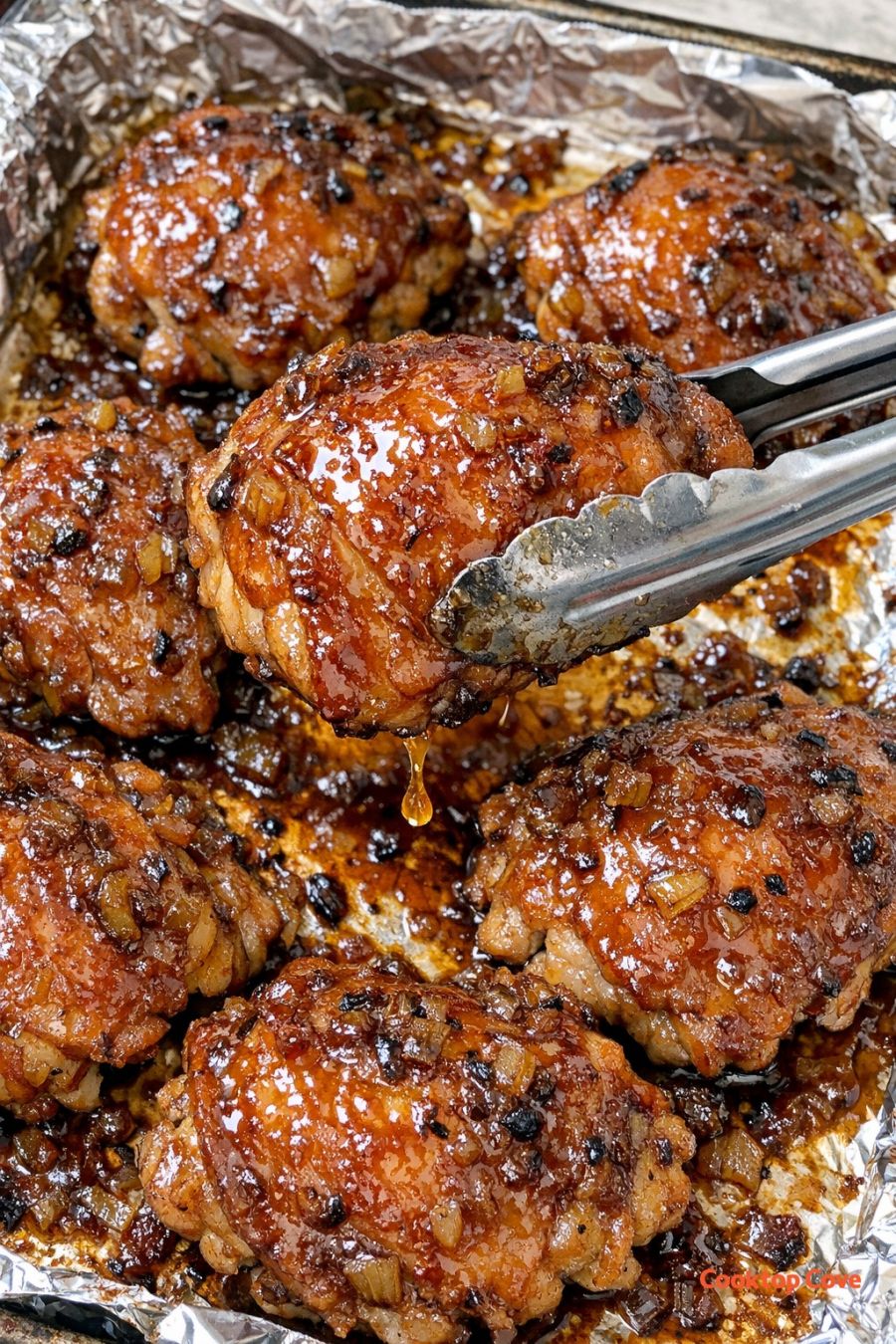
For extra caramelization and sticky edges, you can turn the oven to broil for the last 2 to 3 minutes, watching closely so the sugars in the glaze don’t burn. The sauce on the pan should be amber-colored and bubbly, with some dark, caramelized onion bits around the edges.
Remove the pan from the oven and let the chicken rest for 5 to 10 minutes so the juices settle and the glaze thickens further. Use metal tongs to lift the thighs from the foil, turning them once in the pooled sauce on the pan so they get one last glossy coat before serving.
Transfer the chicken to a serving platter, spooning some of the sticky apricot-onion sauce and caramelized bits over the top. Serve warm, with extra sauce from the pan passed at the table.
Variations & Tips
You can swap the chicken thighs for drumsticks or a mix of bone-in pieces; just keep the total weight about the same and bake until the thickest part reaches 165°F (74°C). Boneless, skinless thighs will also work, but they cook faster—start checking around 30–35 minutes and skip or shorten the broil so they don’t dry out. If you like a little heat with your sweet, stir in a pinch of red pepper flakes or a dash of hot sauce to the apricot and onion soup mixture before spreading it on the chicken (this keeps it a 3-ingredient recipe as written, so add only if you’re comfortable going beyond that). For a slightly tangier sauce, you can whisk in a tablespoon of yellow or Dijon mustard to the glaze, which plays nicely with the apricot. Food safety tips: Always thaw chicken completely in the refrigerator, never on the counter. Pat it dry with clean paper towels and wash your hands well after handling raw poultry. Use a separate cutting board for raw meat if you need to trim any excess skin or fat, and sanitize any surfaces and utensils that touched the raw chicken. Bake until the internal temperature reaches at least 165°F (74°C), measured in the thickest part of the meat away from the bone. Refrigerate leftovers within 2 hours in a shallow container, and reheat thoroughly until steaming hot before eating.
