
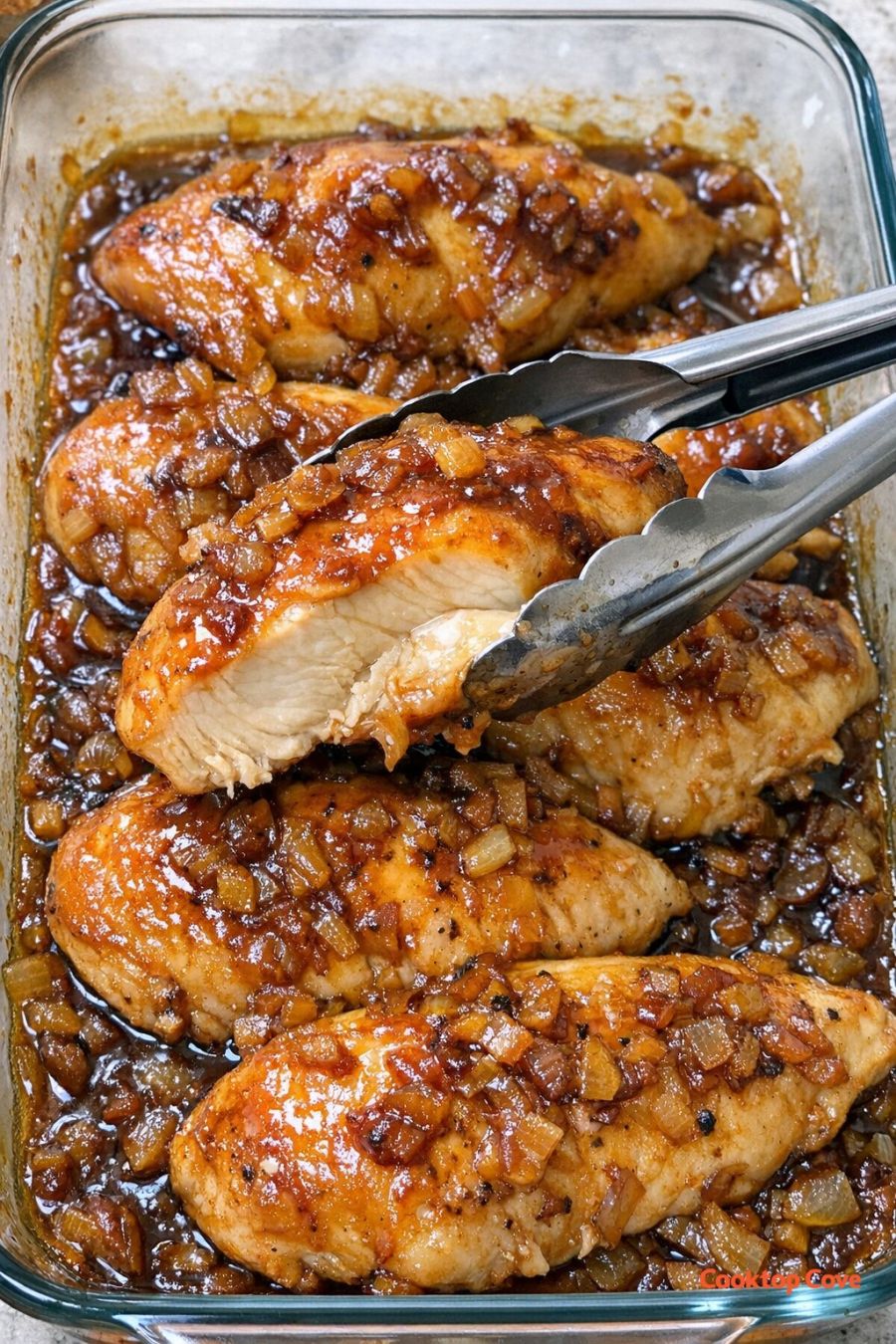
This oven baked 4-ingredient apricot glazed chicken is the kind of simple, reliable dish that shows up at every family gathering for a reason. It’s based on the old-school Midwestern potluck classic my grandmother made every spring: chicken baked in a sticky-sweet apricot and onion glaze that requires almost no effort but tastes like you fussed. The magic here is in the pantry-friendly combo of apricot preserves, a packet of onion soup mix, and a splash of French dressing, which caramelize together in the oven into an amber, sweet-savory coating over tender chicken breasts. It’s approachable, comforting, and perfect for busy weeknights or casual entertaining.
Serve this apricot glazed chicken straight from the glass baking dish with a big spoon for the sauce. It’s excellent over plain white rice, buttered egg noodles, or mashed potatoes to soak up every bit of the sticky glaze. Add a bright, crisp side like steamed green beans, roasted asparagus, or a simple mixed green salad with a tangy vinaigrette to balance the sweetness. A loaf of crusty bread or soft dinner rolls is also welcome for swiping through the caramelized onion bits left in the pan.
Oven Baked 4-Ingredient Apricot Glazed Chicken
Servings: 4
Ingredients
2 pounds boneless, skinless chicken breasts (about 4 medium pieces)
1 cup apricot preserves
1 cup French dressing (thick, orange-style bottled dressing)
1 (1-ounce) packet dry onion soup mix
Directions
Preheat your oven to 375°F (190°C). Lightly grease a rectangular glass baking dish (about 9x13 inches) so the chicken doesn’t stick and the glaze can bubble and caramelize nicely.
Pat the chicken breasts dry with paper towels. This helps them brown better and keeps the glaze from sliding off. Arrange the chicken in a single layer in the prepared glass baking dish, leaving a little space between each piece.
In a medium bowl, whisk together the apricot preserves, French dressing, and dry onion soup mix until the mixture is smooth and the onion bits are evenly distributed. The mixture will be thick and glossy.
Pour the apricot-onion mixture evenly over the chicken breasts, using a spatula or spoon to spread it so each piece is well coated. Spoon some glaze into the spaces around the chicken so it can thicken and caramelize as it bakes.
Cover the baking dish loosely with foil and bake for 20 minutes. This helps the chicken cook gently and keeps it moist while the glaze begins to melt and mingle with the chicken juices.
Remove the foil, carefully baste the chicken with the pan juices and glaze, and return the uncovered dish to the oven. Continue baking for another 15 to 25 minutes, basting once more if you like, until the chicken is cooked through and the glaze is thick, sticky, and amber-colored around the edges.
Check for doneness: the internal temperature of the thickest part of each chicken breast should reach 165°F (74°C) when measured with an instant-read thermometer. The meat should look juicy but no longer pink in the center.
Once done, let the chicken rest in the hot baking dish for 5 to 10 minutes. During this time, the glaze will thicken slightly more and cling to the chicken. Use serving tongs to lift each breast, turning it once in the sauce to coat, and serve with plenty of the caramelized onion bits and pan juices spooned over the top.
Variations & Tips
For a slightly tangier version, replace half of the French dressing with Russian or Catalina dressing, which still keeps you at four ingredients if you swap rather than add. If you prefer dark meat, you can use boneless, skinless chicken thighs instead of breasts; they tend to stay even juicier and are more forgiving if slightly overcooked. For a bit of heat, stir 1 to 2 teaspoons of crushed red pepper flakes into the glaze (this does add a fifth ingredient, but it changes the character nicely). If your apricot preserves are very thick, warm them briefly in the microwave so they whisk more easily with the dressing and soup mix. To keep the texture right, avoid overcrowding the pan; if the chicken is packed too tightly, it will steam instead of allowing the glaze to caramelize around the edges. For food safety, always thaw chicken fully in the refrigerator, never on the counter, and wash your hands and any cutting boards or utensils that touch raw poultry with hot, soapy water. Use an instant-read thermometer to confirm that the chicken reaches 165°F (74°C) in the thickest part, and refrigerate leftovers within 2 hours in a shallow container. Leftovers reheat well, covered, in a low oven or microwave with a spoonful of the extra sauce to keep the meat moist.
