
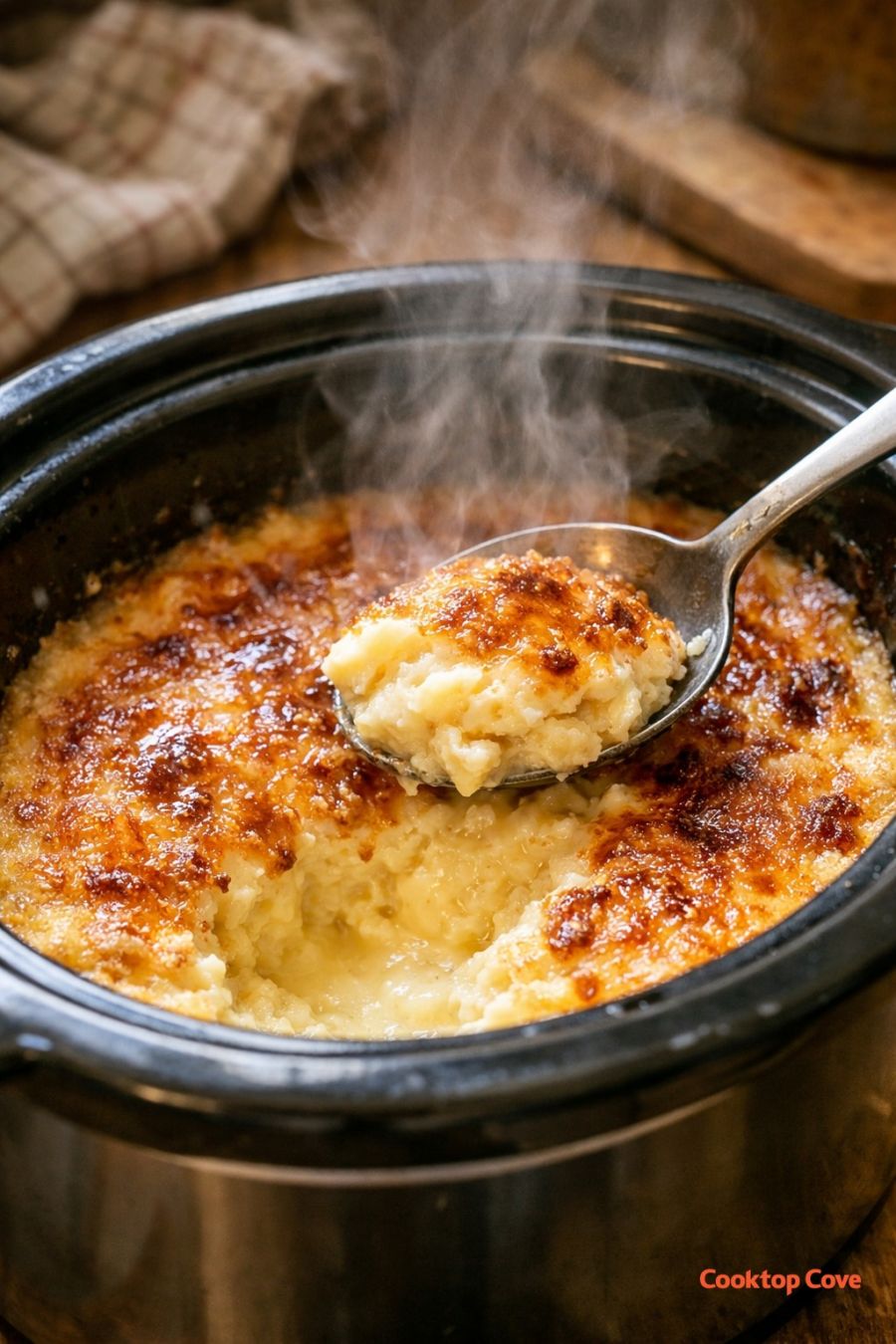
This is the kind of cozy, old-fashioned tapioca pudding that feels like it came straight out of grandma’s kitchen, but with a slow cooker twist that fits into a busy weekday. With just four basic ingredients and a hands-off method, it quietly bubbles away all afternoon and is ready right around the time the evening news would come on. Using real pearl tapioca (not instant) gives it that classic, chewy texture and custardy, creamy center, with a golden, caramelized top that you scoop into while it’s still warm and steamy.
Serve this tapioca pudding warm, straight from the slow cooker, with a spoonful of softly whipped cream or a drizzle of extra cream over the top. It’s lovely on its own, but a few fresh berries or sliced bananas make it feel a little springy and bright. For something more nostalgic, pair it with a cup of hot tea or decaf coffee after dinner. If you’re serving a family, set the slow cooker on the table and let everyone scoop their own bowl while it’s still warm and a little steamy—no extra sides needed.
4-Ingredient Slow Cooker Vintage Tapioca Pudding
Servings: 6
Ingredients
1/2 cup small pearl tapioca (not instant, dry)
4 cups whole milk
3/4 cup granulated sugar
3 large eggs
Directions
Lightly grease the inside of a 4- to 6-quart slow cooker with a little butter or neutral oil to help keep the pudding from sticking and to encourage a soft, caramelized edge.
In a medium bowl, whisk the eggs until well blended and slightly frothy; set aside.
In the slow cooker crock, stir together the dry pearl tapioca, granulated sugar, and whole milk until the tapioca is evenly dispersed and no big sugar pockets remain.
While whisking the eggs constantly, slowly ladle in about 1 cup of the milk mixture from the slow cooker to temper the eggs. Whisk until smooth and warm, then pour the egg mixture back into the slow cooker and stir well to combine. This helps keep the eggs from scrambling as the pudding cooks.
Cover the slow cooker with its lid and cook on LOW for 3 to 4 hours. Do not cook on HIGH, or the eggs may curdle and the milk can scorch.
After about 2 1/2 hours, gently stir the pudding once, scraping the bottom and sides. Replace the lid and continue cooking until the tapioca pearls are tender and the pudding is thick but still a bit loose. It will thicken more as it cools.
For a more vintage, slightly caramelized top, once the tapioca is cooked through and thickened, uncover the slow cooker and let it sit on WARM or OFF for 15 to 20 minutes. The exposed surface will deepen in color and set into a soft golden layer while the interior stays pale and creamy.
Serve the tapioca pudding warm, scooping down through the golden top to reveal the creamy center. If it thickens more than you like as it sits, whisk in a splash of warm milk just before serving to loosen it back up.
Variations & Tips
For a slightly richer pudding, you can swap 1 cup of the whole milk for heavy cream or half-and-half, but keep the total liquid at 4 cups so the texture stays custardy and not soupy. If you like a stronger old-fashioned flavor, stir in 1 to 2 teaspoons of vanilla extract or a pinch of ground nutmeg after cooking, when the slow cooker is off—this keeps the flavor bright and prevents the vanilla from cooking off. To keep the ingredient list at four, skip any extras and instead play with toppings: a sprinkle of cinnamon, a spoonful of jam, or a few berries on each bowl. For a slightly firmer, sliceable pudding (more like grandma’s church potluck version), let it cool completely in the slow cooker, then chill it in the fridge for a few hours before scooping. If you need to make it ahead, cook it earlier in the day, cool to room temperature, cover, and refrigerate; rewarm gently on LOW or WARM, stirring in a bit of milk to loosen. Food safety tips: Always use pasteurized milk and fresh eggs, and keep the pudding out of the temperature danger zone (40°F–140°F) by refrigerating leftovers within 2 hours of cooking. Store leftovers in a covered container in the refrigerator for up to 3 days, and reheat portions gently on the stovetop or in the microwave, adding a splash of milk if it becomes too thick. Discard if it smells sour, looks separated, or has been left at room temperature for more than 2 hours.
