
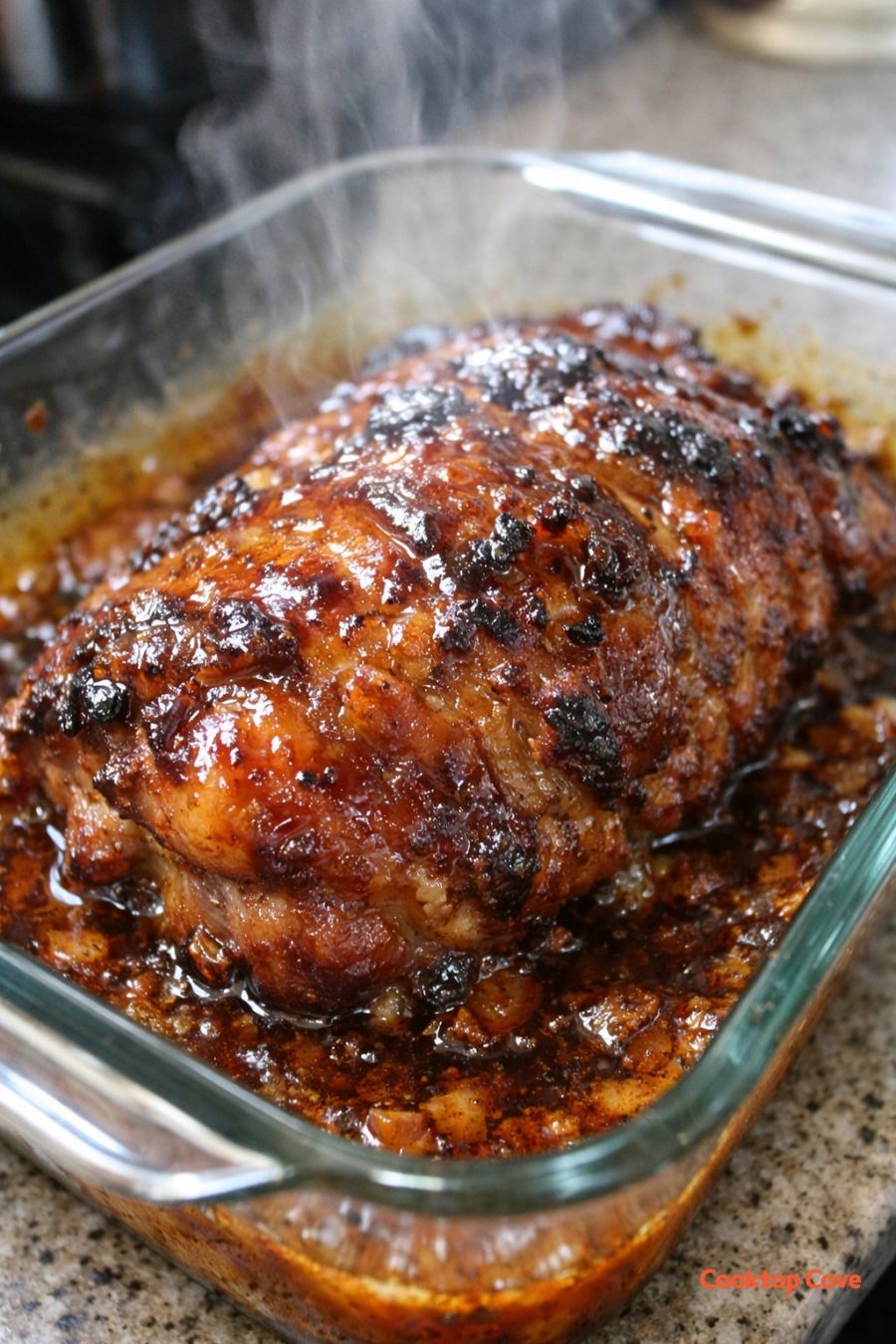
This Late May Marvel is my kind of weeknight dinner: four ingredients, a single glass baking dish, and the oven doing nearly all the work. Boneless pork shoulder slow-roasts under a blanket of sliced onions and a simple brown sugar–mustard rub, creating that glistening, caramelized exterior you see in the pan. It’s inspired by classic Midwestern pot roasts and church-supper pulled pork, but streamlined so you can slide it into the oven and forget about it for a few hours while the house fills with that deep, roasty aroma.
Serve the pork in generous chunks or shredded, spooning plenty of the caramelized onions and pan juices over the top. It’s hearty enough to stand alone with a simple green salad, but it’s especially good with roasted potatoes, buttered egg noodles, or crusty bread to soak up the juices. For a lighter touch, pile the meat into lettuce cups or over a bed of steamed green beans or asparagus—both in season in late May. A crisp white wine or a cold, mildly hoppy beer balances the richness nicely.
Late May Marvel Pork Roast
Servings: 6
Ingredients
3 to 3 1/2 pounds boneless pork shoulder (Boston butt), trimmed of excess surface fat
2 large yellow onions, thinly sliced
1/3 cup packed light or dark brown sugar
1/4 cup Dijon mustard (or smooth yellow mustard for a milder flavor)
1 1/2 teaspoons kosher salt (optional but recommended, does not count as one of the 4 main ingredients)
1 teaspoon freshly ground black pepper (optional, does not count as one of the 4 main ingredients)
Directions
Preheat your oven to 300°F (150°C). Lightly grease a deep glass baking dish (about 9x13 inches) with a dab of oil or cooking spray to prevent sticking.
Layer the sliced onions evenly over the bottom of the baking dish. They’ll act as a flavorful bed for the pork and will soften and caramelize in the juices as everything roasts.
In a small bowl, stir together the brown sugar and Dijon mustard until you have a thick, smooth paste. If using, add the kosher salt and black pepper to the paste and mix well.
Pat the pork shoulder dry with paper towels. Place it on top of the onions in the baking dish. Spread the brown sugar–mustard mixture all over the pork, coating the top and sides as evenly as you can. It will seem like a lot, but this layer is what forms the rich, caramelized exterior.
Cover the baking dish tightly with foil, crimping the edges to seal in moisture. Place the dish on the middle rack of the preheated oven.
Roast, covered, for 2 1/2 hours. During this time, the pork will slowly braise in its own juices and the onions will soften and begin to melt into the sauce.
Carefully remove the foil (watch for steam), then increase the oven temperature to 375°F (190°C). Spoon some of the pan juices over the top of the pork to moisten the sugar-mustard crust.
Return the dish to the oven, uncovered, and roast for another 45 to 60 minutes, basting once or twice with the pan juices. The exposed surface should turn a deep amber-brown and look glossy and caramelized, with the edges of the onions darkening and the whole dish bubbling.
Check doneness: the pork should be very tender when pierced with a fork and reach at least 190°F (88°C) in the thickest part for easy shredding. If it’s not quite tender, continue roasting in 15-minute increments, basting occasionally.
Remove the baking dish from the oven and let the pork rest for 10 to 15 minutes. Then either slice the roast into thick pieces or use two forks to gently pull it into large, rustic chunks, turning the meat in the caramelized onions and juices to coat before serving.
Variations & Tips
For a slightly smoky version, add 1 to 2 teaspoons smoked paprika or a few drops of liquid smoke to the brown sugar–mustard paste before spreading it on the pork. If you prefer a bit of heat, stir in 1/2 to 1 teaspoon crushed red pepper flakes or a spoonful of your favorite hot sauce. You can lean sweeter by using dark brown sugar and a mild yellow mustard, or lean tangier with extra Dijon and a splash of apple cider vinegar stirred into the paste. For a different protein, this same method works with bone-in chicken thighs; reduce the covered roasting time to about 45 minutes and the uncovered time to 25 to 30 minutes, checking that the chicken reaches 165°F (74°C). If you need to prep ahead, assemble the dish up to the point of coating the pork, cover, and refrigerate up to 12 hours; add 10 to 15 minutes to the initial covered roasting time to account for the cold start. Food safety notes: Always keep raw pork refrigerated until you’re ready to cook, and avoid cross-contamination by using separate cutting boards and utensils for raw meat and vegetables. Cook pork to at least 145°F (63°C); for this style of falling-apart roast, a higher internal temperature (190–200°F / 88–93°C) is ideal for texture. Let leftovers cool, then refrigerate within 2 hours and use within 3 to 4 days, reheating to at least 165°F (74°C) before serving.
