
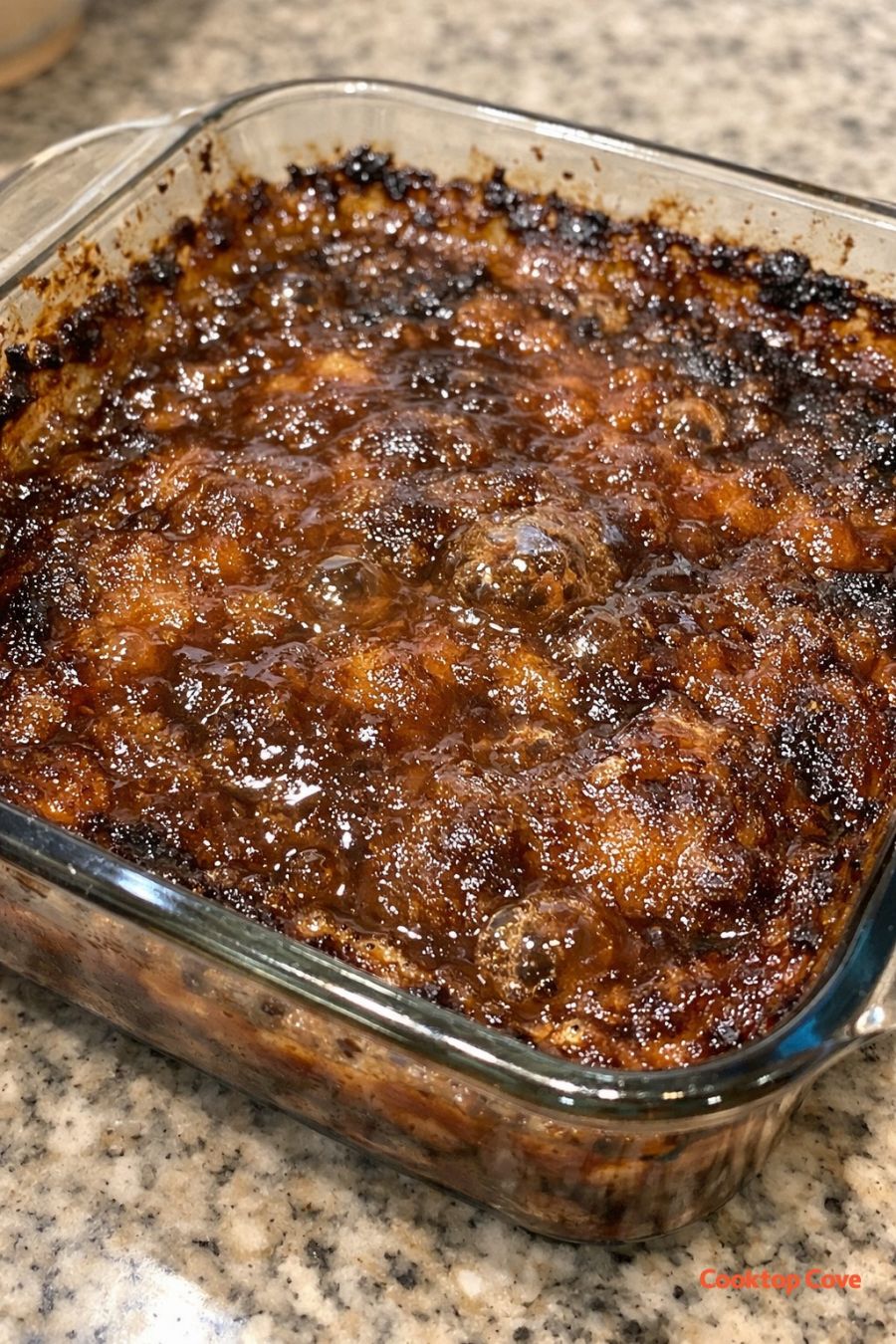
This 4-ingredient long weekend lifesaver is my answer to, “Can dinner please just take care of itself while I deal with everything else?” It’s a concealed bubbling glazed bake: chicken tucked under a glossy, savory-sweet sauce that turns gelatinous and rich as it cools slightly, with browned, bubbling edges hiding everything inside a glass baking dish. The idea borrows from old Midwestern pantry casseroles and Japanese-inspired teriyaki glazes—simple ingredients transformed by a long, hands-off bake. You assemble it in minutes, slide it into the oven hours before guests arrive, and let the slow heat and umami glaze do all the work.
Serve this bubbling glazed chicken over plain white rice, buttered egg noodles, or mashed potatoes so the sauce has something starchy to cling to. A crisp green salad with a bright vinaigrette or simple steamed green beans helps cut through the richness. If you want to lean into the comfort-food angle, add soft dinner rolls or a baguette for mopping up the extra glaze. Leftovers reheat nicely and can be tucked into a rice bowl with sliced cucumbers, or shredded and piled into toasted buns with a little crunchy slaw on the side.
4-Ingredient Long Weekend Lifesaver Glazed Bake
Servings: 6
Ingredients
3 pounds bone-in, skin-on chicken thighs (about 6–8 pieces), trimmed
1 cup low-sodium soy sauce
3/4 cup packed brown sugar (light or dark)
1/2 cup ketchup
Directions
Heat the oven to 325°F (165°C). Lightly grease a 9x9-inch or similar-sized glass baking dish; the glass helps you see those bubbling, caramelized edges as it bakes.
Pat the chicken thighs dry with paper towels and trim any large excess flaps of fat. Arrange the thighs in a single snug layer in the glass dish, skin side up. It’s fine if they touch; the close fit helps keep everything concealed under the glaze.
In a medium bowl, whisk together the soy sauce, brown sugar, and ketchup until the sugar is mostly dissolved and the mixture is smooth and glossy. This will look thin now but thickens and turns almost gelatinous as it bakes and cools.
Pour the glaze evenly over the chicken, making sure each piece is coated and the liquid settles around the sides. The chicken should be mostly submerged with just the skin peeking out on top.
Cover the baking dish tightly with foil. Bake at 325°F for 1 hour, undisturbed. During this time the chicken will release juices and the glaze will start to concentrate under the foil.
After 1 hour, carefully remove the foil (watch for steam). Baste the chicken with the pan juices by spooning the liquid over the tops of the thighs. Return the dish to the oven, uncovered.
Continue baking, uncovered, for 45–60 minutes, basting once or twice more, until the sauce has reduced to a thick, glossy glaze that bubbles around the edges and the chicken skin is deeply browned. The internal temperature of the thickest part of the thighs should reach at least 175°F (80°C) for tender, pull-apart meat.
If you want extra color, switch the oven to broil for 2–3 minutes at the end, watching closely so the sugars in the glaze don’t burn. You’re looking for dark, sticky, caramelized edges, not blackened spots.
Remove the dish from the oven and let the chicken rest in the bubbling glaze for at least 10–15 minutes. As it cools slightly, the sauce thickens into a rich, almost jelly-like coating that clings to the chicken and hides the pieces beneath a shiny surface.
Serve the chicken straight from the glass dish, spooning plenty of the concealed glaze from the corners over each portion. Any extra sauce in the pan is gold—save it for drizzling over sides or tomorrow’s leftovers.
Variations & Tips
To shift the flavor profile, you can swap a portion of the ketchup for chili-garlic sauce or sriracha for a gentle heat, or add a spoonful of Dijon mustard for a tangier, more grown-up glaze. If you’d like a bit of brightness without adding extra ingredients, finish the dish at the table with a squeeze of lemon from whatever citrus you have on hand, but it’s entirely optional. For a slightly lighter version, you can use bone-in, skin-on chicken drumsticks or a mix of thighs and drumsticks; just keep them in a single layer and bake until they reach the same internal temperature. Boneless, skinless thighs will work in a pinch, but they cook faster and won’t develop the same browned, bubbling top—start checking for doneness around 40 minutes after removing the foil and be careful not to over-reduce the glaze. If you need to make this further ahead, you can assemble the chicken and glaze in the glass dish, cover, and refrigerate up to 12 hours before baking; let it sit at room temperature for about 20–30 minutes while the oven heats to take off the chill. Food safety notes: Always handle raw chicken with care—wash your hands, cutting board, and any knives or utensils that touch the raw poultry before using them on other ingredients. Use a thermometer to confirm the chicken reaches at least 165°F (74°C) at the thickest part, though thighs are more succulent closer to 175–185°F (80–85°C). Cool leftovers quickly and refrigerate within 2 hours; reheat until steaming hot before serving. The high sugar content in the glaze can burn quickly under a broiler, so watch closely and pull the dish out as soon as the edges are dark and bubbling rather than blackened.
