
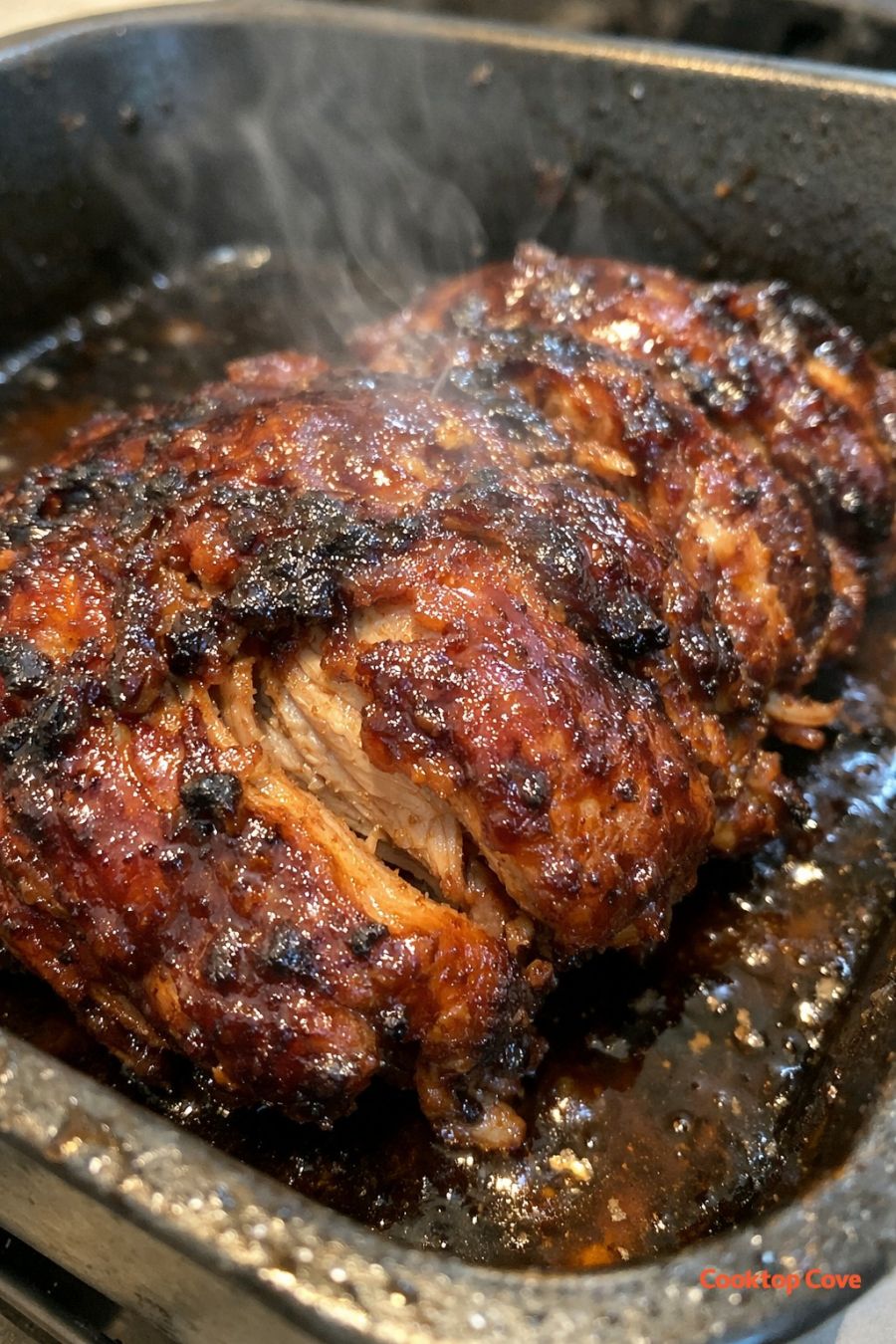
This is the kind of busy-weeknight supper I lean on when the days finally stretch a little longer and the fields start greening up. It’s just five ingredients, and once you get everything into the pan, the oven does the heavy lifting while you pay bills, fold laundry, or sit a spell on the porch. The recipe is built around a simple, heavily glazed roasted pork loin that turns out tender and fibrous, with a sticky, deeply browned surface that looks like you fussed far more than you did. It reminds me of the easy roasts my mother made on spring Thursdays when planting season had everyone running in ten directions at once.
I like to slice this glazed pork and heap it alongside buttered baby potatoes or a pan of roasted carrots and onions that can share the oven rack. A crisp green salad with radishes and a simple vinegar dressing keeps things feeling light and springy. Leftovers are wonderful tucked into soft rolls with a spoonful of the pan juices, or served cold the next day with sliced hard-boiled eggs and pickles for a no-fuss farmer’s lunch.
5-Ingredient Spring Glazed Roast Pork
Servings: 4
Ingredients
2 to 2 1/2 lb boneless pork loin roast, trimmed and patted dry
1 cup thick barbecue sauce (your favorite, not too thin)
1/4 cup honey
2 tbsp apple cider vinegar
1 tsp kosher salt
Directions
Heat your oven to 350°F (175°C). Set a dark metal roasting pan or sturdy metal baking dish on the counter so it’s ready; the darker pan helps the glaze caramelize into that deep, sticky finish.
Pat the pork loin completely dry with paper towels, then sprinkle it all over with the kosher salt, rubbing it in so it adheres. Lay the pork in the center of the roasting pan, fat side up if there is a fat cap.
In a small bowl, stir together the barbecue sauce, honey, and apple cider vinegar until smooth and glossy. This will be your heavy glaze and basting sauce.
Spoon about one-third of the glaze over the top and sides of the pork, using the back of the spoon to coat it as evenly as you can. It will slide down into the pan a bit, and that’s just fine.
Slide the pan into the preheated oven and roast for 20 minutes without disturbing it, letting the first layer of glaze begin to set and darken around the edges.
After 20 minutes, pull the pan out and baste: spoon some of the pan juices over the pork, then brush or spoon on another third of the glaze, coating the meat heavily again. Return the pan to the oven.
Continue roasting for another 20 minutes, then repeat the basting: spoon more of the pan juices over the roast and spread on the remaining glaze, really piling it on so the surface looks thickly coated.
Roast for 10 to 20 more minutes, or until the pork registers 145°F (63°C) in the thickest part with an instant-read thermometer. The glaze should be bubbling, deeply browned, and clinging in a shiny, sticky layer, and the pork should look slightly shrunken and fibrous at the edges.
Remove the pan from the oven and tent the pork loosely with foil. Let it rest in the pan for at least 10 to 15 minutes so the juices settle and the fibers relax; this keeps it moist and easy to slice.
Slice the pork across the grain into thick or thin slices, as you like, letting the fibrous meat pull slightly as you cut. Spoon some of the thickened, sticky pan glaze over the top and serve hot, right from the roasting pan, with extra juices passed at the table.
Variations & Tips
You can shift this simple roast to suit what you have on hand. For a slightly brighter spring flavor, replace half the barbecue sauce with orange marmalade or apricot preserves and cut the honey back to 2 tablespoons; the fruit adds a gentle tang and a lovely shine. If you prefer chicken, use bone-in, skin-on chicken thighs (about 3 pounds) instead of pork and reduce the roasting time to about 45–55 minutes total, basting twice as written and cooking until the thighs reach 175°F (79°C) and the juices run clear. For a little heat, stir 1 teaspoon crushed red pepper flakes or a spoonful of hot sauce into the glaze. You can also tuck a few peeled garlic cloves or wedges of onion around the pork in the pan; they’ll roast in the glaze and are wonderful spooned over the slices.
Food safety tips: Always start with fresh, properly refrigerated meat, and keep raw pork or chicken and their juices away from ready-to-eat foods. Wash your hands, cutting boards, and utensils thoroughly after handling raw meat. Use a clean spoon or brush each time you baste, or keep the reserved glaze separate from any that has touched raw meat so you don’t cross-contaminate. Rely on an instant-read thermometer rather than guesswork: cook pork to at least 145°F (63°C) and let it rest before slicing; cook chicken to at least 165°F (74°C) for safety, though dark meat is more tender closer to 175°F (79°C). Refrigerate leftovers within 2 hours, and reheat them until they are piping hot and steaming before eating.
