
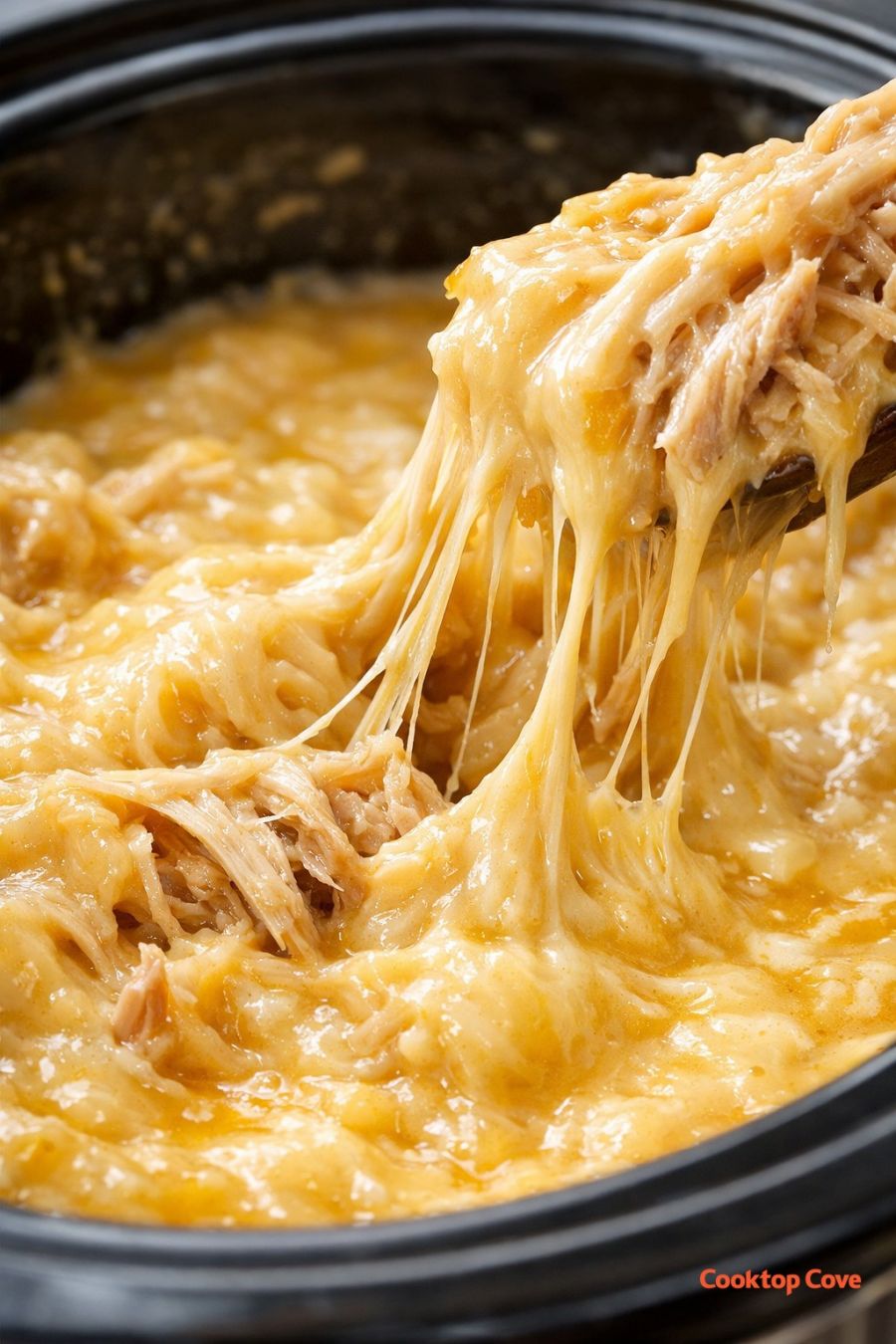
This 4-ingredient slow cooker smoked gouda mac is the sort of dish you set up before heading outside for a Memorial Day cookout and return to a pot of molten, golden comfort. It leans on the classic American-style macaroni-and-cheese concept but simplifies everything down to elbow macaroni, smoked gouda, milk, and butter. The result is a hyper-creamy, stretchy, almost fondue-like sauce that clings to every curve of the pasta—no flour roux, no baking, no fuss—just low, slow heat doing the work while you enjoy the sunshine.
Serve this smoked gouda mac alongside grilled burgers, brats, or barbecued chicken; its smoky richness pairs especially well with anything off the grill. A crisp green salad with a tangy vinaigrette or a simple coleslaw helps cut through the creaminess. If you’re setting out a buffet, keep the slow cooker on warm so guests can spoon out gooey helpings as they go, and offer a bowl of sliced pickles or pickled jalapeños nearby for a bright, acidic contrast.
4-Ingredient Slow Cooker Smoked Gouda Mac
Servings: 8
Ingredients
16 ounces dry elbow macaroni
4 cups whole milk
16 ounces smoked gouda cheese, shredded
4 tablespoons unsalted butter, cut into small pieces
Directions
Lightly grease the inside of a 4- to 6-quart slow cooker with a bit of butter taken from the measured amount, making sure to coat the bottom and lower sides so the pasta and cheese don’t stick.
Add the dry elbow macaroni to the slow cooker in an even layer. No need to parboil—the pasta will cook directly in the milk and cheese, which is what gives you that ultra-creamy, slightly gelatinous texture.
Pour the whole milk evenly over the macaroni, pressing down gently with a spoon so all the pasta is submerged as much as possible. Scatter the remaining butter pieces over the top.
Add about two-thirds of the shredded smoked gouda to the slow cooker, sprinkling it evenly over the pasta and milk. Gently stir everything together just until the macaroni is moistened and the cheese is distributed; don’t overwork it.
Sprinkle the remaining shredded smoked gouda over the surface in an even layer. This top layer will melt into a stretchy, glossy cap that helps create that luscious, fibrous pull when you stir and serve.
Cover the slow cooker with the lid and cook on LOW for 1 hour without lifting the lid. The milk will begin to warm and the cheese will start to melt into a loose sauce while the pasta softens.
After 1 hour, quickly lift the lid and give the mixture a thorough but gentle stir, scraping along the bottom and corners to prevent any sticking. The sauce will look thin at this stage, and some cheese may still be in soft clumps—that’s expected.
Replace the lid and continue cooking on LOW for another 45 to 60 minutes, stirring once halfway through. The macaroni should become tender but not mushy, and the sauce will thicken into a glossy, heavily emulsified, hyper-creamy base.
Once the pasta is al dente to your liking and the sauce is thick and stretchy, give it a final vigorous stir. You should see long, fibrous strands of melted smoked gouda pulling from the spoon and a cohesive, golden, almost gelatinous sauce coating every piece of macaroni.
Switch the slow cooker to WARM for serving. Keep the lid slightly ajar if the sauce seems very loose; this lets a bit of steam escape and helps it stay thick and creamy. Stir every 15 to 20 minutes to maintain a smooth texture and prevent the edges from overcooking.
Variations & Tips
For a slightly lighter texture, you can swap up to 1 cup of the whole milk with 2% milk, but keep at least 3 cups whole milk to preserve that ultra-creamy, stretchy consistency. If you prefer a bolder smoky note, choose an extra-smoky gouda or mix in a small portion of another smoked melting cheese while staying within the 16-ounce total. For a milder flavor, use a younger, less-aged smoked gouda, which will be creamier and less sharp. If the sauce ever seems too thick after holding on WARM, gently stir in a splash of hot milk until it loosens to your taste. Food safety tips: Keep the slow cooker on LOW or WARM once the macaroni is cooked; avoid letting it sit at room temperature for more than 2 hours to prevent bacterial growth. Stir periodically to keep the sauce evenly hot and to avoid scorching on the sides. Leftovers should be cooled quickly, transferred to shallow containers, and refrigerated within 2 hours; reheat gently on the stovetop or in the microwave with a spoonful of milk to restore creaminess, heating until steaming hot throughout.
