
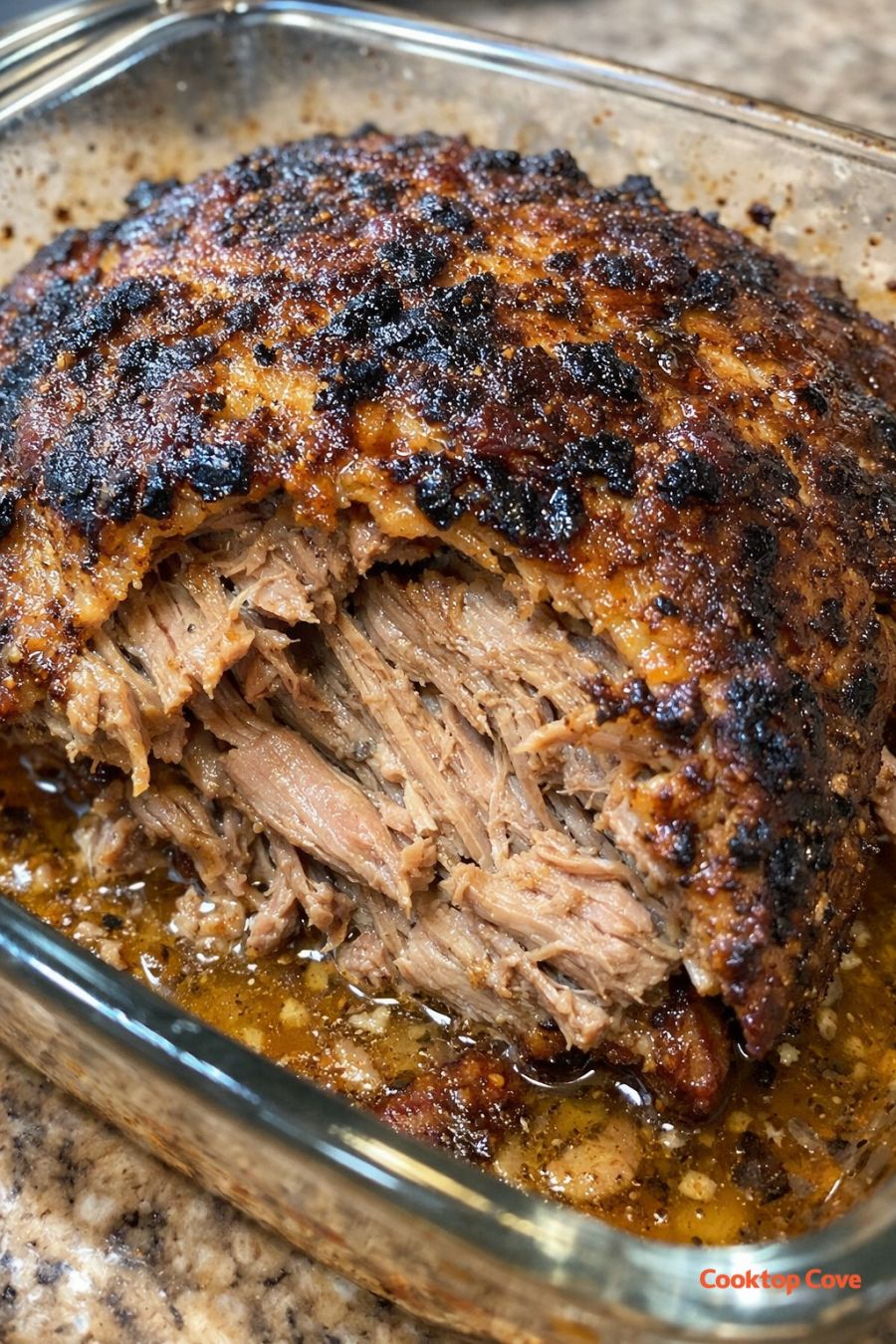
This is my late-May, five-ingredient, hands-off main dish that quietly takes care of itself while I get the house and patio ready. Think of it as a cross between a classic Midwestern pot roast and slow-roasted carnitas: a single, well-marbled cut of meat turns deeply fibrous and succulent under a charred, golden crust in the oven. The technique is simple—season, cover, roast low and slow, then finish uncovered—yet it feels like magic when you pull a bubbling glass casserole dish from the oven and dinner is essentially done hours before guests arrive.
Serve generous forkfuls of the roasted, shreddable meat over buttery mashed potatoes, creamy polenta, or simply alongside crusty bread to soak up the juices. A bright side—like a lemony green salad, grilled asparagus, or a tomato-cucumber salad—balances the richness nicely. For a more casual spread, pile the meat into toasted rolls with a sharp mustard or horseradish and a crunchy slaw. Leftovers make excellent tacos, grain bowls, or a next-day hash with fried eggs.
5-Ingredient Late May Magic Roast
Servings: 6
Ingredients
3 to 3 1/2 lb boneless beef chuck roast (or similar well-marbled roast)
2 tsp kosher salt
1 tsp freshly ground black pepper
1 tbsp smoked paprika (or sweet paprika, if preferred)
1 cup beef broth (or low-sodium stock)
Directions
Heat the oven to 300°F (150°C). Choose a glass casserole dish with a tight-fitting lid that’s just large enough to hold the roast with a little space around it. If your dish doesn’t have a lid, you can cover it tightly with heavy-duty foil later.
Pat the beef chuck roast dry with paper towels. This helps the surface brown and form that charred golden crust later. Place the roast in the glass casserole dish.
In a small bowl, stir together the kosher salt, black pepper, and smoked paprika. Sprinkle this mixture evenly over all sides of the roast, using your hands to rub it in and coat the meat thoroughly.
Pour the beef broth into the casserole dish around the roast, trying not to rinse off the seasoning. You want the liquid to come up the sides a bit but not cover the top of the meat. This gentle bath keeps the meat moist while the exposed top slowly browns.
Cover the casserole dish with its lid (or with a tight layer of heavy-duty foil, crimping well around the edges to trap steam). Place the dish in the center of the oven and roast, undisturbed, for 3 hours. During this time the meat will slowly break down into long, fibrous strands while staying juicy.
After 3 hours, carefully remove the lid or foil. Baste the top of the roast with some of the pan juices using a spoon. Return the uncovered dish to the oven and continue roasting for 45 to 60 minutes, basting once or twice, until the top develops a charred golden crust and the meat is very tender when pierced with a fork.
Check for doneness: the roast should shred easily with two forks and the interior should be at least 190°F (88°C) for that pull-apart texture. If it still feels firm, continue roasting in 15-minute increments, uncovered, until it yields.
Once the roast is tender and well browned, remove the casserole dish from the oven. Let the meat rest in its juices for at least 15 minutes. This short rest lets the fibers relax and reabsorb some of the liquid, keeping the shredded meat succulent.
Use two forks to gently pull the meat into large, fibrous chunks or shreds directly in the glass dish, turning the pieces in the pan juices so everything is glossy and moist. Taste and adjust seasoning with a pinch more salt or pepper if needed.
Serve straight from the glass casserole dish, letting that rustic, homey look work in your favor. Spoon the charred, crusty bits on top of each portion—they’re the best part.
Variations & Tips
For a lighter flavor, you can swap the beef chuck roast for a 3 to 4 lb pork shoulder (Boston butt). The cooking method and timing will be similar; roast until the pork easily shreds and the top is well browned. If you prefer a more aromatic profile, add 1 tsp dried thyme or 1 tsp dried oregano to the spice mix (this still keeps you at five ingredients if you count only the core components and use water instead of broth). You can also substitute chicken stock or even water for the beef broth; the fat and collagen from the roast will still create a rich cooking liquid. To deepen the crust, turn the oven up to 375°F (190°C) for the last 10 to 15 minutes of roasting, watching closely so the top doesn’t burn. For a mild smoky-spicy version, use hot smoked paprika instead of regular smoked paprika.
Food safety tips: Always start with a fresh, properly refrigerated roast and keep it chilled until you’re ready to cook. Wash your hands, cutting board, and any utensils that touch raw meat with hot, soapy water before using them with cooked foods. Use an instant-read thermometer to ensure the internal temperature of the roast reaches at least 145°F (63°C) for safety, though going up to 190°F (88°C) or higher is ideal for shredding. Do not leave the cooked roast at room temperature for more than 2 hours (or 1 hour if your kitchen is very warm); refrigerate leftovers promptly in shallow containers. Reheat leftovers to 165°F (74°C) before serving.
