
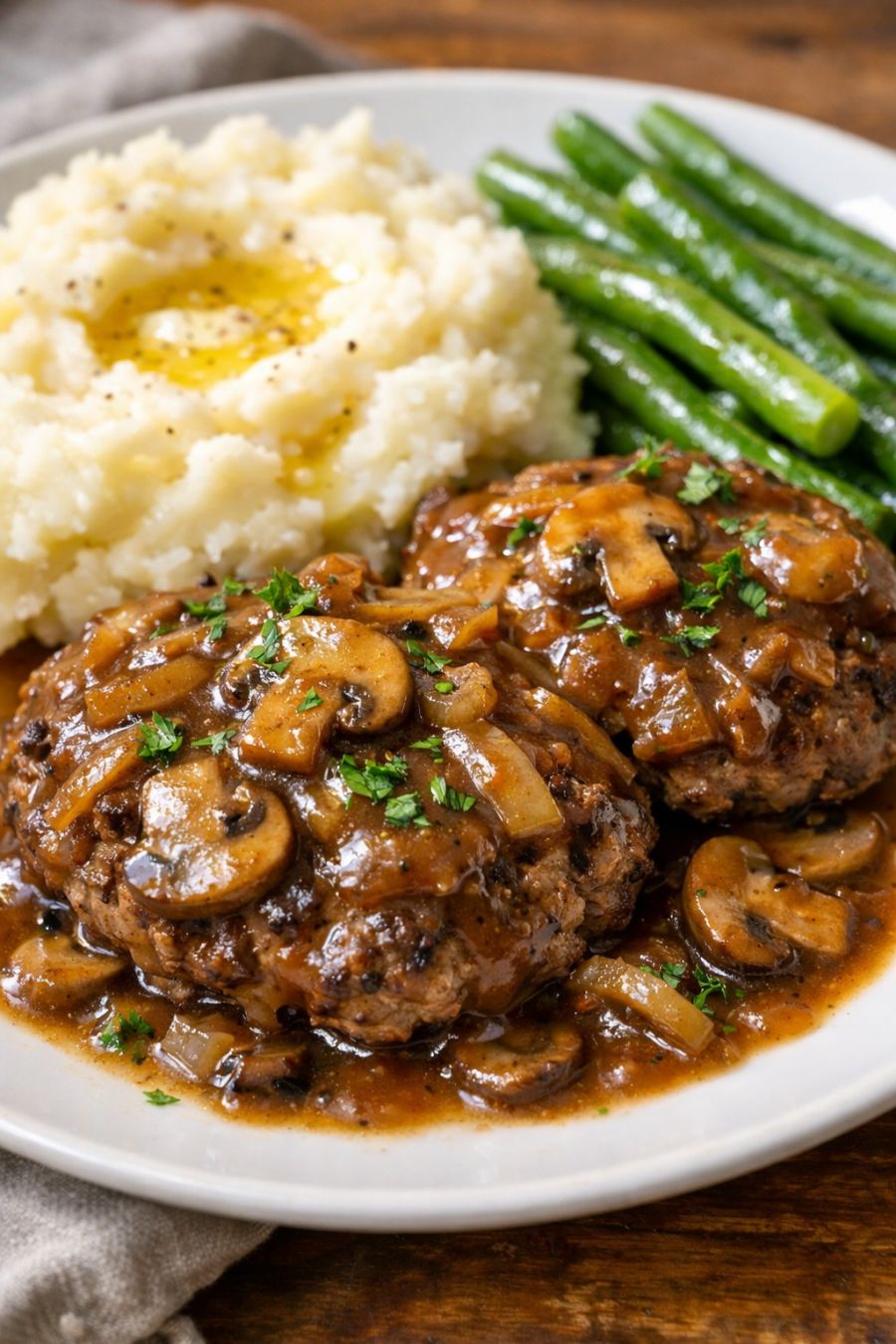
This 5-ingredient slow cooker classic comfort using frozen beef patties is the kind of weeknight meal that feels like a diner-style Salisbury steak dinner without the fuss. You literally start with rock-solid frozen patties, layer on pantry staples, and let the slow cooker transform everything into tender beef in a rich onion-mushroom gravy. It’s inspired by old-school Midwestern comfort food—think TV-dinner nostalgia, but with better flavor and less work. Perfect for the nights when you want something hearty that will have your husband (and everyone else at the table) asking for seconds.
Serve these slow-cooked beef patties and gravy over a bed of creamy mashed potatoes, buttered egg noodles, or steamed white rice to soak up every bit of the sauce. Add a simple green side—like roasted green beans, a crisp salad with vinaigrette, or steamed broccoli—to balance the richness. Warm dinner rolls or crusty bread are ideal for sopping up the extra gravy, and a simple fruit salad or applesauce on the side nods to that classic Midwestern meat-and-potatoes plate.
5-Ingredient Slow Cooker Beef Patties with Onion-Mushroom Gravy
Servings: 4
Ingredients
4 frozen beef patties (about 4–5 ounces each, 80–85% lean)
1 (10.5-ounce) can condensed cream of mushroom soup
1 (1-ounce) packet dry onion soup mix
1 cup beef broth (low sodium preferred)
1 medium yellow onion, thinly sliced
Directions
Place the frozen beef patties in a single layer on the bottom of the slow cooker insert. They can be touching but try not to overlap so they cook evenly.
Scatter the thinly sliced onion evenly over the frozen patties, letting some slices fall down around the sides to flavor the gravy.
In a medium bowl, whisk together the condensed cream of mushroom soup, dry onion soup mix, and beef broth until mostly smooth. It will still be fairly thick—that’s what you want for a rich gravy.
Pour the soup mixture evenly over the onions and frozen patties, making sure all of the patties are at least mostly covered with the sauce.
Cover the slow cooker with the lid and cook on LOW for 6–7 hours, or on HIGH for 3–4 hours, until the beef patties are cooked through (internal temperature reaches at least 160°F/71°C) and very tender.
Once cooked, gently lift the patties out with a wide spatula and transfer them to a serving platter or individual plates. Stir the remaining onions and sauce in the slow cooker to combine into a smooth gravy.
Taste the gravy and adjust seasoning if desired with a pinch of salt and black pepper. Spoon the hot onion-mushroom gravy generously over the beef patties and serve immediately with your favorite starch and vegetables.
Variations & Tips
For a slightly more elevated version, add 1 cup of sliced fresh mushrooms on top of the onions before pouring in the soup mixture (this will technically add an ingredient, but it layers beautifully with the mushroom soup). If you prefer a deeper, more savory note, substitute 1/4 cup of the beef broth with dry red wine or a splash of Worcestershire sauce. For a creamier gravy, stir in 2–3 tablespoons of sour cream at the end of cooking, off the heat, to prevent curdling. To keep the sodium in check, choose low-sodium beef broth and a reduced-sodium condensed soup, and taste before adding extra salt. You can also use turkey or chicken patties instead of beef; just ensure they are labeled safe to cook from frozen and cook until they reach an internal temperature of 165°F/74°C. Food safety tips: Always place the patties in the slow cooker fully frozen or fully thawed—do not partially thaw at room temperature, as that can encourage bacterial growth. Use only patties that are labeled suitable for cooking from frozen, and avoid stacking them too thickly so the center reaches a safe temperature in time. Check doneness with an instant-read thermometer inserted into the center of the thickest patty. Refrigerate leftovers within 2 hours of cooking and reheat thoroughly before serving. If your slow cooker is older or runs cool, favor the HIGH setting or extend the LOW time to ensure the patties spend minimal time in the temperature “danger zone.”
