
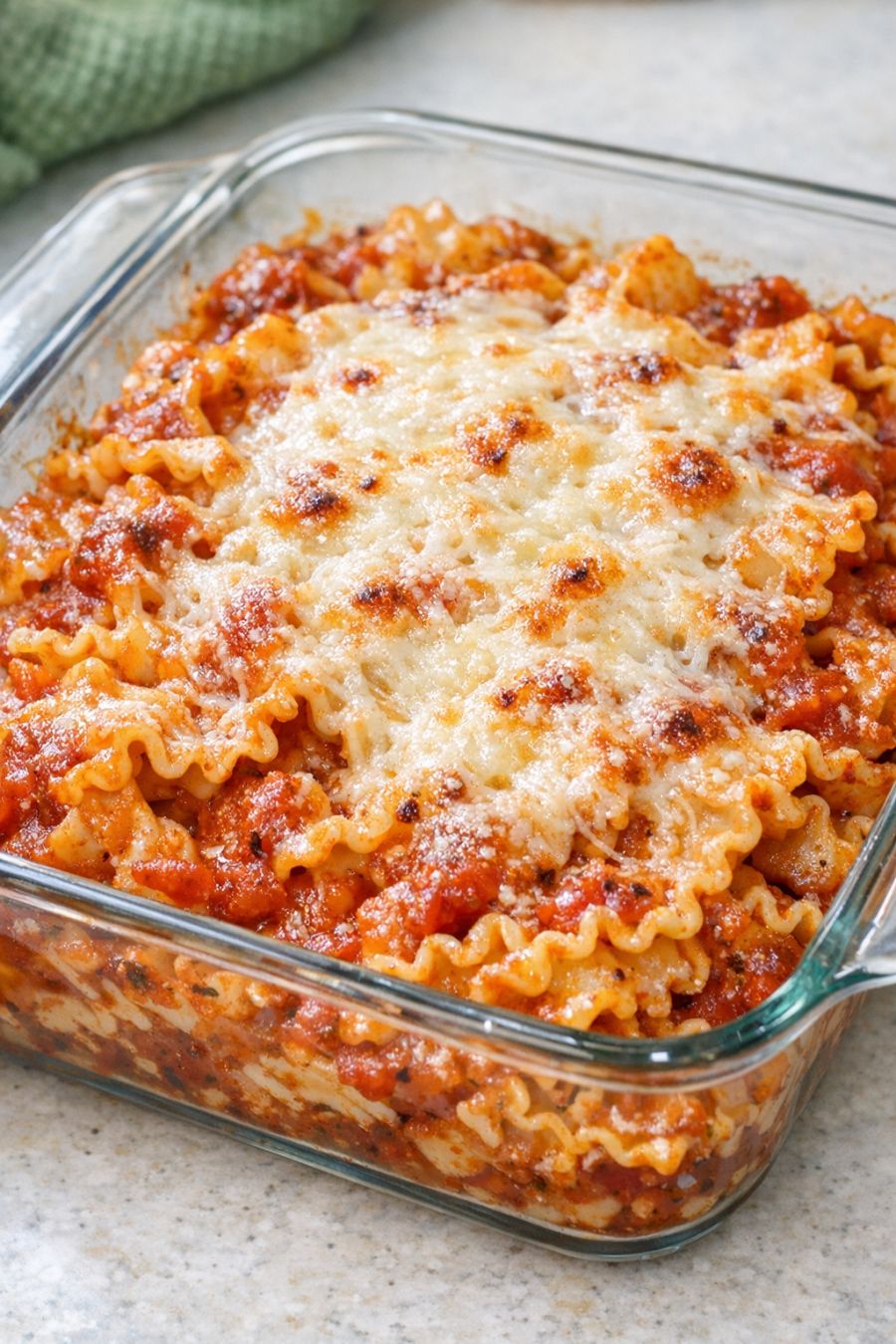
This little oven mafaldine reminds me of the kind of no-fuss suppers we’d throw together on busy harvest nights: a glass casserole dish, some dry pasta, a jar from the pantry, and into the oven it goes. Using mafaldine—the ruffled, ribbon-like pasta—gives this simple bake a cozy, old-fashioned feel, like a cross between lasagna and a church potluck casserole. You don’t even have to boil the noodles first; they soften right in the sauce as it bakes, soaking up every bit of flavor. It’s the sort of recipe you make once for friends and then keep getting asked, “Can you make that easy pasta again?”
Serve this mafaldine hot right out of the glass casserole dish with a green salad dressed in a simple vinaigrette or ranch, and some buttered garlic toast or warm dinner rolls to mop up the sauce. A side of steamed green beans or peas fits that classic Midwestern table nicely. If you like, put a small bowl of grated Parmesan or shredded mozzarella on the table so folks can sprinkle their own cheese over the top.
3-Ingredient Oven Mafaldine
Servings: 4
Ingredients
8 oz dry mafaldine pasta (about half a standard 16 oz box)
1 jar (24 oz) marinara or other tomato pasta sauce
2 cups water
Directions
Preheat your oven to 375°F (190°C). Pull out a clear glass casserole dish, about 2 to 2 1/2 quarts in size, so you can see the pasta and liquid levels as it bakes.
Pour the dry mafaldine pasta straight into the bottom of the glass casserole dish. Spread the noodles out as evenly as you can so they’re in a mostly flat layer; it’s fine if they overlap a bit.
In a mixing bowl or large measuring cup, combine the jar of marinara sauce and the 2 cups of water. Stir until the sauce and water are evenly blended into a loose, pourable mixture.
Pour the sauce-and-water mixture over the dry mafaldine in the glass dish, making sure all the pasta is moistened. Gently press down any pieces that are sticking up so they’re mostly under the liquid; a few edges showing are okay.
Cover the glass casserole dish tightly with foil, crimping the edges so steam stays inside. Place the covered dish on the middle rack of the preheated oven.
Bake covered for 35 minutes. Then carefully remove the foil (watch out for hot steam), give the pasta a gentle stir to loosen any pieces that may be sticking together, and spread it back into an even layer.
Return the dish to the oven, uncovered, and bake for another 10–15 minutes, or until the mafaldine is tender when you bite into it and most of the liquid has been absorbed into a saucy consistency. If the top looks a little dry before the pasta is done, you can stir once more and add a splash of hot water.
Remove from the oven and let the mafaldine rest for 5–10 minutes. The sauce will thicken slightly as it stands, and the pasta will finish absorbing the flavors. Serve straight from the glass casserole dish at the table.
Variations & Tips
This simple base is meant to be a blank canvas, just like the casseroles our mothers and grandmothers stretched to feed whoever showed up at the table. If you’d like to dress it up but still keep things easy, you can sprinkle grated Parmesan or shredded mozzarella over the top during the last 5–10 minutes of baking for a bubbly, cheesy finish. To add a little richness, dot the top with a few small pieces of butter before covering with foil, or stir in a splash of cream or half-and-half with the sauce and water for a creamier bake (this will make it more like a tomato cream casserole). If you enjoy a bit of heat, add a pinch of red pepper flakes to the sauce-and-water mixture before pouring it over the pasta. You can also swap marinara for a chunky vegetable tomato sauce or a garlic and herb variety for extra flavor without adding more ingredients. For a slightly firmer pasta, reduce the water by 1/4 cup and check doneness a few minutes earlier; for softer, more tender pasta, add up to 1/4 cup more water and bake a bit longer. Food safety tips: Make sure the casserole is heated until the pasta is fully cooked and the sauce is bubbling all the way through the center. Leftovers should be cooled within 2 hours, stored in a covered container in the refrigerator, and eaten within 3–4 days. Reheat portions until steaming hot in the middle before serving. If your glass casserole dish has manufacturer instructions, follow them and avoid placing a cold dish directly into a very hot oven to reduce the risk of thermal shock (let the dish come closer to room temperature while the oven preheats).
