
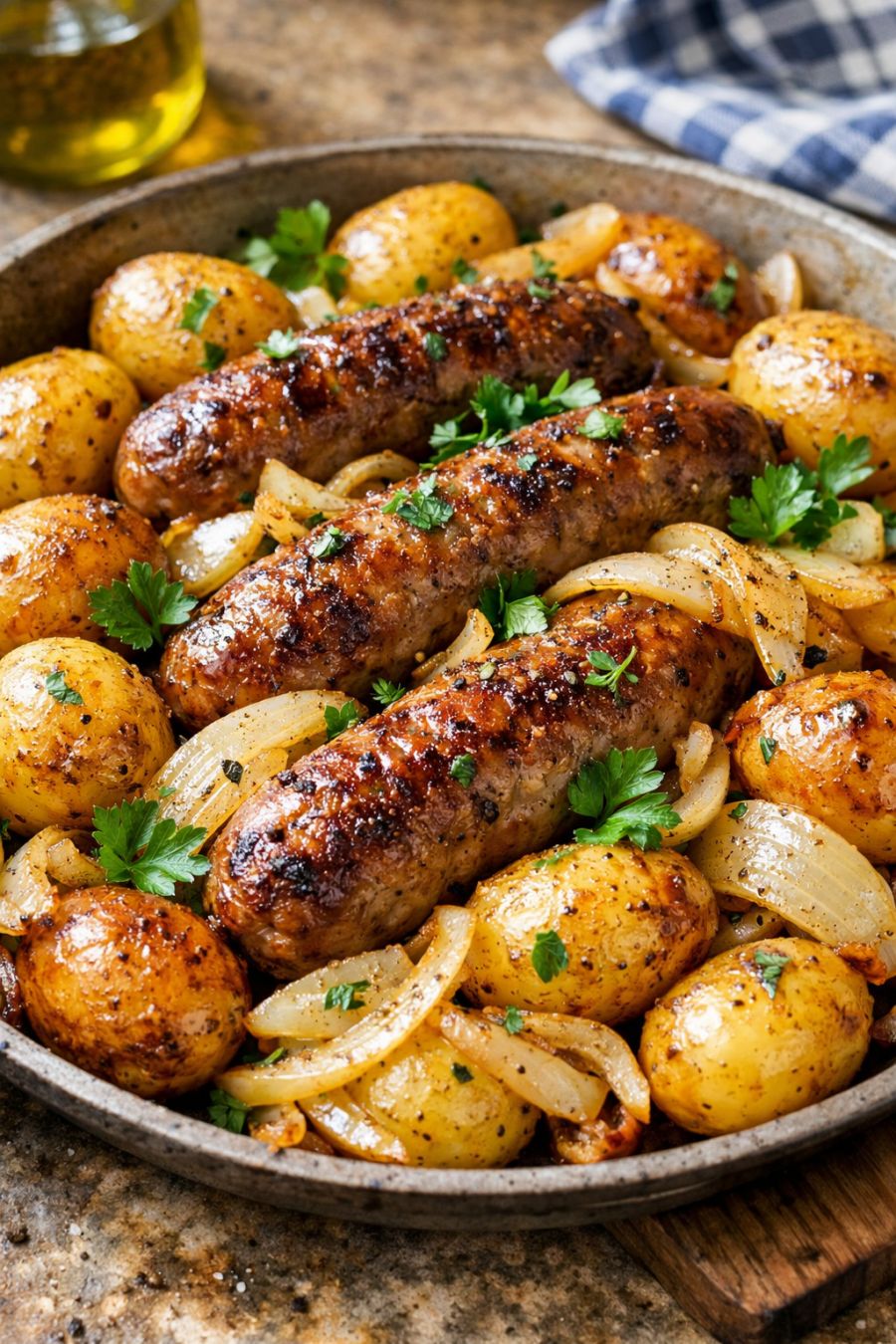
This 5-ingredient oven beef using frozen beef sausages is exactly the kind of no-brainer meal I lean on when work runs late but we still have friends coming over. You literally dump frozen sausages into a roasting pan, toss them with four pantry staples, and let the oven do the rest. The sausages roast up juicy with caramelized edges, and the veggies soak up all that savory flavor. It’s not fancy or fussy—just a Midwest-style, sheet-pan comfort meal that tastes like you spent way more time on it than you actually did.
Serve these roasted beef sausages and vegetables straight from the pan with a big green salad, crusty bread, or buttered rolls to soak up the juices. If you want to stretch it for more people, spoon everything over mashed potatoes, rice, or egg noodles. A simple side of roasted green beans or a bagged salad mix with a tangy vinaigrette balances the richness. For weekend guests, I like to set the pan in the center of the table, add a jar of mustard or hot sauce on the side, and let everyone help themselves family-style.
5-Ingredient Oven Beef with Frozen Sausages
Servings: 4
Ingredients
1 1/2 pounds frozen beef sausages (about 8–10 links, kept frozen)
1 1/2 pounds baby potatoes, halved (or quartered if large)
1 large yellow onion, sliced into thick wedges
3 tablespoons olive oil
1 1/2 teaspoons kosher salt
1 teaspoon black pepper
1 teaspoon dried Italian seasoning or dried mixed herbs (optional but recommended)
Directions
Preheat your oven to 400°F (200°C). While it heats, grab a large metal roasting pan or rimmed baking sheet. There’s no need to thaw the sausages—this recipe is designed for them to go in straight from the freezer.
Add the halved baby potatoes and onion wedges to the roasting pan. Drizzle the olive oil evenly over the vegetables, then sprinkle with the kosher salt, black pepper, and dried Italian seasoning if using. Toss everything directly in the pan until the potatoes and onions are well coated and spread them into an even layer.
Arrange the frozen beef sausages on top of the vegetables in a single layer. They can touch but try not to stack them so they roast and brown instead of steam.
Place the pan on the middle rack of the oven and roast for 25 minutes. During this time, the sausages will start to thaw and release some flavorful juices into the pan.
Carefully remove the pan from the oven and use tongs to flip the sausages. Give the potatoes and onions a quick stir to coat them in the pan juices and re-spread everything into a single layer.
Return the pan to the oven and continue roasting for another 20–25 minutes, or until the sausages are browned and cooked through and the potatoes are tender when pierced with a fork. If you have a meat thermometer, the internal temperature of the sausages should reach at least 160°F (71°C).
For extra color, you can switch the oven to broil for the last 2–3 minutes, watching closely so the sausages and vegetables get nicely caramelized but don’t burn.
Remove the pan from the oven and let everything rest for about 5 minutes. This helps the juices settle back into the sausages and keeps them moist. Serve hot, spooning the roasted potatoes and onions onto plates and topping with the sausages and any pan juices.
Variations & Tips
You can easily tweak this basic dump-and-roast method to match what you have on hand. Swap the baby potatoes for chunked russet or Yukon Gold potatoes, or add chopped carrots or bell peppers to the pan (just keep the total veggie amount similar so roasting time stays about the same). If you like a little sweetness, drizzle 1–2 tablespoons of balsamic vinegar or honey over everything with the olive oil. For extra flavor without adding new ingredients, use garlic powder, smoked paprika, or a pinch of red pepper flakes from your pantry instead of—or in addition to—the Italian seasoning. If you need to feed more people, add another half-pound of sausages and a few extra potatoes, but use a larger pan or two pans so everything still roasts instead of steaming. For food safety, always cook frozen beef sausages until they reach an internal temperature of at least 160°F (71°C), and avoid overcrowding the pan so they cook evenly. Use a metal roasting pan or sturdy baking sheet to handle the high heat, and let leftovers cool slightly before refrigerating in a shallow container; reheat thoroughly before eating. If you prefer less oil, you can cut the olive oil back to 2 tablespoons, but be sure to line the pan with parchment for easier cleanup and to prevent sticking.
