
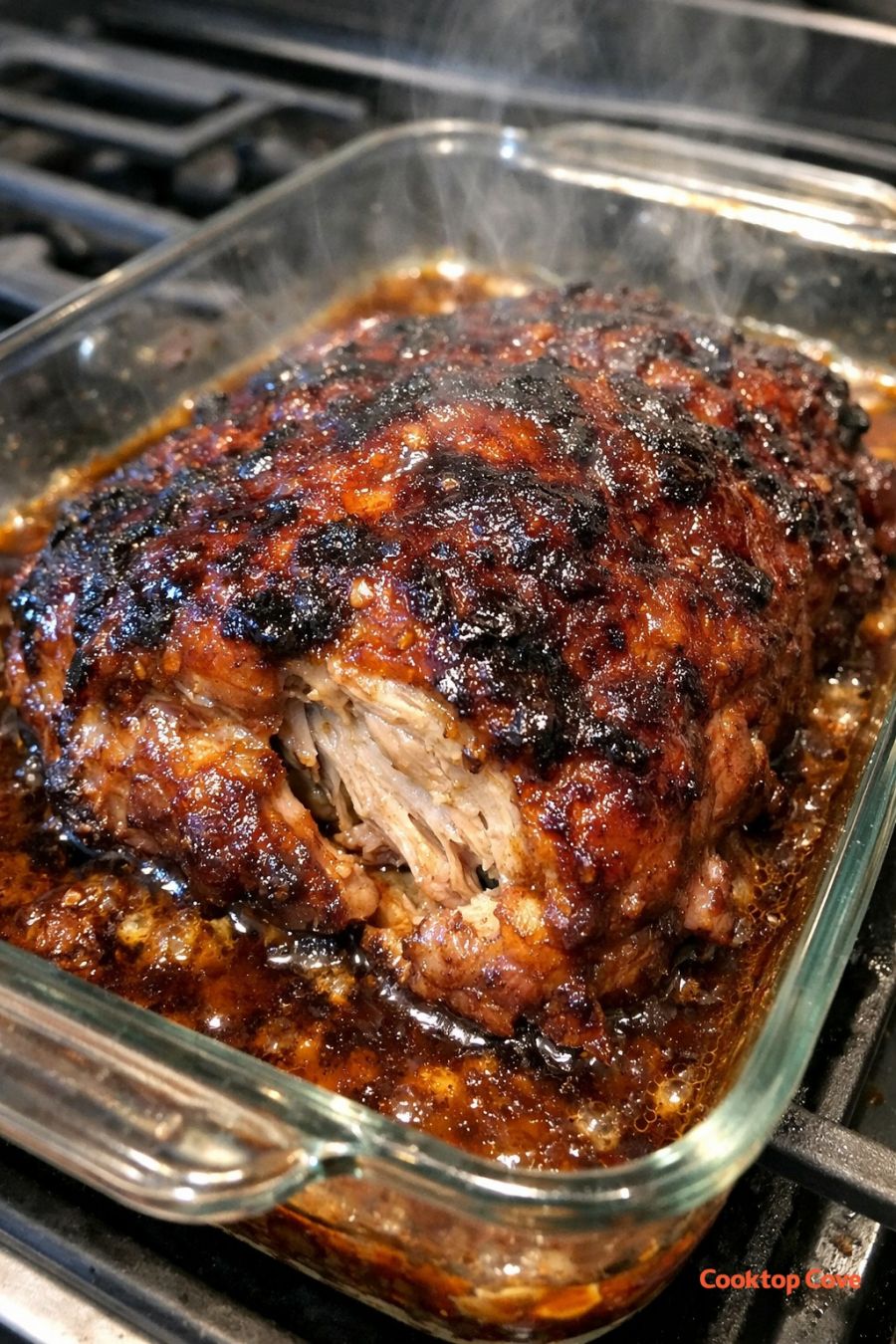
This 4-ingredient oven caramelized crust bake is the kind of dish I like to have tucked in the oven long before anyone pulls into the driveway. It reminds me of the way my mother used to prepare for church potlucks out here in the Midwest—meat slow-roasting in a glass pan, the whole house smelling warm and sweet. A simple seasoned pork roast bakes low and slow in a brown sugar and mustard glaze, forming a glossy caramelized crust while the inside stays fork-tender. It’s made to be a cookout companion: you assemble it early, slide it into the oven, and by the time guests arrive you’re calm, the kitchen’s tidy, and supper is already sending up little curls of steam.
Serve thick slices of this caramelized pork roast with classic cookout sides: creamy potato salad, coleslaw, baked beans, or buttered corn on the cob. It’s lovely tucked into soft sandwich buns with pickle chips, or plated with a simple green salad if you’re keeping things lighter. The sweet-savory crust pairs nicely with tart items like vinegar slaw or dill pickles, and a pitcher of iced tea or lemonade on the table makes the whole meal feel like a summer Sunday, no matter the season.
4-Ingredient Caramelized Crust Pork Roast Bake
Servings: 8
Ingredients
3 to 3 1/2 lb boneless pork shoulder roast (or pork butt), trimmed of excess hard fat
1 cup packed light brown sugar
1/4 cup yellow mustard
1 1/2 tsp kosher salt (or 1 tsp table salt)
Directions
Grease a 9x13-inch glass baking dish lightly with oil or cooking spray so the roast doesn’t stick. Place the pork shoulder in the center of the dish, fat side up if there is a fat cap.
In a small bowl, stir together the brown sugar, yellow mustard, and salt until you have a thick, sandy paste. It will look a bit dry at first, but keep stirring and pressing with the back of a spoon until it is evenly combined.
Spread the brown sugar–mustard paste all over the top and sides of the pork roast, pressing it on so it forms a thick, even coating. Don’t worry if some falls into the pan; that will help make the glossy caramelized juices.
Cover the baking dish tightly with foil. At this point you can refrigerate the prepared roast for up to 12 hours if you’re getting ready early—just let it sit at room temperature for about 20–30 minutes while the oven heats.
When you’re ready to cook, preheat the oven to 300°F (150°C). Place the covered baking dish on the center rack and bake for 2 1/2 hours, undisturbed, until the pork is very tender when pierced with a fork.
Carefully remove the foil (watch for hot steam). Spoon some of the pan juices over the top of the roast. Increase the oven temperature to 375°F (190°C). Return the uncovered dish to the oven and bake for 25–35 minutes more, basting once or twice, until the top has turned a deep golden brown and the glaze has formed a glossy, caramelized crust.
Check that the internal temperature of the pork has reached at least 190°F (88°C) for pull-apart tenderness, or at minimum 145°F (63°C) if you prefer it just sliceable. Let the roast rest in the hot juices for 10–15 minutes on the counter so the meat relaxes and the caramelized crust sets.
To serve, slice or gently pull the pork into large chunks right in the glass dish, turning pieces lightly in the caramelized juices. Serve warm, spooning some of the glossy sauce over each portion.
Variations & Tips
You can swap the pork shoulder for a 3 lb boneless pork loin if you prefer leaner meat; just reduce the covered baking time to about 1 1/2 hours and keep a close eye during the caramelizing step so the crust doesn’t burn. For a little extra tang, replace half of the yellow mustard with Dijon. If you like a touch of heat, sprinkle 1/4 teaspoon of cayenne or black pepper into the brown sugar mixture—this keeps the ingredient count simple while still adding character. To make this ahead for a truly stress-free cookout, you can fully bake the roast, cool it slightly, then cover and refrigerate. Reheat gently, covered, at 300°F until hot and bubbly, then uncover for the last 10–15 minutes to refresh the caramelized top. Always handle raw pork with care: keep it refrigerated until you’re ready to bake, wash your hands and any surfaces or utensils that touch the raw meat, and use a clean thermometer to check doneness. Do not leave the cooked roast at room temperature for more than 2 hours (or 1 hour if it’s very hot outside); refrigerate leftovers promptly in shallow containers and use within 3–4 days, reheating until steaming hot before serving.
