
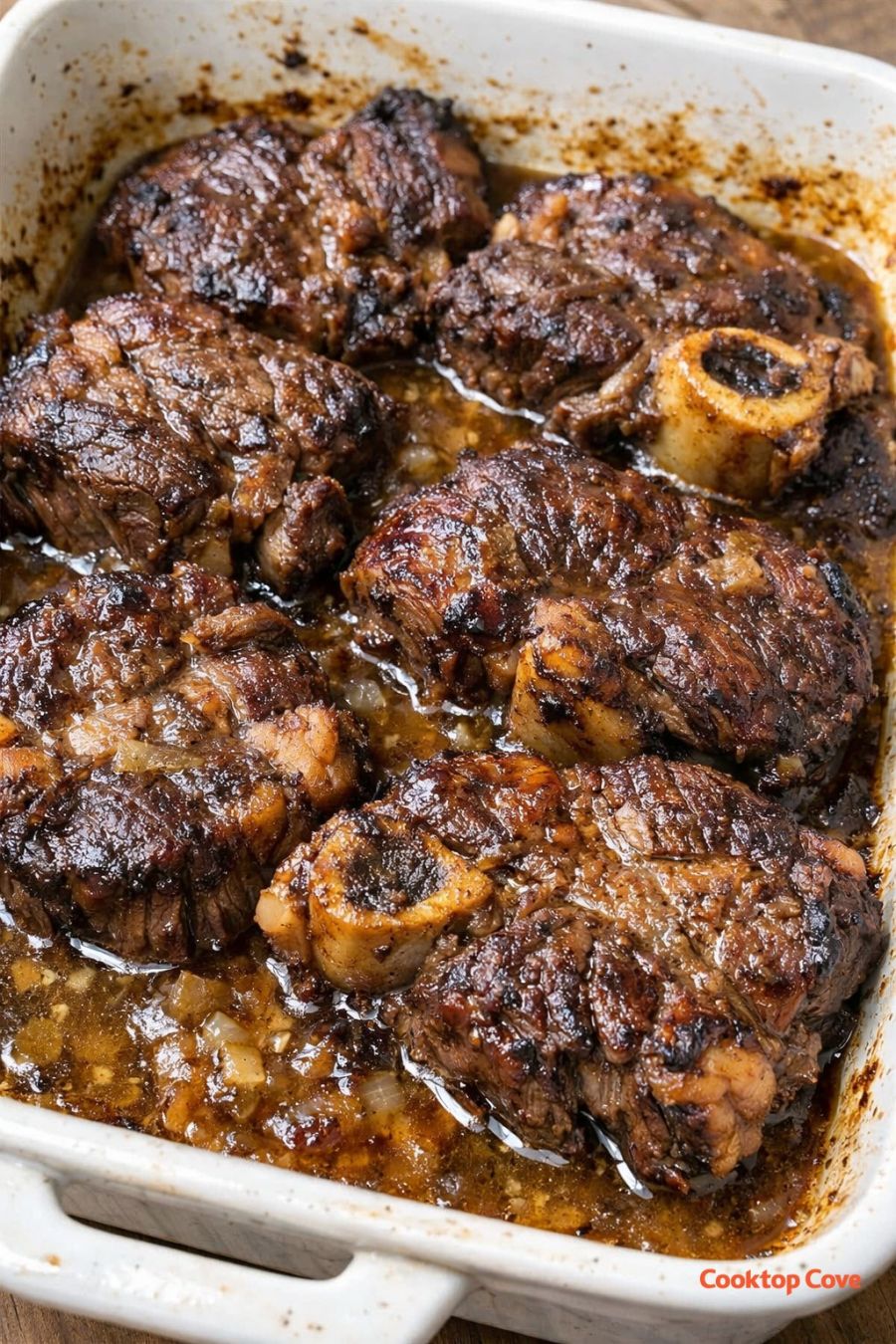
This is the kind of late spring supper I put together right after breakfast, when I know the day will get away from me but I still want the house to smell like someone’s been tending the stove. It uses a good, fibrous, well-marbled cut of beef—something like chuck roast or beef shank—that softens and glistens in the oven while you go about your business. With exactly four ingredients, it reminds me of the way my mother cooked on the farm: simple, unfussy, and trusting the oven to do the slow, quiet work. By suppertime, you’ve got tender, succulent beef resting in a rich, gelatinous coating in the baking dish, ready to spoon onto plates without any last-minute fuss.
I like to serve this oven beef with buttery mashed potatoes or a scoop of egg noodles to catch all that glossy, beefy goodness from the pan. A simple side of green beans, peas, or a crisp lettuce salad balances the richness nicely. Warm dinner rolls or a thick slice of country bread are handy for swiping through the juices. If you enjoy a little something extra, a spoonful of horseradish or grainy mustard on the side wakes everything up without needing any more ingredients in the main dish.
4-Ingredient Oven Beef
Servings: 4
Ingredients
3 pounds well-marbled beef roast (chuck roast, beef shank, or similar fibrous cut)
2 teaspoons kosher salt
1 teaspoon freshly ground black pepper
2 tablespoons neutral oil (such as canola or vegetable oil)
Directions
Heat the oven to 300°F (150°C). Set out a medium ceramic baking dish that’s deep enough to hold the roast and its juices without spilling.
Pat the beef roast dry on all sides with paper towels. This helps it brown instead of steam.
Sprinkle the salt evenly over all sides of the roast, then do the same with the black pepper, pressing it in gently so it clings to the meat.
In a large, heavy skillet, heat the oil over medium-high heat until it shimmers. Carefully lay the roast in the pan. Let it sear without moving it for 3–4 minutes, until a deep brown crust forms.
Turn the roast and brown the other sides the same way, taking your time so most of the exterior is well seared. This browning builds the rich, beefy flavor and helps create that glossy, gelatinous coating later.
Transfer the browned roast to the ceramic baking dish, scraping any browned bits and oil from the skillet over the top of the meat.
Cover the baking dish tightly with heavy-duty foil, crimping the edges so steam and juices stay inside. This helps the tough, fibrous meat slowly soften and keeps everything moist.
Place the covered dish on the middle rack of the oven and bake for 3 to 3 1/2 hours, or until the beef is very tender and easily pulls apart with a fork. Try not to open the oven or uncover the dish during this time so the heat and moisture stay trapped.
When the beef is tender, remove the dish from the oven and carefully peel back the foil, watching for hot steam. You should see the roast nestled in its own rich, glossy juices, with a light gelatinous coating around the edges of the dish.
Let the beef rest in the baking dish for 10–15 minutes so the juices settle. Then use two forks to pull it into large, rustic chunks or thick slices, turning the pieces gently in the pan juices so they’re well coated and glistening.
Serve the beef straight from the ceramic baking dish, spooning some of the rich juices over each portion.
Variations & Tips
You can use any well-marbled, fibrous cut suited to slow cooking: beef chuck, beef shank, blade roast, or even a well-marbled cross-rib roast. The key is visible marbling and connective tissue, which melt down into that luscious, gelatinous coating in the oven. If you prefer a deeper crust, sear the meat a bit longer before transferring it to the baking dish, but don’t skip the covered oven time—that’s what tenderizes the fibers. For a slightly different flavor without adding more ingredients, adjust the salt and pepper amounts to your taste or use coarse ground pepper for a more pronounced bite. If you want to turn the pan juices into a thicker gravy later, you can pour them into a small saucepan and reduce them gently on the stovetop, but that’s optional and can be done after the main dish is cooked. Food safety tips: Always start with fresh beef kept refrigerated at or below 40°F (4°C) and cook promptly after seasoning and searing. Use clean utensils and a clean cutting board reserved for raw meat. This roast is cooked well beyond the minimum safe internal temperature of 145°F (63°C), which is appropriate for tough cuts that need time to become tender. Refrigerate leftovers within 2 hours of cooking in shallow containers so they cool quickly, and reheat until hot and steaming before serving again.
