
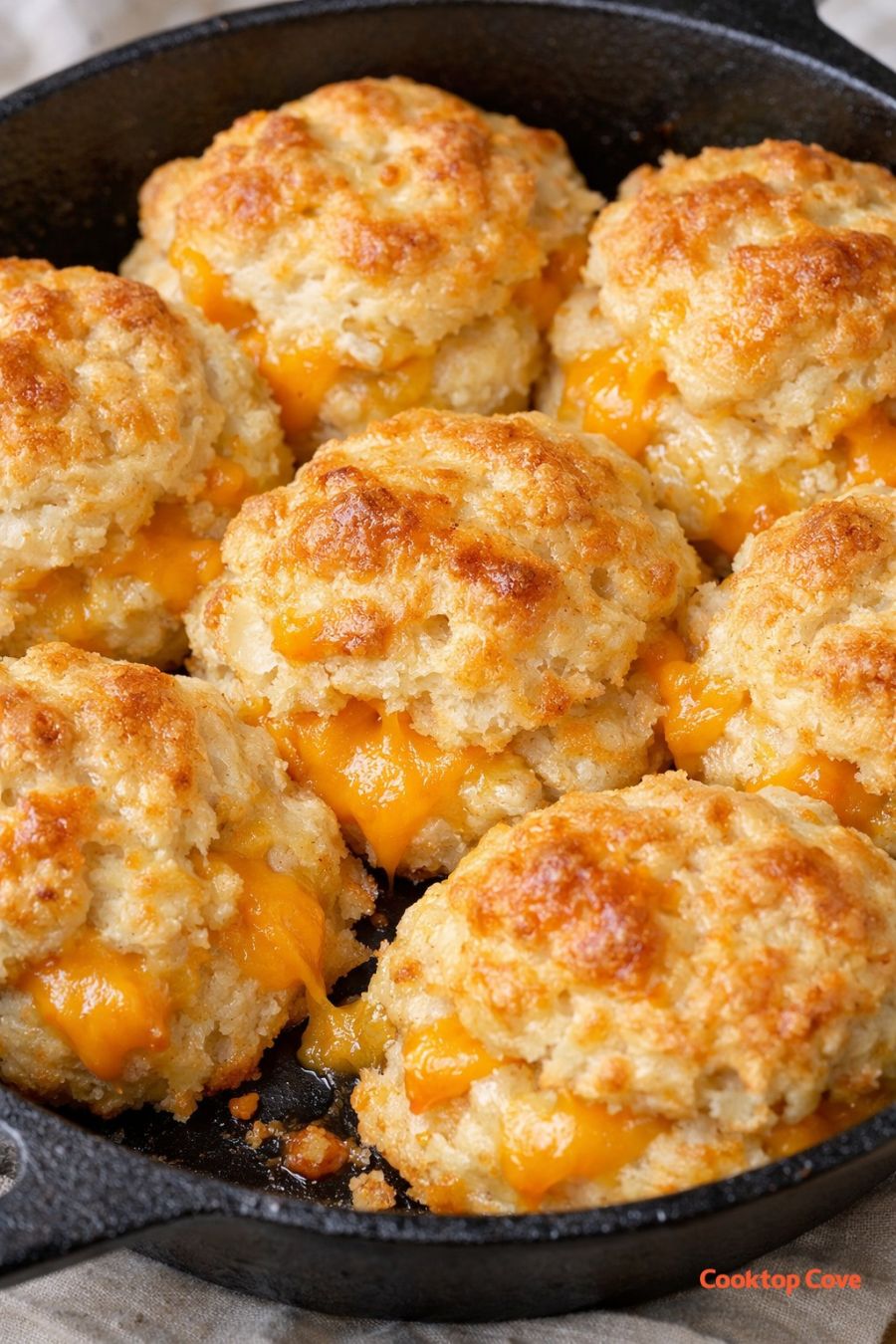
Mama finally gave up this little church-supper secret after I pestered her all the way home one Sunday. These southern 3-ingredient cheddar biscuit bites are the kind of thing you pop in your mouth and suddenly everyone wants the recipe, but you almost hate to admit how simple they are. They bake up in a cast iron skillet, golden and flaky around the edges with pockets of sharp cheddar melting through. This is the kind of practical, no-fuss Midwestern-meets-Southern cooking I grew up on: pantry staples, church potlucks, and recipes passed down only when you’ve proven you’ll truly use them.
Serve these warm right out of the cast iron skillet with softened butter or a swipe of honey for contrast. They’re perfect alongside a bowl of chili, a pot of vegetable beef soup, or a Sunday roast with gravy. For breakfast, pair them with scrambled eggs and crisp bacon, or tuck a little slice of country ham inside for a quick bite. They travel well for potlucks and are lovely on a snack board with pickles, sliced apples, and a little extra sharp cheddar on the side.
Southern 3-Ingredient Cheddar Biscuit Bites
Servings: 18–22 small biscuit bites
Ingredients
2 cups self-rising flour
2 cups shredded sharp cheddar cheese, firmly packed
1 1/2 cups cold whole buttermilk
Directions
Preheat your oven to 425°F (220°C). Place a 10-inch cast iron skillet on the middle rack while the oven heats so the pan gets good and hot.
In a medium mixing bowl, add the self-rising flour and shredded sharp cheddar cheese. Toss with your hands or a fork until the cheese is well coated and no big clumps remain. This helps the cheese stay nicely scattered through the biscuits.
Pour in the cold buttermilk. Using a fork or a sturdy spoon, gently stir just until everything comes together into a thick, sticky dough. Do not overmix; a few streaks of flour are better than a tough biscuit.
Carefully remove the hot cast iron skillet from the oven and lightly grease it by rubbing a small piece of butter, bacon grease, or a drizzle of neutral oil over the bottom and sides. The pan is very hot, so use oven mitts and keep your hands clear of the metal.
Using a tablespoon or a small cookie scoop, drop heaping spoonfuls of dough into the hot skillet, spacing them just barely apart so they’ll puff up and kiss together as they bake. You should get roughly 18–22 small mounds, depending on your scoop size.
Place the skillet back in the oven and bake for 14–18 minutes, until the biscuit bites are puffed, golden brown on top, and you can see little bits of gooey, melted cheddar peeking through the cracks.
If you like a richer finish, brush the tops lightly with a bit of melted butter as soon as they come out of the oven. Let the biscuit bites cool in the skillet for about 5 minutes, then serve them warm, pulling them apart at the table.
Variations & Tips
If you don’t have self-rising flour, you can make a quick substitute: for every 1 cup of all-purpose flour, whisk in 1 1/2 teaspoons baking powder and 1/4 teaspoon fine salt (for this recipe, that’s 2 cups flour, 3 teaspoons baking powder, and 1/2 teaspoon salt). Use a good, sharp cheddar for the best flavor; pre-shredded works fine for busy days, but freshly grated cheese melts a bit more smoothly. For a touch of heat, add a generous pinch of black pepper or a small spoonful of crushed red pepper flakes to the flour and cheese before you stir in the buttermilk (this will technically add an extra ingredient, so think of it as a flavor bonus when you’re not strictly sticking to the three-ingredient story). You can make the bites slightly larger and bake a few extra minutes if you want more traditional biscuit size. To freeze, bake as directed, cool completely, then freeze in a single layer before transferring to a freezer bag; reheat in a 350°F oven until warmed through. Food safety tips: keep the buttermilk refrigerated until you’re ready to mix, and don’t leave the finished biscuits at room temperature for more than 2 hours if your kitchen is warm—store leftovers in an airtight container in the fridge and reheat before serving. Always handle the preheated cast iron skillet with heavy oven mitts, and keep children and pets clear of the stove when transferring the hot pan.
