
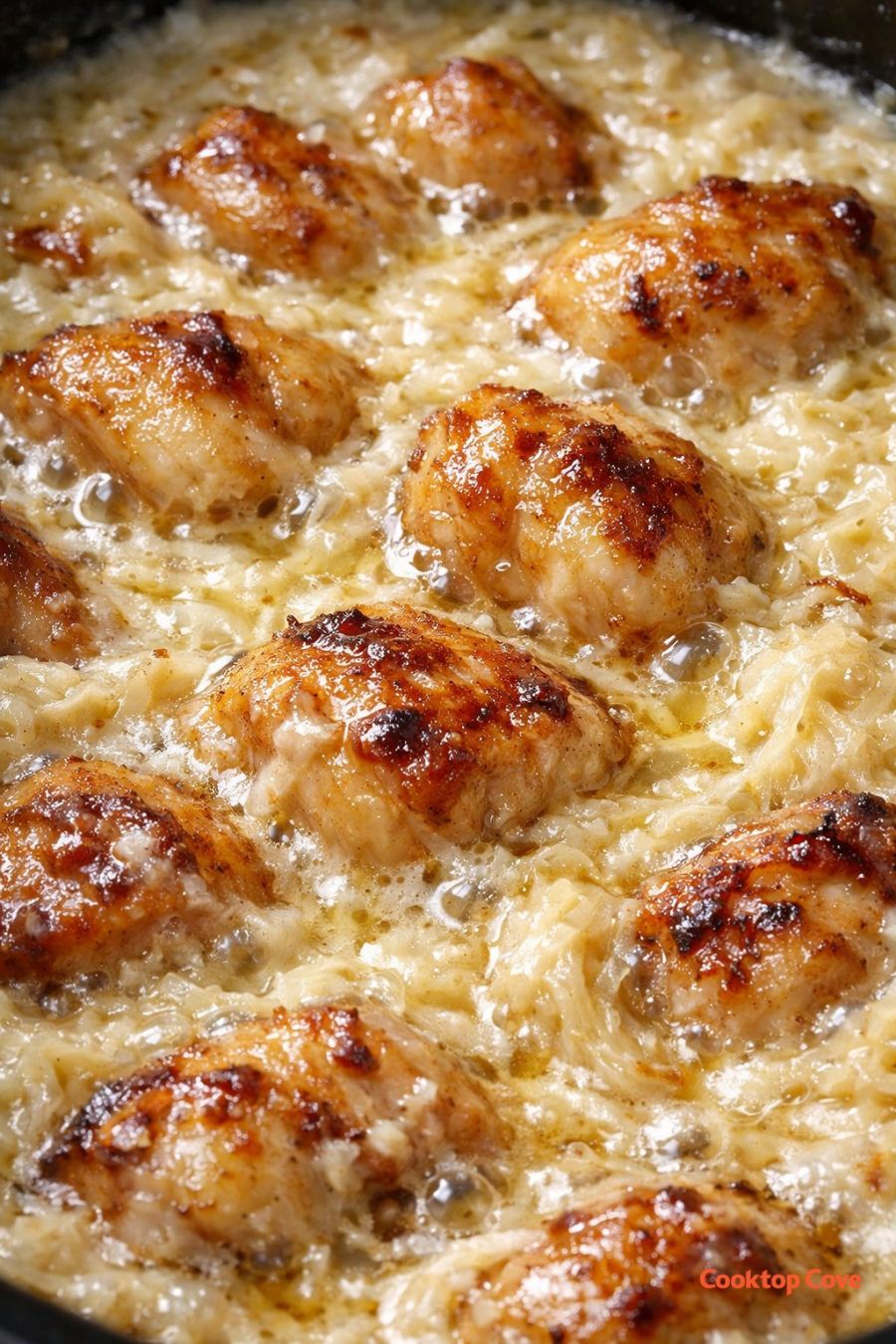
This 4-ingredient slow cooker creamy dumpling dish leans on store‑bought potato gnocchi to mimic pillowy dumplings in a rich, bubbling sauce. It’s the kind of springtime comfort I turn to when I want dinner handled hours ahead with almost no effort—everything goes into the slow cooker and quietly transforms into caramelized, tender morsels in a glossy, pale cream sauce. While traditional dumplings trace back to many European and Asian cuisines, here we borrow the Italian gnocchi shape and let it behave like Midwestern comfort food, all with supermarket ingredients and a hands-off method.
Serve these creamy gnocchi dumplings straight from the slow cooker into warm shallow bowls, making sure to scoop plenty of the thick, fibrous sauce. They’re lovely with a simple green salad dressed in a sharp vinaigrette to cut through the richness, or alongside roasted asparagus or green beans if you want to keep the spring theme. A crusty baguette or warm dinner rolls are excellent for swiping up the sauce, and a crisp white wine—like Pinot Grigio or Sauvignon Blanc—or sparkling water with lemon balances the dish nicely.
Slow Cooker Creamy Gnocchi Dumplings
Servings: 4
Ingredients
2 pounds shelf-stable potato gnocchi
2 cups low-sodium chicken broth
2 cups heavy cream
1 (10.5-ounce) can condensed cream of chicken soup
Directions
Lightly grease the insert of a 4- to 6-quart slow cooker with cooking spray or a thin film of neutral oil to help prevent sticking around the edges.
In the slow cooker, whisk together the chicken broth, heavy cream, and condensed cream of chicken soup until the mixture is smooth and evenly combined. Take a minute to break up any lumps from the soup so the sauce cooks evenly.
Add the potato gnocchi to the slow cooker and gently stir to coat every piece in the creamy mixture, making sure the gnocchi are mostly submerged but not tightly packed.
Cover the slow cooker with the lid and cook on LOW for 3 to 4 hours, or until the sauce is thick, glossy, and bubbling around the edges and the gnocchi are very tender and slightly caramelized where they touch the sides. Avoid stirring during the first 2 hours so the sauce can reduce and the gnocchi can set without breaking apart.
Once the gnocchi are tender and the sauce has reduced to a rich, spoon-coating consistency, gently stir from the edges toward the center to redistribute the caramelized bits into the sauce. If the sauce seems too thick for your taste, thin with a splash of warm broth or water; if it seems too loose, cook uncovered on HIGH for 10 to 15 minutes to reduce slightly.
Taste and adjust seasoning at the table with salt and freshly ground black pepper if desired, then ladle the creamy dumplings into bowls and serve hot straight from the slow cooker on its warm setting.
Variations & Tips
For a vegetarian version, swap the chicken broth and condensed cream of chicken soup for vegetable broth and condensed cream of mushroom soup; the method stays the same, but the flavor leans more earthy. If you prefer a lighter texture, replace up to 1 cup of the heavy cream with whole milk, understanding that the sauce will be slightly less thick and glossy. You can also use flavored gnocchi—such as spinach or cauliflower gnocchi—for extra color and subtle variation, but stick to shelf-stable or refrigerated varieties rather than frozen, which can water down the sauce. To introduce gentle aromatics without adding more ingredients to the base recipe, finish at the table with a sprinkle of dried herbs you already keep on hand, like thyme or Italian seasoning. For a more golden, caramelized top, transfer the finished gnocchi and sauce to a broiler-safe dish, sprinkle lightly with grated hard cheese if you like, and broil for a few minutes until browned and bubbling. Food safety tips: Keep dairy products refrigerated until you’re ready to assemble the slow cooker. Do not leave the slow cooker on the warm setting for more than 2 hours after cooking, as the temperature may fall into the bacterial “danger zone.” If you’re reheating leftovers, bring them to a simmer (165°F / 74°C) before serving, and cool and refrigerate leftovers within 2 hours in shallow containers; use within 3 to 4 days.
