
This little slow cooker chicken is the kind of recipe I lean on when the yard is already full of lawn chairs, the grandkids are running through the sprinkler, and I still want something hot and homemade on the table. It’s just three ingredients, starts with frozen diced chicken thighs, and leans on a bright, tangy barbecue sauce that reminds me of the sweet-and-zippy church potlucks I grew up with here in the Midwest. You simply toss everything in the slow cooker, let it burble away while you visit on the porch, and by the time folks are ready to eat over Memorial weekend, you’ve got a tender, saucy chicken starter that tastes like you fussed all afternoon.
Serve this Memorial weekend starter chicken piled on soft slider buns or split dinner rolls with a spoonful of crunchy coleslaw on top for contrast. It’s also lovely spooned over baked potatoes, rice, or buttered egg noodles if you want to stretch it into more of a meal. Put out some pickle slices, kettle chips, and a simple green salad or corn on the cob, and you’ve got a full spread without ever turning on the oven.
3-Ingredient Slow Cooker Memorial Weekend Starter Chicken
Servings: 6
Ingredients
2 pounds frozen diced boneless skinless chicken thighs
2 cups thick, sweet barbecue sauce (bright reddish-pink in color, such as a honey or brown sugar style)
1 medium red onion, very thinly sliced or shredded (about 1 1/2 cups packed)
Directions
Place the frozen diced chicken thighs in an even layer in the bottom of a 4- to 6-quart slow cooker. Do not thaw the chicken first; it should go in solidly frozen.
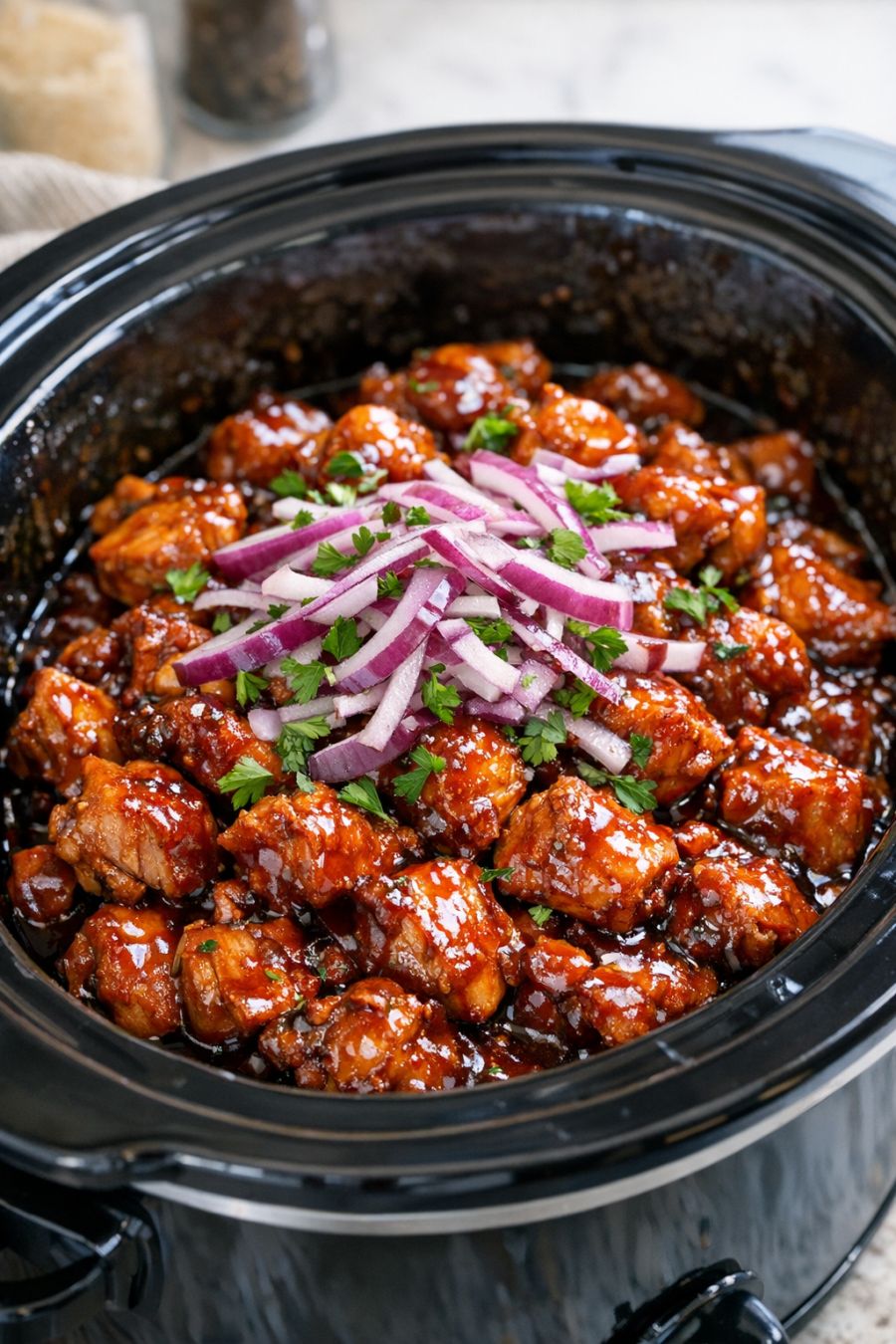
Scatter the shredded red onion evenly over the top of the frozen chicken, covering the surface so you see mostly the bright pink curls of onion.
Pour the barbecue sauce over the onions and chicken, using a spatula to spread it so everything is well coated but the onions still sit on top in a thick layer.
Cover the slow cooker with the lid. Cook on HIGH for 3 to 4 hours or on LOW for 6 to 7 hours, or until the chicken is cooked through, very tender, and reaches at least 165°F in the center of several pieces.
Once the chicken is done, use two forks to gently shred or break up the chicken right in the slow cooker, stirring it into the onions and sauce until everything is evenly mixed and saucy.
Taste and adjust the seasoning if you like—add a pinch of salt, a splash of vinegar for more tang, or a spoonful of extra barbecue sauce for more sweetness.
Turn the slow cooker to WARM and let the chicken sit, covered, for 10 to 15 minutes to let the flavors settle before serving. Serve hot, with a slotted spoon if you want less sauce or a ladle if you like it extra juicy.
Variations & Tips
You can nudge this simple starter in a few directions without losing its easy charm. For a smokier flavor, stir in 1 teaspoon of smoked paprika or a few drops of liquid smoke along with the barbecue sauce. If your crowd likes a little heat, add 1 to 2 teaspoons of crushed red pepper flakes or a minced jalapeño on top of the chicken before cooking. For a sweeter, more kid-friendly version, use a honey or brown sugar barbecue sauce and skip any spicy additions. If you prefer white meat, you can substitute frozen diced chicken breasts, though they may cook a bit faster and can dry out more easily, so check for doneness on the earlier side. To keep things on the lighter side, serve the chicken in lettuce cups or over a bed of shredded cabbage instead of on buns.
Food safety tips: Always start with properly frozen, store-bought or safely frozen chicken thighs; do not leave chicken at room temperature to thaw before adding to the slow cooker. Make sure your slow cooker is at least half full but not more than two-thirds full so it heats evenly. Cook the chicken until it reaches an internal temperature of at least 165°F in the thickest pieces, checking with an instant-read thermometer. Once cooked, do not leave the chicken on the WARM setting for more than about 2 hours; after that, cool leftovers quickly and refrigerate in shallow containers. Reheat leftovers to at least 165°F before serving again, and use refrigerated leftovers within 3 to 4 days or freeze for longer storage.
