
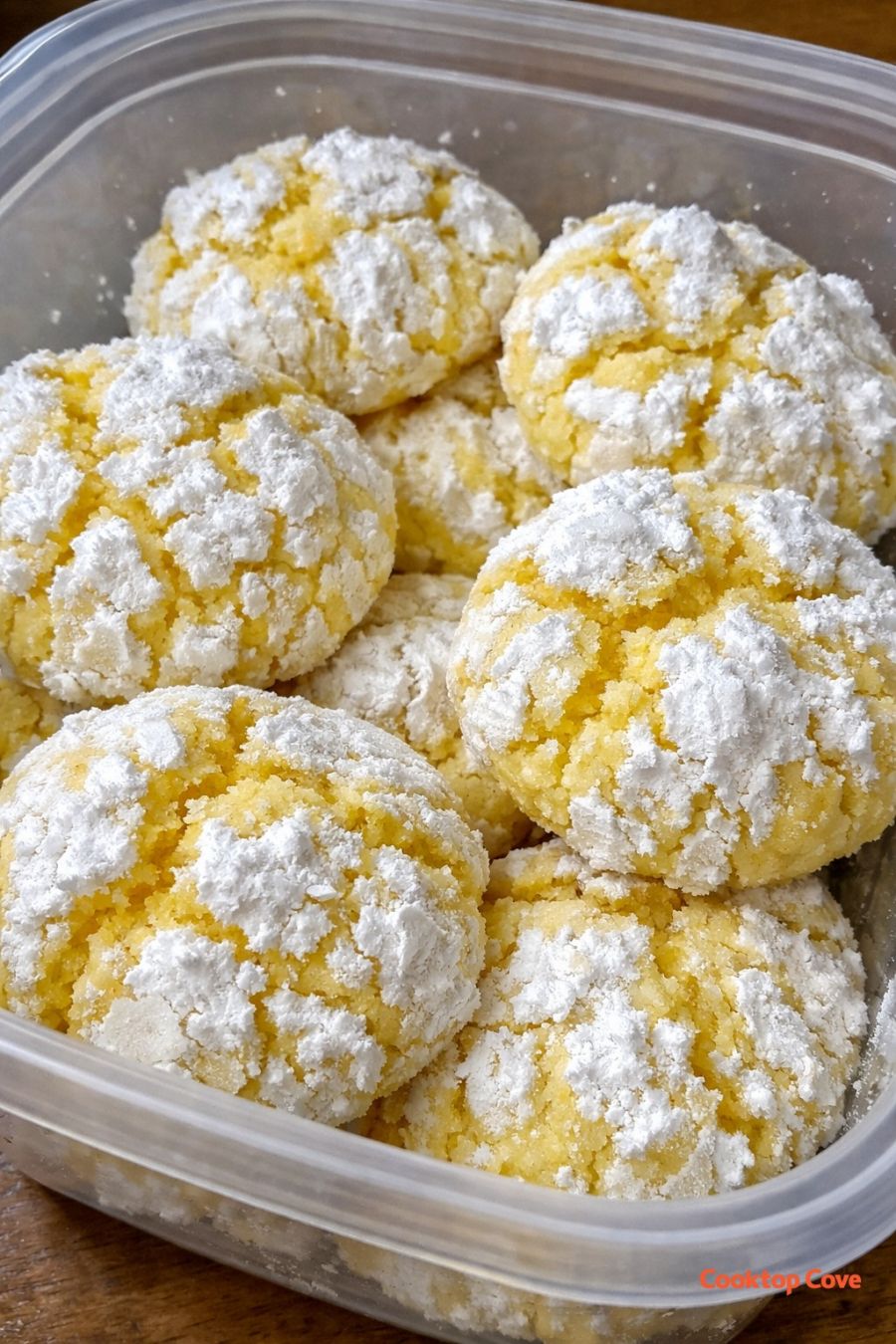
These 3-ingredient lemon crinkle cookies are a bright, cheerful spring dessert inspired by the kind of simple baking my grandmother leaned on for every family gathering. They deliver a soft, melt-in-your-mouth texture with a vivid lemon flavor and a crackly powdered sugar crust, yet the dough comes together from only a boxed lemon cake mix, eggs, and neutral oil. This style of shortcut cookie became popular in Midwestern church and community cookbooks in the late 20th century, when boxed mixes made it easy to turn out big batches of treats for potlucks and holidays without a long ingredient list or complicated technique.
Serve these cookies piled into a plastic food container or onto a simple platter so the bright yellow centers and deep powdered-sugar crinkles take center stage. They pair especially well with hot coffee or black tea, which cut through the sweetness, or with iced tea and lemonade for a spring brunch or baby shower. For a more composed dessert, tuck two cookies around a small scoop of vanilla or lemon ice cream for easy ice cream sandwiches, or serve alongside fresh berries to echo the citrus notes without adding more richness.
3-Ingredient Lemon Crinkle Cookies
Servings: 24
Ingredients
1 box (15.25 oz) lemon cake mix
2 large eggs, at room temperature
1/3 cup neutral oil (such as canola or vegetable)
1 cup powdered sugar, for rolling
Directions
Preheat your oven to 350°F (175°C). Line 2 baking sheets with parchment paper or lightly grease them so the cookies release easily and keep their crinkled coating intact.
In a medium mixing bowl, add the lemon cake mix, eggs, and neutral oil. Stir with a spatula or wooden spoon until the mixture forms a thick, smooth dough and no dry pockets of cake mix remain. The dough will be soft but should hold its shape when scooped.
Pour the powdered sugar into a shallow bowl. This will create the thick, snowy coating that accentuates the deep cracks as the cookies bake.
Using a small cookie scoop or a tablespoon, portion out about 1 tablespoon of dough per cookie. Roll each portion quickly between your palms to form a smooth ball; the smoother the ball, the more even the crinkles will appear.
Roll each dough ball generously in the powdered sugar, turning to coat all sides. You want a thick, opaque layer of sugar—this is what gives the finished cookies that dramatic white-on-yellow contrast and a tender, melt-in-your-mouth exterior.
Place the coated dough balls on the prepared baking sheets, spacing them about 2 inches apart to allow for gentle spreading and crackling as they bake.
Bake, one sheet at a time, for 9–11 minutes, or until the cookies have puffed, developed deep cracks, and the edges look just set. The centers should still appear slightly soft; they will continue to firm up as they cool, which keeps the interior pillowy.
Remove the baking sheet from the oven and let the cookies cool on the pan for 5 minutes. This brief rest helps them set without collapsing and keeps the powdered sugar layer from rubbing off.
Carefully transfer the cookies to a wire rack to cool completely. Once fully cooled, place them in a plastic food container in gentle layers, using parchment or wax paper between layers if you need to stack them to preserve the thick sugar coating and soft texture.
Variations & Tips
To intensify the lemon flavor without adding more ingredients to the dough, you can choose a super-lemony cake mix brand or dust the finished cookies with an extra light sprinkle of powdered sugar mixed with a small pinch of finely grated lemon zest. For a slightly different texture, chill the dough for 20–30 minutes before rolling; this will give you slightly thicker, puffier cookies with more pronounced cracks. If you prefer smaller bites for a big gathering, make 2-teaspoon-sized dough balls and reduce the bake time by 1–2 minutes, watching closely so they stay soft. These cookies freeze well once baked and cooled; store them in an airtight container with parchment between layers for up to 2 months, thawing at room temperature before serving. Food safety notes: Use fresh, in-date eggs and avoid consuming the raw dough, as it contains raw egg and uncooked flour from the cake mix. If you’re baking for someone with food allergies, always check the cake mix label for potential allergens such as wheat, milk, soy, or tree nuts. Cool cookies completely before sealing in a container to prevent condensation, which can make them sticky and encourage spoilage. Store at room temperature for up to 4 days in an airtight container, and discard if they develop an off smell, visible mold, or an unusually sticky surface.
